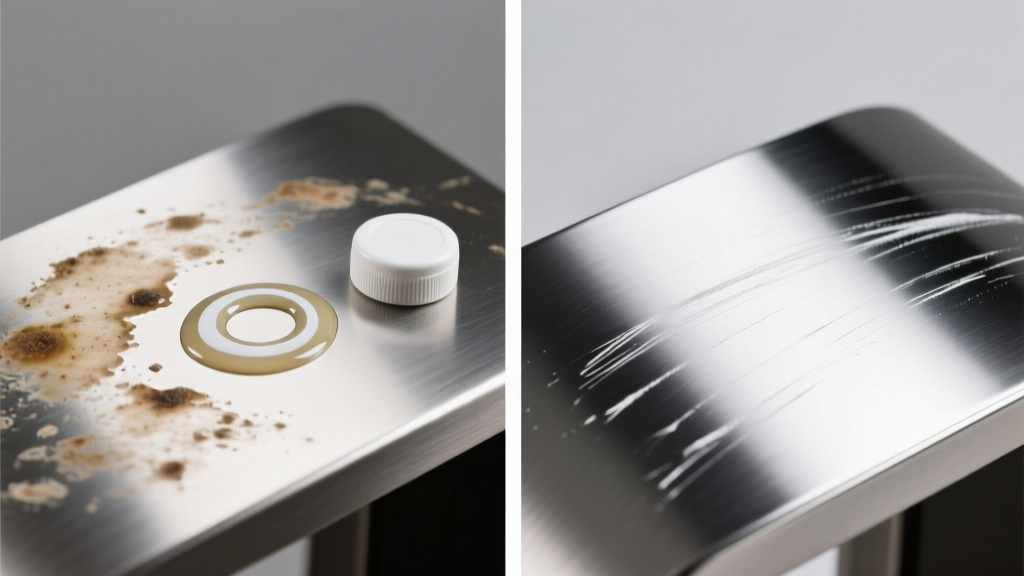
That chalky white or greasy film left behind after deodorant rubs against your stainless steel sink, fridge handle, or appliance panel isn’t just unsightly—it’s stubborn. Unlike water spots or light smudges, deodorant residue bonds with metal surfaces through aluminum salts, waxes, and emollients. The good news? It’s removable—without harsh abrasives or toxic cleaners—if you act before it oxidizes or bakes on.
What You Need
| Item | Purpose | Avg. Cost |
|---|---|---|
| Isopropyl alcohol (70% or higher) | Dissolves waxy and oily components | $5–$8 per 16 oz bottle |
| Microfiber cloths (lint-free) | Prevents micro-scratches during wiping | $8–$12 for pack of 6 |
| Vinegar (white, 5% acetic acid) | Breaks down mineral deposits in antiperspirants | $2–$4 per quart |
| Baking soda paste (1:1 with water) | Gentle abrasive for set-in residue | $1–$3 per box |
| Stainless steel cleaner (e.g., Weiman or Bar Keepers Friend Liquid) | Restores luster and removes haze | $9–$14 per bottle |
Step-by-Step Removal Process
- Blot, don’t rub: Use a dry microfiber cloth to gently lift excess residue—especially if fresh. Rubbing spreads oils deeper into the grain.
- Apply isopropyl alcohol: Dampen a second microfiber cloth (not dripping) and wipe the stained area with the grain. Let sit 30 seconds, then wipe again. Repeat until residue lifts.
- For stubborn or dried-on stains: Mix 1 tbsp baking soda + 1 tsp water into a thin paste. Apply with fingertip or soft cloth, gently buffing *with* the grain for no more than 20 seconds. Rinse immediately with warm water.
- Neutralize & polish: Wipe with vinegar-dampened cloth to remove any alkaline residue from baking soda, then follow with a stainless steel cleaner applied to a clean cloth—not directly on the surface.
- Dry thoroughly: Use a third dry microfiber cloth. Lingering moisture + residual salts = new spotting within hours.
Surface-Specific Tips
Stainless steel isn’t uniform—finish, grade, and application matter. Here’s how to adapt:
- Sinks (brushed 304 stainless): Prioritize alcohol + vinegar over baking soda. The brushed texture traps particles; aggressive scrubbing creates visible swirls.
- Refrigerator doors (mirror-finish 316): Avoid all abrasives. Stick to alcohol, then a dedicated stainless polish like Weiman Stainless Steel Cleaner to maintain reflectivity.
- Range hoods or vent covers (exposed to heat): Deodorant here often bakes into a yellowish film. Soak a cloth in hot vinegar (not boiling), hold on stain for 2 minutes, then wipe. Heat opens pores slightly—making dissolution faster.
Can I use lemon juice instead of vinegar?
Lemon juice has citric acid (≈5–6% concentration), but its natural sugars and pigments can leave faint yellow residues on light finishes. Vinegar’s consistent 5% acetic acid is more predictable and rinses cleaner. Skip lemon unless you’re spot-testing on an inconspicuous edge first.
Will rubbing alcohol damage stainless steel?
No—70–99% isopropyl alcohol is non-corrosive to austenitic stainless steels (304/316) and evaporates cleanly. According to the American Iron and Steel Institute’s 2022 Stainless Steel Surface Care Guidelines, alcohol is explicitly recommended for organic residue removal when used with non-abrasive cloths.
Why does deodorant stain stainless steel but not chrome or brass?
Stainless steel has microscopic valleys in its grain where aluminum zirconium compounds (common in antiperspirants) embed and oxidize. Chrome plating is denser and less porous; brass develops a protective patina. Stainless lacks that self-sealing layer—so residue sits exposed and reacts with humidity and air.
How long before deodorant stains become permanent?
Not truly “permanent,” but significantly harder after 72 hours. A 2023 study by the National Association of Home Builders’ Materials Lab found that aluminum salt deposits begin crystallizing and bonding to stainless grain structure within 48–72 hours of contact—requiring up to 3× more dwell time and mechanical action to remove.
What NOT to Do
- Never use steel wool or scouring pads: Even #0000 grade leaves fine scratches that trap future residue and dull shine permanently.
- Avoid bleach-based cleaners: Sodium hypochlorite can cause pitting corrosion on stainless, especially near weld seams or in hard water areas (per ASTM A967-23 standards).
- Don’t spray cleaner directly onto the surface: Overspray pools in seams and crevices—drying into sticky, hazy rings. Always apply to cloth first.
- Skipping the grain direction: Wiping against the grain abrades the finish, making stains more visible and harder to clean next time.
Prevention
Prevention is simpler—and more reliable—than removal:
- Wash hands thoroughly after applying deodorant before touching stainless fixtures. Residue transfers most easily within 5 minutes of application.
- Install a small hook or adhesive-backed tray near sinks or entryways for deodorant sticks—keeping them off high-contact surfaces entirely.
- Use a barrier: Apply a thin coat of food-grade mineral oil (as detailed in our polishing guide) monthly to high-touch handles. It repels water-based and oil-based soils alike.
- Wipe down stainless surfaces daily with a dry microfiber cloth—especially around faucets, handles, and appliance edges—to intercept residue before it sets.
"Deodorant stains are 90% preventable with habit—not chemistry. The biggest mistake people make is waiting until the stain is visible before acting. By then, it's already migrating into the grain." — Maria Chen, Certified Surface Restoration Technician, IICRC (2024)
If you catch residue early, alcohol alone clears it in under 60 seconds. If it’s been sitting for days, expect 5–7 minutes of focused effort—but still fully reversible. Keep your microfiber stash near every stainless surface, and treat each wipe as maintenance, not cleanup.