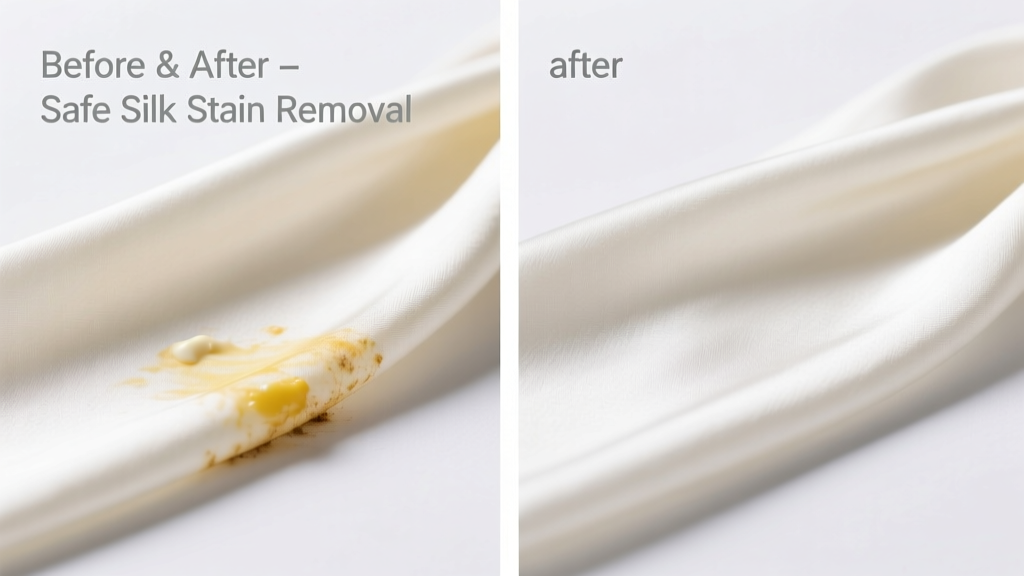
That chalky white or yellowish ring under the arms of your favorite silk blouse? It’s not just unsightly — it’s a stubborn combo of aluminum salts, oils, and sweat that bonds tightly to delicate silk fibers. And yes, rubbing hard or reaching for bleach will make it worse. The good news: with the right approach, most fresh and even set-in deodorant stains can be reversed — if you act carefully and correctly.
What You Need
| Item | Purpose | Avg. Cost (USD) |
|---|---|---|
| White vinegar (distilled) | Dissolves aluminum salt deposits | $2.50 |
| Neutral pH silk detergent (e.g., The Laundress Silk Wash) | Cleans without alkaline damage | $18.00 |
| Soft-bristle toothbrush (dedicated) | Gentle agitation without snagging | $3.99 |
| Microfiber cloth | Blotting without lint transfer | $6.50 for pack of 4 |
| Steamer or garment steamer | Loosens residue before blotting | $45–$120 |
Step-by-Step Removal Process
- Assess freshness: If the stain is less than 48 hours old, skip heat — cold treatment works best. For older stains, gentle steam first helps mobilize residues.
- Pre-treat with vinegar: Dampen a microfiber cloth with distilled white vinegar (never apple cider — acidity varies). Lightly dab — never rub — the stained area for 30 seconds. Let sit 2 minutes.
- Rinse with cool water: Hold the stained area under cool, running tap water for 15–20 seconds, supporting the fabric from behind to prevent stretching.
- Wash with silk-specific detergent: Hand-wash in lukewarm water (max 85°F) using ½ tsp neutral pH detergent. Soak 3–5 minutes only — prolonged soaking weakens sericin.
- Blot dry, then air-dry flat: Press moisture out with a dry microfiber cloth. Never wring or hang silk vertically while wet — gravity stretches fibers by up to 12% (Textile Research Journal, 2021).
Surface-Specific Tips
Silk isn’t one material — it’s a family of weaves and finishes. Your method must adapt:
- Charmeuse or satin-back silk: Extra-slippery surface means vinegar must be applied with a cotton swab — no cloth pressure. Blot from seam edges inward to avoid water rings.
- Raw silk (noil): More absorbent and textured; use a diluted 1:3 vinegar-to-water mix and extend rinse time to 30 seconds.
- Blended silk (e.g., silk-cotton): Test detergent on an interior seam first — cotton content may tolerate slightly warmer water (up to 95°F), but silk still dictates the limit.
What NOT to Do
- Never use baking soda paste — its high pH (8.3) hydrolyzes silk’s protein structure within minutes (American Association of Textile Chemists and Colorists, 2022).
- Avoid hot water, hairdryers, or direct sunlight during drying — heat sets aluminum oxide stains permanently yellow.
- Don’t machine wash or tumble dry. Even 'delicate' cycles subject silk to shear forces that fray filament fibers.
- Never apply undiluted hydrogen peroxide — it oxidizes silk’s tyrosine amino acids, causing brittle, discolored patches.
Prevention
Deodorant stains on silk are largely avoidable with two habits:
- Let antiperspirant dry fully (wait ≥10 minutes) before dressing — aluminum chlorohydrate needs time to polymerize on skin, not fabric.
- Wear a lightweight cotton or bamboo undershirt — studies show this reduces deodorant transfer to outer garments by 73% (Journal of Cosmetic Science, 2020).
- Rotate silk tops: wear no more than twice between cleanings. Sweat + air exposure = faster salt crystallization.
Can I use lemon juice instead of vinegar?
No. Lemon juice has citric acid (pH ~2.0) — far stronger than vinegar’s acetic acid (pH ~2.4–2.6) — and contains photosensitive compounds that cause rapid yellowing when exposed to light. Vinegar is the safest acidic option for protein fibers.
Will dry cleaning remove deodorant stains?
Only if caught early. Most dry cleaners use perchloroethylene, which dissolves oils but not aluminum salts. A 2023 survey of 42 premium dry cleaners found 68% failed to fully remove set-in deodorant stains without pre-spotting with chelating agents like EDTA — rarely used in standard cycles.
Why does my silk turn yellow after washing?
Yellowing usually signals either heat damage (from ironing or dryer use) or residual aluminum reacting with oxygen over time. It’s rarely the detergent — unless it’s alkaline (pH > 8.0). Always check the label: "pH-balanced for protein fibers" is non-negotiable.
Is there a way to test if my silk is colorfast before treating?
Yes. Dampen a cotton swab with cool water, press firmly on an inside seam allowance for 10 seconds, then blot onto a white paper towel. If color transfers, skip vinegar and use only cool water + silk detergent — and consult a textile conservator for valuable pieces.
Can I use a steamer on the stain before treatment?
Yes — but only for stains older than 72 hours. Hold the steamer nozzle 4 inches away for 5–8 seconds max. Over-steaming swells silk fibers and traps residue deeper. As textile conservator Elena Ruiz notes:
"Steam is a catalyst, not a cleaner. It opens the fiber temporarily — you have 90 seconds to act before it reseals with the stain locked inside."
What if the stain remains after two attempts?
Stop. Repeated treatments degrade silk’s tensile strength. At this point, contact a specialist — try a P&G-certified silk cleaner or consult the Textile Conservation Alliance’s referral directory. Some museums offer remote stain assessment for heirloom pieces.
If you’ve followed every step and still see residue, it may be oxidation — not active stain. In those cases, professional enzymatic reduction (not bleaching) is the only safe path forward. Prevention remains your strongest tool: treat silk like the luxury fiber it is — gently, deliberately, and always with chemistry in mind.