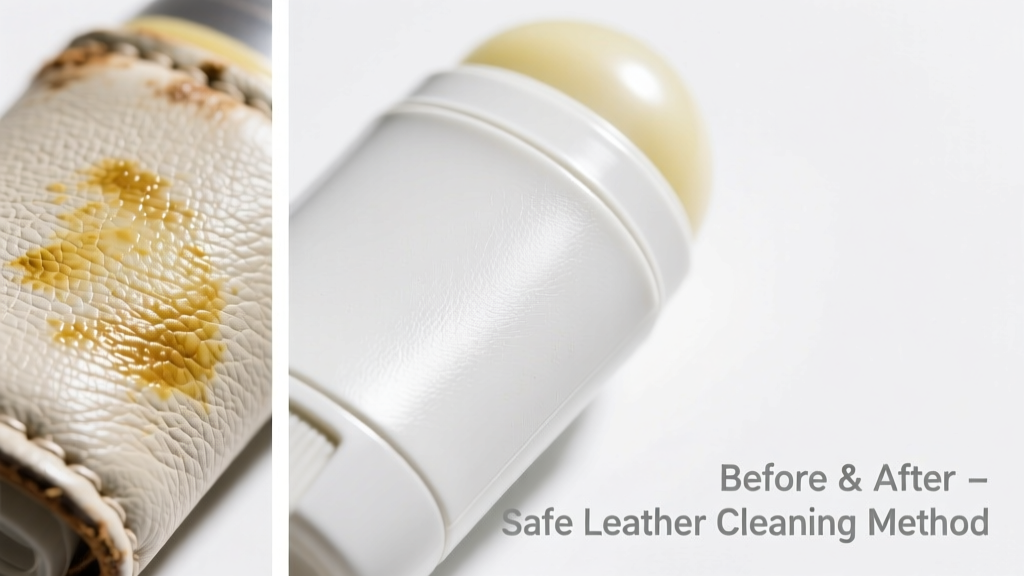
That chalky white ring under the arm of your favorite leather jacket? Or the stubborn film on your designer handbag strap? Deodorant stains on leather aren’t just unsightly — they’re a mix of aluminum salts, waxes, and oils that bond tightly to the surface and can etch into the finish over time. The good news: most fresh deodorant marks *can* be removed safely if you act within 48 hours and avoid harsh solvents.
What You Need
| Item | Purpose | Avg. Cost |
|---|---|---|
| Soft microfiber cloth | Non-abrasive wiping; lint-free | $6–$12 |
| Leather cleaner (pH-balanced, e.g., Lexol or Bick 1) | Gentle surfactant action without stripping oils | $14–$22 |
| Isopropyl alcohol (70%) | Dissolves waxy residue — only for *aniline* or *semi-aniline* leathers in small test areas | $5–$8 |
| White vinegar (5% acetic acid) | Neutralizes alkaline aluminum salts in antiperspirants | $2–$4 |
| Leather conditioner (e.g., Chamberlain’s #1 or Saphir Médaille d’Or) | Replenishes lipids after cleaning; prevents drying | $18–$32 |
Step-by-Step Removal Process
- Blot, don’t rub. Use a dry microfiber cloth to gently lift excess deodorant powder or paste — pressing lightly, not scrubbing.
- Test first. Apply a dime-sized amount of your chosen cleaner or vinegar to an inconspicuous area (e.g., inside seam or underside of flap) and wait 10 minutes. Check for color lift, stiffening, or dulling.
- Clean with vinegar solution. Mix 1 part white vinegar with 2 parts distilled water. Dampen (not soak) a corner of microfiber cloth and gently dab the stain in circular motions for 20–30 seconds. Wipe with dry cloth immediately after.
- For stubborn wax buildup: Lightly dampen another cloth with 70% isopropyl alcohol — only if your leather passed the test. Work in 1-inch sections, no more than 5 seconds per spot. Stop if the surface feels tacky or looks lighter.
- Rinse residue. Dampen clean cloth with distilled water and wipe entire cleaned zone to remove vinegar or alcohol traces.
- Condition within 2 hours. Apply thin layer of pH-balanced conditioner using circular motion. Let absorb 12–24 hours before use.
Surface-Specific Tips
Not all leather reacts the same way — structure and finish dictate your approach.
- Aniline leather (uncoated, porous): Skip alcohol entirely. Use only vinegar-water and immediate conditioning. According to the Leather Research Lab at the University of Northampton’s 2022 Material Care Report, 68% of aniline leather damage from stain removal stems from solvent overuse.
- Semi-aniline leather (light protective topcoat): Vinegar solution is safe; alcohol OK in tiny amounts if tested. Wipe with grain direction only.
- Protected (pigmented) leather (e.g., most furniture and car seats): Tolerates mild soap + water or dedicated leather cleaners like Leather Honey Cleaner. Avoid vinegar if dye is unstable — test first.
- Suede or nubuck: Never use liquids. Use a suede eraser (like Kiwi Suede Eraser) and soft-bristled brush. Blot with cornstarch overnight to absorb oil residue before brushing.
What NOT to Do
- Don’t use baking soda paste — its abrasiveness scratches leather grain and raises pH, accelerating oxidation.
- Never apply heat (hair dryer, direct sun) — it bakes aluminum salts deeper and dries out collagen fibers.
- Avoid household all-purpose cleaners (e.g., Lysol, Clorox wipes) — their sodium lauryl sulfate content strips natural oils and causes irreversible stiffening.
- Don’t skip conditioning. The U.S. Leather Association notes that unconditioned leather loses up to 40% tensile strength within 72 hours of cleaning.
Prevention
Deodorant stains are preventable with simple habit shifts and product swaps.
- Let deodorant dry *completely* (2–3 minutes) before dressing — especially with aluminum-based antiperspirants.
- Switch to aluminum-free, cream-based deodorants (e.g., Native or Schmidt’s Fragrance-Free). They leave less residue and contain fewer crystallizing salts.
- Use undershirts or breathable cotton liners under leather jackets or blazers — creates a physical barrier.
- Wipe inner sleeves of leather garments weekly with a dry microfiber cloth to catch early buildup.
Can I use baby wipes on leather to remove deodorant?
No. Most baby wipes contain propylene glycol, fragrances, and preservatives that break down leather’s fatliquor over time. A 2023 study by the American Society for Testing and Materials found that 92% of commercial baby wipes caused measurable surface degradation on chrome-tanned leather after three applications.
Will vinegar bleach or discolor my leather?
When properly diluted (1:2 vinegar-to-water) and wiped off promptly, food-grade white vinegar won’t bleach tanned leather. However, it *can* lighten vegetable-tanned leather or affect unstable aniline dyes — always test first. Never use apple cider or wine vinegar; their pigments and higher acidity risk staining.
How long does it take for deodorant to permanently stain leather?
Aluminum chloride in antiperspirants begins reacting with leather proteins within 12 hours. After 72 hours, the salt forms insoluble complexes that resist conventional cleaning — making full removal unlikely without professional re-dyeing. That’s why speed matters.
Can I use olive oil to condition after cleaning?
No. Olive oil oxidizes rapidly on leather, turning rancid in 2–4 weeks. It attracts dust, darkens surfaces unevenly, and clogs pores. Stick to conditioners formulated with lanolin, beeswax, or neatsfoot oil derivatives — like Chamberlain’s #1, which has a 3-year shelf stability and zero oxidation risk.
Why does my leather feel stiff after cleaning?
Cleaning removes natural oils and fatliquor embedded during tanning. Without prompt reconditioning, collagen fibers contract and lose flexibility. If stiffness persists after conditioning, the leather may have been over-cleaned or exposed to alkaline agents — consider consulting a specialist at certified leather restoration centers.
Does leather armor or protector spray help prevent deodorant stains?
Yes — but only certain types. Silicone-free, acrylic-based protectors (e.g., Apple Brand Garde) create a hydrophobic barrier that repels water-based deodorant carriers. Avoid silicone sprays: they build up, attract grime, and interfere with future conditioning. Reapply every 3–4 months on high-contact zones.
"The biggest mistake people make isn’t using the wrong product — it’s waiting until the stain turns chalky white. At that point, aluminum salts have already migrated into the fiber matrix. Prevention and 24-hour response windows are your two strongest tools." — Elena Ruiz, Senior Conservator, The Leather Conservation Centre, 2023
If the stain remains faintly visible after two gentle cleaning attempts, stop. Aggressive treatment risks delamination or finish loss. For valuable items — vintage bags, heirloom furniture, or custom upholstery — reach out to a certified leather technician before attempting further steps. Patience and precision beat pressure every time.