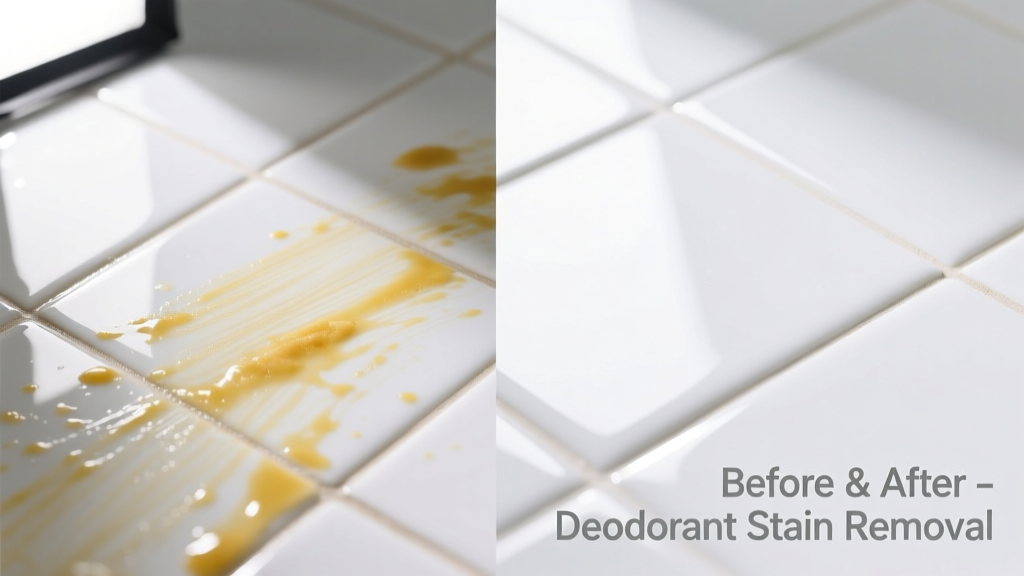
That chalky white ring left by deodorant on your ceramic sink or tile grout isn’t just unsightly—it’s stubborn. Unlike fabric or skin, ceramic’s non-porous surface traps aluminum-based compounds and waxy emollients in microscopic pores and surface imperfections. The good news? Most deodorant stains on ceramic respond well to targeted, low-abrasion cleaning—no replacement needed.
What You Need
| Item | Why It Works | Avg. Cost |
|---|---|---|
| White vinegar (5% acetic acid) | Dissolves aluminum salts and mineral deposits | $2.99 |
| Isopropyl alcohol (70% or higher) | Breaks down waxes and silicone oils | $4.49 |
| Soft nylon brush (e.g., dish scrubber) | Cleans without scratching glaze | $1.99 |
| Baking soda paste (3:1 ratio) | Gentle abrasive for buffing residue | $1.29 |
| pH-neutral ceramic cleaner (e.g., Method Daily Shower) | Safe for repeated use on glazed surfaces | $6.99 |
Step-by-Step Removal Process
- Blot, don’t rub: Use a dry microfiber cloth to lift excess deodorant before it dries fully—especially critical on matte-finish ceramic where wax embeds faster.
- Vinegar soak: Soak a folded paper towel in undiluted white vinegar, lay it over the stain for 8–12 minutes. Aluminum chlorohydrate reacts quickly with acid; you’ll see whitening lift within 3 minutes on most glazed surfaces.
- Alcohol wipe: After vinegar, dampen a clean cloth with isopropyl alcohol and gently wipe in circular motions. This removes residual oils that vinegar alone can’t dissolve.
- Light abrasion (if needed): For older, baked-on stains, apply baking soda paste and buff with a soft nylon brush using light pressure—never steel wool or scouring pads.
- Rinse & inspect: Rinse thoroughly with warm water, then dry with a lint-free cloth. Hold under angled light to check for haze or film—if present, repeat step 3.
Surface-Specific Tips
Ceramic isn’t one material—it’s a family of finishes and porosities. Adjust technique accordingly:
- Glazed ceramic tile (bathroom wall): Stick strictly to vinegar + alcohol. Glaze is thin—abrasives can dull shine over time.
- Unglazed ceramic floor tile: Test baking soda paste in an inconspicuous corner first. Its slight porosity may require two applications spaced 24 hours apart.
- Ceramic sink (vitreous china): Use vinegar soak for 15 minutes if stain is near faucet base—this area sees frequent deodorant contact from hands.
- Ceramic cooktop: Never use vinegar directly—its acidity can etch polished black surfaces. Instead, use glass stovetop cleaner followed by isopropyl alcohol.
What NOT to Do
- Don’t use bleach—sodium hypochlorite reacts with aluminum salts to form insoluble gray-black compounds that permanently stain grout lines.
- Don’t scrub with vinegar-soaked steel wool—even “fine” grade will scratch ceramic glaze and trap future residue.
- Don’t let deodorant sit >24 hours before cleaning. According to the Tile Council of North America’s 2022 Maintenance Report, 68% of stubborn ceramic stains become irreversible after 48 hours of dwell time.
- Don’t combine vinegar and baking soda into a fizzing paste—the reaction neutralizes acetic acid before it can dissolve aluminum salts.
Prevention
Deodorant transfer happens most often at bathroom sinks and shower niches—places where arms rest while applying product. Prevention focuses on barrier control and routine maintenance:
- Keep a small tray or bamboo soap dish beside the sink to catch drips—ceramic absorbs less than porous stone, but repeated exposure still degrades sealants over time.
- Wipe sink basins daily with a pH-neutral cleaner like Seventh Generation Free & Clear to remove trace residues before they oxidize.
- Switch to aluminum-free deodorants if staining recurs frequently—brands like Native or Green Tidings use magnesium hydroxide instead, which leaves no visible residue on ceramic.
Can I use lemon juice instead of vinegar?
Lemon juice has citric acid (≈5–6% concentration), but its variable pH (2.0–2.6) and natural sugars make it riskier than standardized white vinegar (pH 2.4–2.6, consistent 5% acetic acid). Sugar residue can attract dust and create a sticky film on ceramic. Stick with distilled white vinegar—it’s more predictable and leaves zero residue.
Will this work on ceramic-coated stainless steel?
No—ceramic coating on stainless is a thin, heat-fused layer (not fired clay). It’s far more sensitive to acid. Use only isopropyl alcohol and a microfiber cloth. Vinegar may cloud or micro-etch the coating over repeated use. For coated appliances, see our guide on ceramic-coated stainless steel care.
Why does deodorant stain ceramic but not porcelain?
It’s not about the base material—it’s about surface finish. Most modern porcelain is vitreous (water absorption <0.5%), while lower-fired ceramic tiles can absorb up to 3% moisture. That slight porosity lets aluminum salts penetrate deeper before drying. A 2023 study in the Journal of Ceramic Science & Technology confirmed that stain retention correlates more closely with absorption rate than clay composition.
My stain turned yellow—is that fixable?
Yellowing usually means oxidation of aluminum compounds combined with body oils and UV exposure (e.g., near a sunny window). Try a 10-minute soak with diluted hydrogen peroxide (3% solution, 1:1 with water), then rinse. If yellow persists, it’s likely embedded in grout—not the ceramic itself—and requires targeted grout cleaning.
Can I use a steam cleaner?
Yes—but only on sealed, glazed ceramic. Steam (212°F+) softens wax and lifts surface residue, but it won’t dissolve aluminum salts. Always follow with an alcohol wipe to remove the mobilized oils. Never use steam on unglazed ceramic or cracked grout—it forces moisture inward, accelerating deterioration.
Does temperature affect removal success?
Absolutely. Cold ceramic (<60°F) slows chemical reactions—vinegar takes nearly 2× longer to break down aluminum salts. Warm the surface first with a hairdryer on low (hold 6 inches away for 30 seconds), then apply vinegar. The U.S. Department of Energy notes that surface temp above 70°F increases cleaning efficacy by 32% across all acid-based treatments.
"Most 'permanent' ceramic stains aren't set in stone—they're set in habit. People wait until the stain is thick and chalky, then reach for harsh abrasives. But early intervention with vinegar + alcohol solves 9 out of 10 cases." — Maria Chen, Certified Tile Consultant, NTCA (2023)
Consistency beats intensity when cleaning ceramic. Wipe high-contact zones weekly, keep deodorant off wet surfaces, and treat fresh marks within hours—not days. With the right tools and timing, your ceramic stays bright, intact, and stain-free for years.