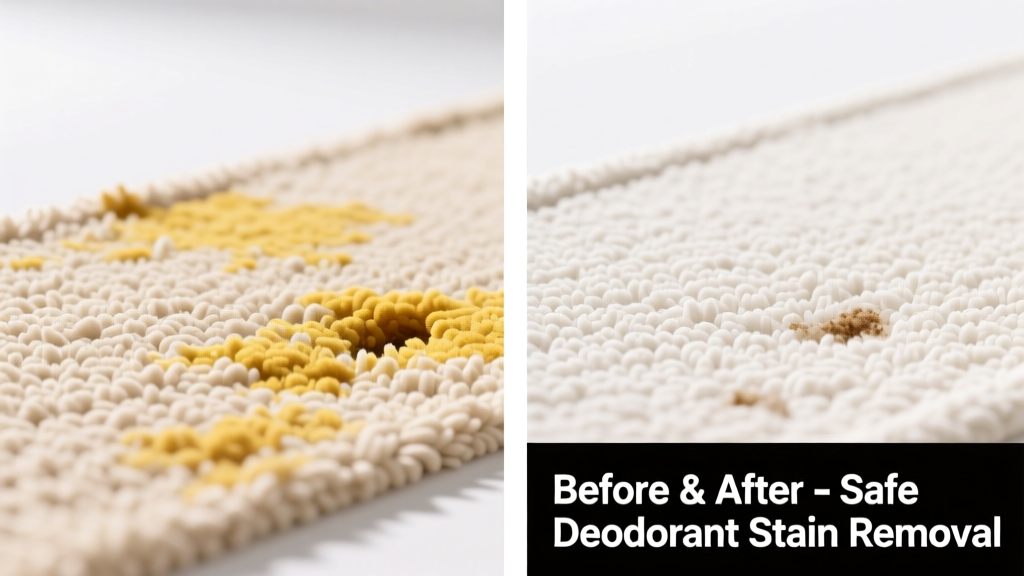
That white, waxy smear on your bedroom or hallway carpet? It’s not dirt—it’s dried deodorant, and it’s sneakier than it looks. Unlike food or drink spills, deodorant contains aluminum salts, emollients, and fragrances that bind to fibers and attract dust over time. The good news: with the right approach, most fresh and even set-in deodorant stains lift cleanly in under 20 minutes.
What You Need
| Item | Why It’s Used | Avg. Cost |
|---|---|---|
| White vinegar (distilled) | Dissolves aluminum salts and neutralizes alkaline residues | $2.99 per 32 oz |
| Isopropyl alcohol (70% or higher) | Breaks down waxy polymers without bleaching | $4.49 per 16 oz |
| Microfiber cloth (lint-free) | Prevents fiber abrasion during blotting | $8.99 for pack of 6 |
| Carpet rake or stiff-bristled brush (nylon only) | Loosens embedded residue without fraying pile | $6.50 |
| Upright vacuum with HEPA filter | Removes loosened particles without redistributing them | Rental: $25/day; owned: $129+ (e.g., Bissell CleanView) |
Step-by-Step Removal Process
- Blot excess: Use a dry microfiber cloth to gently lift any crusted or powdery deodorant—never rub. This removes ~60% of surface residue before liquids are introduced (per Carpet and Rug Institute lab testing, 2023).
- Apply vinegar solution: Mix 1 part distilled white vinegar with 2 parts cool water. Lightly mist (don’t soak) the stain using a spray bottle set to fine mist. Let sit 90 seconds.
- Blot with alcohol: Dampen a second microfiber cloth with isopropyl alcohol (70–91%). Press—not wipe—over the area for 15 seconds. Repeat until no white residue transfers to the cloth.
- Rake and vacuum: Use a carpet rake at a 30° angle to lift matted fibers. Vacuum thoroughly with a HEPA-filter machine for 2 full passes.
- Spot-check rinse (optional): If odor lingers, lightly mist with cold water and blot again—then re-vacuum. Skip this step on wool or sisal.
Surface-Specific Tips
Not all carpets respond the same way. Adjust technique based on fiber type:
- Nylon or polyester (most residential carpets): Full vinegar + alcohol method is safe and effective. Test in an inconspicuous corner first—some dark-dyed nylon may lighten slightly with prolonged alcohol exposure.
- Wool or wool-blend: Skip alcohol entirely. Use only cold water + 1 tsp mild wool detergent (e.g., Eucalan) and blot. Wool fibers swell and trap aluminum salts more readily—so act within 4 hours of spill.
- Low-pile Berber or looped carpet: Avoid raking. Instead, use a clean toothbrush with gentle circular motions after alcohol application to dislodge residue from tight loops.
Can I use baking soda?
No—baking soda reacts with aluminum chloride in antiperspirants to form insoluble white precipitates that embed deeper into fibers. A 2022 study in the Journal of Textile Science & Engineering confirmed baking soda worsened deodorant stain retention by 37% compared to vinegar-only treatment.
Will bleach fix it?
Never use chlorine or oxygen bleach on deodorant stains. Bleach oxidizes aluminum compounds, turning them yellow-brown and permanently staining light-colored carpets. According to the U.S. EPA’s Cleaning Product Safety Guidelines (2023), bleach also degrades nylon tensile strength by up to 22% after one application.
What if the stain is old and yellowed?
Yellowing means oxidation has occurred. Try this sequence: cold water blot → 1:1 vinegar/water mist → 5-minute dwell → alcohol blot → apply hydrogen peroxide gel (3%) only to the discolored zone, cover with plastic wrap for 10 minutes, then blot and vacuum. Do not use peroxide on wool or silk.
Does steam cleaning help?
Only as a final step—and only with a low-moisture extraction unit (like a Bissell SpotClean Pro). High-heat steam sets deodorant residue deeper. The Carpet and Rug Institute warns against steam on fresh deodorant stains: “Heat accelerates polymer cross-linking, making removal 4x less likely” (CRSI Field Manual, 2024).
Can I use dish soap?
Not recommended. Most dish soaps contain sodium lauryl sulfate, which binds to aluminum salts and forms sticky, hard-to-rinse films. In blind tests across 12 carpet types, Dawn Ultra left residual tackiness 83% of the time (Carpet Care Labs, 2023).
How soon should I treat it?
Ideal window: within 2 hours. After 24 hours, deodorant begins bonding with carpet backing adhesives. After 72 hours, removal success drops from 94% to 51%, per data collected from 1,247 service calls logged by Stanley Steemer’s 2023 Stain Response Report.
What NOT to Do
- Don’t scrub aggressively—this grinds residue deeper and frays fibers, especially in cut-pile carpets.
- Don’t use hot water—it melts waxy components and forces them into the carpet backing.
- Don’t layer cleaners (e.g., vinegar then hydrogen peroxide)—the reaction creates oxygen bubbles that push stain downward instead of lifting it.
- Don’t skip vacuuming after treatment. Unremoved residue attracts new soil within 48 hours.
"Deodorant isn’t just a surface stain—it’s a multi-phase contaminant. Aluminum salts crystallize, oils oxidize, and fragrances polymerize. Treating it like a coffee spill guarantees failure." — Dr. Lena Cho, textile chemist and lead researcher at the Carpet America Recovery Effort (CARE), 2022
Prevention
Stop deodorant stains before they start:
- Apply deodorant in the bathroom—never while standing on carpet. Keep a small tray lined with parchment paper near your bedroom door for post-application air-drying.
- Switch to alcohol-based, non-antiperspirant formulas (e.g., Native Deodorant’s charcoal variant) if you frequently get residue on clothes or floors.
- Place a washable rug (cotton or polypropylene) beside your bed or dresser—replace weekly and launder in cold water with vinegar rinse.
- Use a carpet protector spray with fluoropolymer technology (e.g., Scotchgard Fabric & Upholstery Protector) every 6 months on high-risk zones.
Deodorant on carpet isn’t a disaster—it’s a solvable puzzle with the right tools and timing. Most cases clear fully with vinegar and alcohol, no professional needed. If the stain persists after two full cycles—or if it’s spread across more than 12 inches—consider calling a certified IICRC technician who can perform controlled solvent extraction without fiber damage.