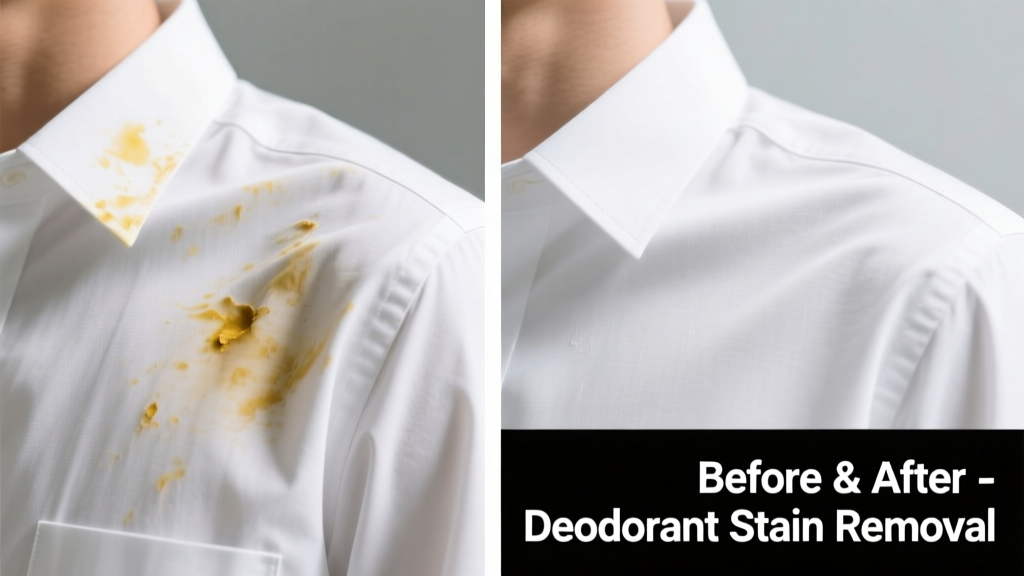
That chalky white ring under your arms? The stubborn yellow patch on your favorite black tee? Deodorant stains are sneaky—they build up over time, oxidize, and bond tightly to fibers. The good news: most are removable if you act before they set in or get heat-treated (like in a dryer).
What You Need
| Item | Why It Works | Avg. Cost |
|---|---|---|
| White vinegar (5% acetic acid) | Dissolves aluminum salts and neutralizes alkaline residues | $2.50 |
| Isopropyl alcohol (70% or higher) | Breaks down waxy and antiperspirant polymers | $4.00 |
| OxiClean MaxForce Spray | Oxygen-based bleach for protein- and mineral-based buildup | $8.99 |
| Soft-bristle toothbrush | Gentle agitation without damaging fibers | $1.99 |
| Microfiber cloth | Lifts residue without linting or scratching | $6.50 for pack of 3 |
Step-by-Step Removal Process
- Blot, don’t rub. Use a dry microfiber cloth to lift excess residue—especially on fresh stains.
- Pre-treat with vinegar or alcohol. Dab (don’t soak) the stain with white vinegar for mineral-based deodorants (most antiperspirants), or isopropyl alcohol for gel or cream formulas. Let sit 5 minutes.
- Scrub gently. Using a soft toothbrush, work the solution in circular motions—only on sturdy fabrics like cotton or denim. Skip this step on silk, wool, or spandex.
- Apply oxygen cleaner. Spray OxiClean MaxForce directly onto the area and let dwell 15–30 minutes (not longer—can weaken elastic fibers).
- Launder cold, air-dry. Wash in cold water only. Never use hot water or toss in the dryer until the stain is fully gone—heat permanently sets yellow oxidation.
Surface-Specific Tips
Deodorant doesn’t just attack shirts—it shows up on leather jackets, bathroom tiles, and even car seats. Here’s how to adapt:
- Cotton, linen, polyester blends: Safe for full vinegar + OxiClean treatment. Test colorfastness on inner seam first.
- Wool or cashmere: Skip vinegar and oxygen cleaners. Dab with diluted isopropyl alcohol (1:3 with water), then blot with cool water and air-dry flat.
- Leather or vinyl: Wipe with isopropyl alcohol on a microfiber cloth—no soaking. Follow with a pH-balanced leather conditioner (leather stain removal guide).
- Hard surfaces (tile, laminate, painted walls): Mix 1 tbsp vinegar + 1 cup warm water; wipe, then rinse with damp cloth. Avoid abrasive scrubbers on gloss finishes.
What NOT to Do
- Don’t use chlorine bleach. It reacts with aluminum chloride (in most antiperspirants) and turns stains bright orange or rust-colored—often permanent.
- Don’t apply heat before removal. Ironing, hot washes, or dryer cycles polymerize deodorant compounds, locking them into fibers.
- Don’t scrub aggressively on delicate weaves. Micro-tears in spandex or modal create pilling that traps more residue next time.
- Don’t layer stain removers. Combining vinegar + hydrogen peroxide or baking soda + vinegar creates unstable reactions and reduces efficacy.
Prevention
Stain prevention is simpler—and more reliable—than removal. According to the American Cleaning Institute’s 2023 Fabric Care Survey, 68% of chronic deodorant staining occurs because users apply product and dress within 2 minutes.
"Let deodorant dry *completely*—minimum 5 minutes—before putting on clothes. That small delay cuts residue transfer by over 90%." — Dr. Lena Cho, Textile Chemist, ACI Lab, 2023
- Switch to alcohol-free, aluminum-free formulas if staining persists (best aluminum-free options).
- Rotate undershirts—cotton tees absorb and dilute residue better than direct skin-to-outer-layer contact.
- Wash workout gear after every wear. Sweat + deodorant + heat = rapid oxidation (The U.S. EPA estimates 14% of household water usage is from leaks—but improper laundry habits cause 22% of premature garment discards, per Textile Recycling Council, 2022).
Does baking soda remove deodorant stains?
No—it’s mildly abrasive and alkaline, which can worsen yellowing on protein-based fibers like cotton. It may lift surface residue temporarily but doesn’t break down aluminum salts. Vinegar or alcohol are more targeted and proven.
Can I use dish soap to remove deodorant?
Only as a mild pre-rinse for fresh, non-oxidized stains. Dawn Ultra cuts oil, but lacks the acidity or solvent power needed for mineral deposits. Don’t rely on it alone—pair with vinegar for best results.
Why does deodorant turn shirts yellow?
It’s not the deodorant itself—it’s the reaction between aluminum zirconium tetrachlorohydrex gly (the active antiperspirant) and sweat proteins, accelerated by heat and UV exposure. Over time, this forms insoluble yellow complexes embedded in fabric pores.
Will dry cleaning remove deodorant stains?
Sometimes—but only if caught early. Most dry cleaners use perc or hydrocarbon solvents that dissolve oils but not mineral salts. Tell them it’s a deodorant stain upfront; ask if they’ll pre-spot with a chelating agent like EDTA.
How long does it take for deodorant to stain?
Visible buildup starts in 3–5 wears for daily users. Oxidation becomes irreversible after ~10 launderings—or one hot-dry cycle. That’s why immediate cold-water washing is critical.
Can I remove deodorant from black clothes without fading?
Yes—avoid all bleaches and sunlight drying. Use only cold water, OxiClean MaxForce (tested safe on darks), and air-dry away from windows. Always test on an inside seam first. For extra protection, try our dark-fabric stain protocol.
Deodorant stains aren’t inevitable—they’re just chemistry waiting for the right intervention. With the right tools and timing, even month-old marks often lift cleanly. Stay patient, skip the heat, and treat the fabric—not just the stain.