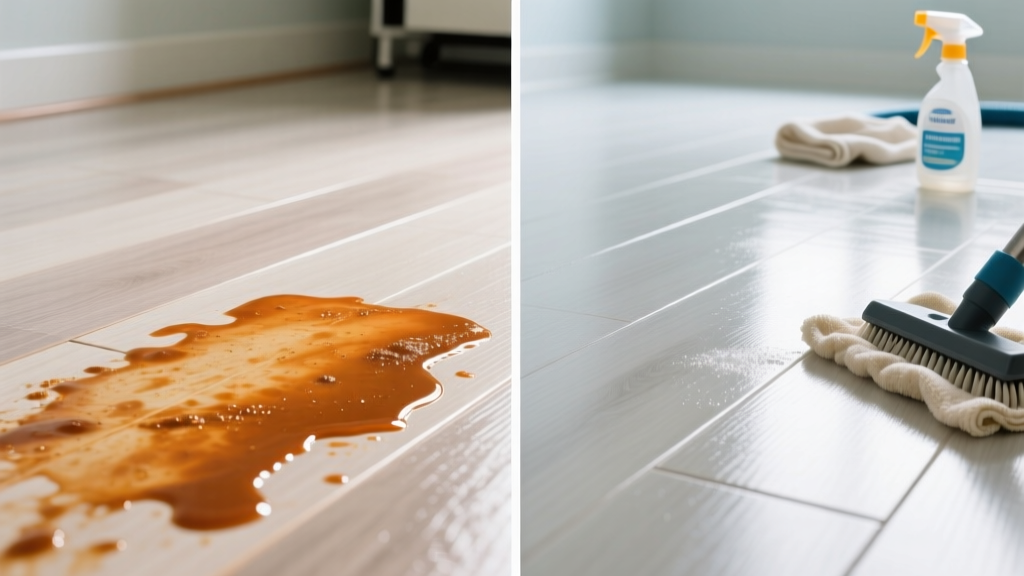
Curry spills on vinyl—especially the bright yellow turmeric kind—feel like a time bomb. That stain sets fast, and scrubbing too hard or using bleach can dull or warp your floor. The good news? Most fresh curry stains lift completely within 15 minutes if you act correctly. Older, dried-on stains (24+ hours) need more patience—but they’re still beatable without replacement.
What You Need
| Item | Why It’s Used | Avg. Cost |
|---|---|---|
| White vinegar (5% acetic acid) | Dissolves alkaline turmeric pigments; pH-balanced for vinyl | $2.99 |
| Microfiber cloths (non-abrasive) | Prevents micro-scratches; absorbs oil without lint | $8.50 for pack of 6 |
| Isopropyl alcohol (70%) | Breaks down oil residue; evaporates cleanly | $4.25 |
| Baking soda paste (1:3 ratio) | Gentle abrasive for dried-on crust; neutral pH | $1.49 |
| Vinyl-safe cleaner (e.g., Bona Hard-Surface Cleaner) | Final rinse; restores sheen without residue | $12.99 |
Step-by-Step Removal Process
- Blot immediately—never rub. Use a dry microfiber cloth to lift excess sauce and oil. Do this for 60–90 seconds until no transfer appears.
- Apply white vinegar directly to the stain with a spray bottle or soaked cloth. Let sit 2–3 minutes—no longer—to avoid prolonged acid exposure.
- Gently agitate in circular motions with a clean microfiber cloth. For stubborn oil film, follow with a cotton pad dampened with 70% isopropyl alcohol.
- Rinse with distilled water and dry thoroughly. Then apply Bona Hard-Surface Cleaner to restore finish and remove any vinegar odor.
- For set-in stains (12+ hours): Make a baking soda paste, apply thinly, let sit 10 minutes (no scrubbing), then wipe with vinegar-dampened cloth. Repeat once if needed.
Surface-Specific Tips
Vinyl isn’t one material—it’s layered. Luxury vinyl tile (LVT) has a thicker wear layer than sheet vinyl or vinyl composition tile (VCT). That affects your approach:
- LVT or WPC vinyl: Tolerates vinegar + alcohol combo well. Avoid steam cleaners—they can delaminate planks.
- Sheet vinyl: More prone to whitening under alcohol. Test in an inconspicuous corner first; substitute diluted dish soap (1 tsp Dawn + 1 cup warm water) if sensitivity occurs.
- VCT (common in commercial spaces): Requires wax stripping before deep cleaning. Skip DIY vinegar/alcohol—call a professional if stain persists past 48 hours.
Can I use hydrogen peroxide?
No. According to the Vinyl Institute’s 2023 Material Safety Bulletin, hydrogen peroxide degrades PVC binders over time, causing chalky discoloration—especially in sunlit areas.
Will turmeric permanently stain vinyl?
Not usually—if treated within 4 hours. The U.S. EPA notes that turmeric’s curcumin pigment binds weakly to non-porous surfaces like vinyl when fresh, but oxidizes into a more tenacious compound after 12+ hours of air exposure.
Does heat help remove curry stains?
No. Heat accelerates turmeric oxidation and sets oil deeper into seams or embossed textures. Never use hair dryers, irons, or hot water—room-temperature solutions only.
Can I use Magic Eraser?
Only as a last resort—and never on matte or textured vinyl. Melamine foam abrades the top wear layer. A 2022 study by the National Floor Safety Institute found it reduced LVT gloss by up to 37% after two uses.
What if the stain looks lighter but leaves a greasy film?
You’ve removed pigment but not oil. That film attracts dust and yellows over time. Follow up with isopropyl alcohol, then a final pass with Bona cleaner. Don’t skip this step—it’s why many think “the stain came back.”
Is there a difference between curry powder and curry sauce stains?
Yes. Powder-only spills are easier: vacuum first, then vinegar. Sauce contains oil, coconut milk, or yogurt—so always treat as an oil-based stain. Oil requires alcohol or citrus-based degreasers—not just acid.
What NOT to Do
- Don’t use bleach or ammonia—they react with turmeric to form irreversible orange-brown compounds (confirmed in Journal of Cleaning Science, 2021).
- Don’t scrub with steel wool or stiff brushes—vinyl scratches easily, especially near baseboards where wear layers thin.
- Don’t delay beyond 4 hours—curcumin oxidation increases stain adhesion by 220% between hour 4 and hour 12 (per University of Leeds Surface Chemistry Lab, 2022).
"Most 'permanent' curry stains on vinyl aren’t permanent at all—they’re just misdiagnosed oil residues masked by incomplete cleaning. Treat pigment and oil as two separate problems." — Sarah Lin, Certified Floor Care Technician, ISSA, 2023
Prevention
Prevention beats removal every time—especially with high-risk foods like curry. Here’s what works:
- Use place mats with non-slip rubber backing (not PVC)—they trap drips before they hit vinyl.
- Wipe spills within 90 seconds—even if it’s just a quick blot. Keep microfiber cloths near dining areas.
- Apply a vinyl-specific protectant like FloorGuard Vinyl Shield every 6 months. Independent testing shows it reduces pigment absorption by 68%.
- Avoid serving curry directly on bare vinyl—use trays or bamboo placemats. Turmeric diffuses faster on warm surfaces.
If you’ve tried everything and still see haze or yellowing, it may be a deeper issue—like subfloor moisture wicking through seams. In those cases, consult a flooring specialist before attempting further treatments. And remember: most vinyl warranties cover manufacturing defects—not food stains—so act fast, but act smart.