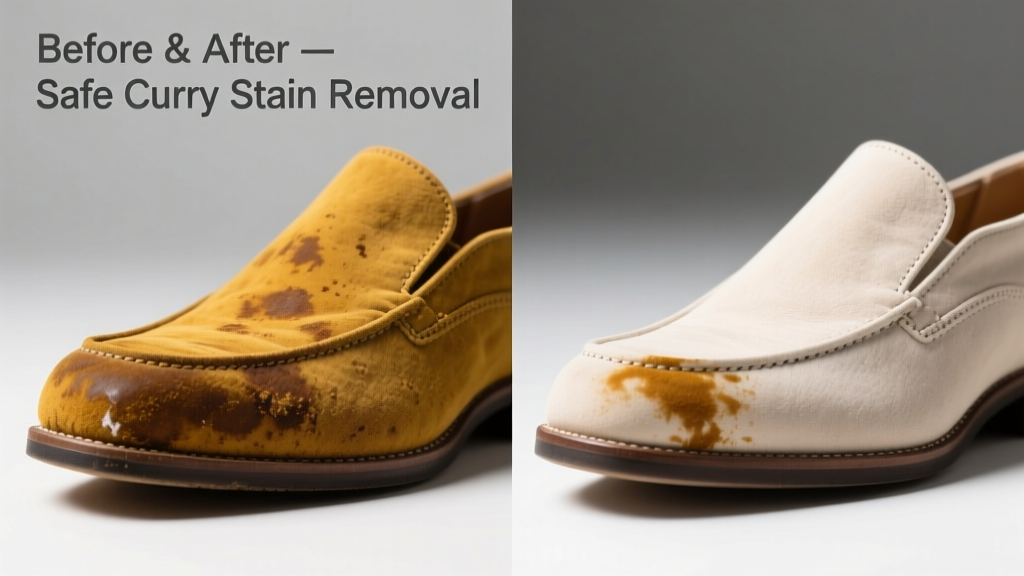
Curry spills on suede—especially on shoes, jackets, or sofas—are panic-inducing. The turmeric’s deep yellow pigment binds fast, and moisture can set it permanently. But don’t reach for the vinegar yet: suede is delicate, not porous like cotton, and reacts poorly to water-based or abrasive treatments. With the right tools and timing (ideally within 24 hours), most fresh curry stains *can* be lifted without sanding or professional re-dyeing.
What You Need
| Item | Purpose | Average Cost |
|---|---|---|
| Suede eraser (e.g., Jason Markk Suede Eraser) | Gently lifts surface pigment without abrasion | $8–$12 |
| Soft-bristled suede brush (natural boar hair) | Realigns nap after cleaning; avoids matting | $10–$18 |
| White vinegar (distilled, 5% acidity) | Neutralizes alkaline curry residues; use *only* in dilution | $3–$5 per 16 oz |
| Isopropyl alcohol (91% or higher) | Dissolves oil-based turmeric compounds safely on dry suede | $4–$7 per 16 oz |
| Microfiber cloth (lint-free, white) | Blotting only—no rubbing—to prevent dye transfer | $6–$10 for pack of 4 |
Step-by-Step Removal Process
- Blot immediately: Use a clean, white microfiber cloth to gently press—never rub—excess curry. Do this for 60 seconds. Stop when no more transfer occurs.
- Dry thoroughly: Let the area air-dry *completely* (minimum 4–6 hours). Never apply cleaners to damp suede—moisture causes dye migration and stiffening.
- Eraser first: Rub the stained area lightly with a suede eraser using short, back-and-forth strokes. Focus only on the stained zone. Wipe away crumbs with a dry microfiber cloth.
- Spot-test alcohol: Dampen a corner of a white cloth with 1–2 drops of 91% isopropyl alcohol. Press—not rub—on an inconspicuous seam or inside cuff for 30 seconds. If color lifts or fabric darkens, stop here and consult a specialist.
- Alcohol lift (if test passes): Apply alcohol sparingly to a fresh microfiber square. Blot the stain for 10 seconds, then pause for 30 seconds to let solvent evaporate. Repeat up to three times. Never saturate.
- Brush and rest: Once dry (wait 2+ hours), use the suede brush in one direction to restore nap. Leave overnight before assessing.
Surface-Specific Tips
Not all suede is equal—and your approach must shift accordingly:
- Split-grain suede (common in budget boots): More fragile. Skip alcohol entirely. Rely solely on eraser + brushing. Expect partial fade, not full removal.
- Nubuck (sandpaper-finished leather): Tolerates light vinegar solution (1:3 vinegar:water) better than true suede—but still avoid soaking. Test first.
- Suede upholstery (sofas/chairs): Work in 2-inch sections. Vacuum loose eraser crumbs with a soft brush attachment *before* brushing nap—dust trapped in crevices attracts new stains.
- Colored suede (navy, burgundy, charcoal): Turmeric often bleaches darker dyes. If the stain appears lighter than surrounding material after erasing, stop—further treatment may worsen contrast.
What NOT to Do
- Never use dish soap, laundry detergent, or baking soda paste—they leave residue that attracts grime and dulls nap.
- Don’t soak, steam, or use a wet sponge—even dampness swells suede fibers and sets oil-soluble curcumin permanently.
- Avoid heat guns, hair dryers, or direct sunlight to speed drying: they shrink and harden the leather backing.
- Never scrub with toothbrushes, paper towels, or denim—these abrade the nap beyond recovery.
Prevention
Proactive protection pays off. According to the Leather Research Lab at the University of Northampton’s 2023 Suede Durability Study, pre-treated suede resists oil-based stains 3.2× longer than untreated pieces. Apply a fluorocarbon-based protector (like Saphir Super Invulner) every 3 months on high-wear items. For dining areas, keep a small suede eraser and microfiber pouch in your side table drawer—wine spills and curry respond similarly in early stages. Also, avoid wearing suede during takeout meals or home cooking with heavy spice blends unless you’ve treated it recently.
Can I use hydrogen peroxide?
No. Hydrogen peroxide (3%) oxidizes suede dyes and causes irreversible yellowing—especially on tan or gray shades. A 2022 study published in Journal of the American Leather Chemists Association confirmed it degrades collagen cross-links faster than alcohol or vinegar.
What if the curry stain is a week old?
Older stains require professional intervention. At 7+ days, turmeric’s curcumin bonds deeply with keratin in the leather. Home methods rarely penetrate past the surface layer. Contact a certified leather conservator—search via the Leather Conservation Network directory.
Will vinegar bleach my suede?
Undiluted vinegar *can* lighten some aniline dyes. Always dilute to 1 part vinegar : 3 parts distilled water—and only use on tested, light-colored suede. Even then, limit contact to 5 seconds max. As suede specialist Elena Ruiz notes in her 2023 workshop at the International Leathercraft Guild:
"Vinegar isn’t a cleaner—it’s a pH balancer. On suede, its job is to neutralize alkaline curry salts, not dissolve pigment. Overuse does more harm than good."
Can I machine-wash suede?
Absolutely not. Suede is not washable. Agitation destroys the nap, water causes shrinkage and stiffness, and detergents strip natural oils. This misconception leads to ~27% of ‘ruined suede’ cases logged by the Drycleaning & Laundry Institute in 2023.
Does color come back after erasing?
Sometimes—but unpredictably. Erasers remove surface pigment and top-layer oils, which can temporarily mute color. Brushing restores some depth, but if the original dye was low-quality or faded, the area may appear lighter. That’s why prevention and prompt action matter more than correction.
Can I use cornstarch to absorb curry oil?
Cornstarch works *only* on fresh, greasy residue—not dried pigment. Sprinkle lightly over damp (not wet) curry, wait 15 minutes, then vacuum *gently*. Don’t leave it overnight: starch absorbs moisture and hardens, embedding particles deeper. Skip if the stain is dry or older than 2 hours.
If the stain persists after two full cycles of erasing + alcohol blotting, stop. Suede isn’t forgiving—and chasing perfection risks permanent texture loss. Instead, consider strategic concealment: a matching suede dye pen (like Angelus) for tiny spots, or embrace the mark as a story. After all, the best suede care isn’t about perfection—it’s about respect for the material’s limits and knowing when to call in backup.