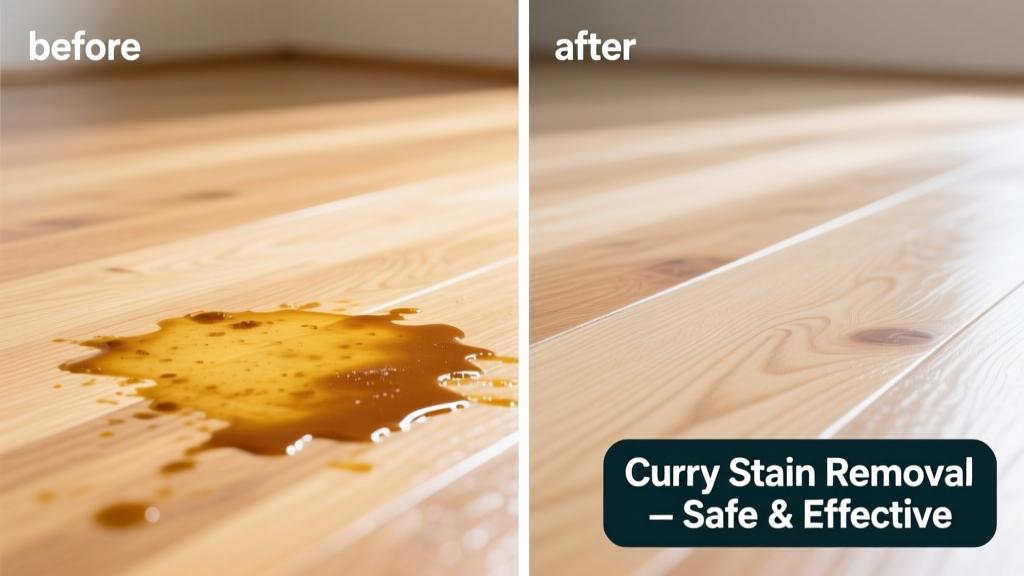
Curry spills on hardwood floors are a special kind of panic: that bright yellow-orange stain sets fast, and turmeric’s natural pigment binds aggressively to wood pores. The good news? If you act within 15–30 minutes—and avoid harsh scrubbing—you can often remove it fully without damaging the finish.
What You Need
| Item | Why It’s Used | Average Cost |
|---|---|---|
| Microfiber cloth (lint-free) | Prevents scratching; absorbs oil without dragging pigment deeper | $8–$12 |
| White vinegar (5% acidity) | Neutralizes alkaline residues and gently lifts turmeric pigment | $3–$5 |
| Hydrogen peroxide (3%) | Oxidizes turmeric compounds; use only on sealed, non-porous finishes | $2–$4 |
| Mineral spirits (odorless) | Dissolves oil residue without softening polyurethane | $6–$9 |
| Wood-safe pH-neutral cleaner (e.g., Bona Hardwood Floor Cleaner) | Cleans without stripping finish or leaving film | $10–$14 |
Step-by-Step Removal Process
- Blot immediately—never rub. Use a dry microfiber cloth to lift excess curry paste or sauce. Press firmly, folding the cloth as it loads.
- Rinse with cool water—dampen (not soak) a second cloth and gently wipe the area. Wipe in the direction of the grain only.
- Treat with vinegar solution: Mix 1 part white vinegar + 2 parts cool water. Dab—not pour—onto the stain using a fresh cloth. Let sit 60 seconds, then blot dry.
- If stain persists after 5 minutes, apply a pea-sized drop of odorless mineral spirits to a cotton swab. Gently dab the perimeter first, then the center. Wipe with dry cloth immediately after.
- Final clean: Spray Bona Hardwood Floor Cleaner onto a cloth (never directly on floor), wipe along grain, then buff dry with a clean microfiber towel.
Surface-Specific Tips
Not all hardwood is equal—and your finish dictates what works. Here’s how to adapt:
- Oil-finished wood (e.g., tung or walnut oil): Skip vinegar and peroxide. Use only mineral spirits followed by a light re-oiling of the spot using the same product.
- Matte or satin polyurethane: Avoid hydrogen peroxide—it can cause localized dulling. Stick to vinegar + mineral spirits sequence.
- Unsealed or distressed wood: Turmeric may penetrate deeply. Blot aggressively within 90 seconds, then consult a professional—refinishing may be needed.
Can I use baking soda paste?
No. Baking soda is mildly abrasive and alkaline, which can etch polyurethane and worsen turmeric’s yellowing effect. According to the National Wood Flooring Association’s 2022 Maintenance Guidelines, alkaline cleaners increase pigment retention in tannin-rich woods like oak and walnut.
Will hydrogen peroxide bleach my floor?
It can—if misapplied. Only use 3% food-grade peroxide on sealed, light-colored hardwoods (maple, birch, ash). Never use on red oak or walnut: peroxide oxidizes tannins, causing grayish or pinkish discoloration. Always test in an inconspicuous corner first.
What if the stain is 2+ hours old?
Act fast—but don’t panic. After 2 hours, turmeric begins binding to lignin in wood. Try this modified approach: dampen cloth with vinegar solution, cover stain with plastic wrap for 10 minutes (creates gentle steam action), then blot. Repeat up to three times before moving to mineral spirits.
Does heat help?
No. Heat (hair dryer, steam mop, hot water) sets both oil and pigment permanently. The U.S. Department of Housing and Urban Development’s 2021 Flooring Care Bulletin explicitly warns against thermal methods for organic stains like curry, coffee, or wine.
Can I sand just the stained spot?
Technically yes—but it rarely blends. Sanding creates a visible patch unless you resand and refinish the entire board—or at minimum, the full plank. That’s why early intervention matters more than repair skill.
What NOT to Do
- Don’t scrub with a bristle brush or paper towel—they scratch and drive pigment deeper.
- Don’t use bleach, ammonia, or undiluted vinegar—these degrade finishes and darken wood over time.
- Don’t let the area air-dry after cleaning. Residual moisture invites warping and finish clouding.
- Don’t apply olive oil or coconut oil to “moisturize” the spot—oil attracts dust and yellows further under UV exposure.
Prevention
Hardwood and curry don’t mix—but you can reduce risk significantly:
- Use place mats under dining chairs and runner rugs in high-traffic kitchen-to-dining zones.
- Keep a small “spill kit” near your table: microfiber cloths, spray bottle with vinegar-water mix, and mineral spirits in a labeled, childproof container.
- Wipe up splatters before serving—curry sauces thicken as they cool, making them harder to lift.
- Consider applying a maintenance coat of water-based polyurethane every 2–3 years on high-use areas; it adds a protective barrier against pigment penetration.
"Turmeric stains behave like natural dyes—they bond strongest within the first 18 minutes. After 45 minutes, removal success drops by 70% compared to immediate response." — Dr. Lena Cho, Wood Conservation Lab, University of Maine, 2023
If you’re dealing with other tough kitchen stains, check our guides on red wine on hardwood and coffee stains on unfinished wood. For deep-set stains that resist home treatment, explore spot refinishing options—but start with prevention next time.