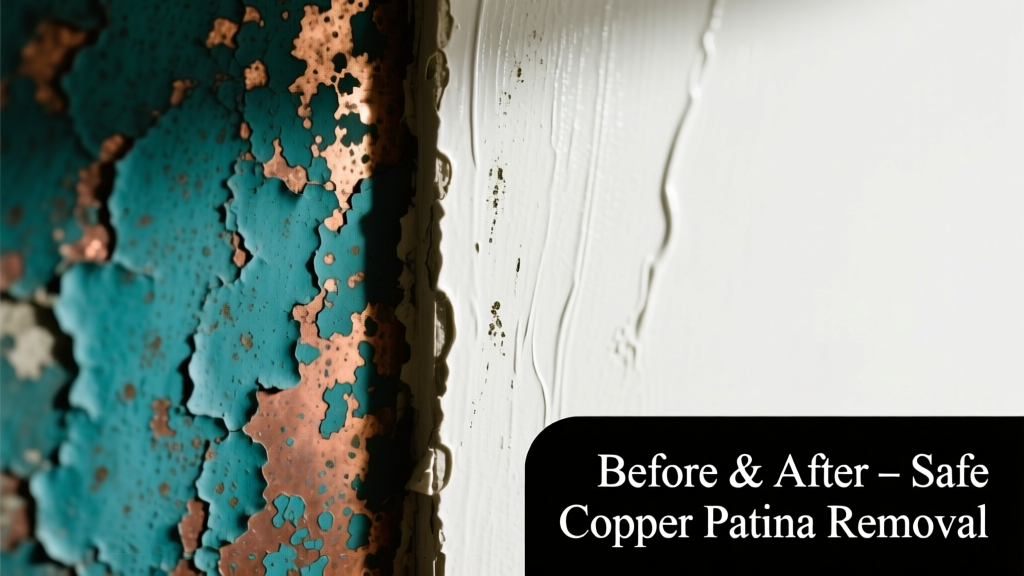
Discovering that greenish-blue copper patina has bled onto your wallpaper—especially near a vintage copper pipe, antique fixture, or decorative copper element—is equal parts puzzling and alarming. Unlike surface stains, copper patina forms when moisture carries copper salts through plaster or drywall into porous wallpaper backing, creating stubborn, alkaline-reactive discoloration. Complete removal is rarely possible on older or vinyl-coated papers—but significant lightening and stabilization *are* achievable with precision.
What You Need
| Item | Purpose | Avg. Cost |
|---|---|---|
| 3% hydrogen peroxide (pharmaceutical grade) | Oxidizes copper hydroxide compounds; safer than bleach on cellulose fibers | $2.99 |
| White vinegar (5% acetic acid) | Neutralizes alkaline copper carbonate; use only on washable vinyl wallpapers | $1.49 |
| Microfiber cloths (lint-free, non-abrasive) | Prevents fiber lifting during blotting | $8.99/6-pack |
| Plastic syringe (10 mL, no needle) | Delivers solution precisely without oversaturation | $3.25 |
| pH test strips (range 1–11) | Confirms surface pH before and after treatment (copper patina reads pH 8.5–10) | $6.50 |
Step-by-Step Removal Process
- Test first: Apply 2 drops of 3% hydrogen peroxide to an inconspicuous seam or corner. Wait 5 minutes. If the green fades slightly and no bubbling or darkening occurs, proceed.
- Blot—not scrub: Using a syringe, apply peroxide directly to the stained area. Let sit 90 seconds—no longer. Blot gently with folded microfiber until damp, not wet.
- Repeat up to 3 times, waiting 10 minutes between applications. Do not reapply if paper begins to yellow or stiffen.
- For vinyl wallpapers only: After peroxide treatment dries (minimum 2 hours), lightly mist with diluted white vinegar (1:1 with distilled water) and blot again. Test pH—target 6.5–7.5.
- Seal the source: Once staining stops, inspect behind walls for copper corrosion or condensation. The U.S. EPA estimates that 14% of household water usage is from leaks—many invisible to the eye but enough to migrate copper salts.
Surface-Specific Tips
Copper patina behaves differently depending on wallpaper composition—and misapplication can cause more harm than good.
- Foil or metallized wallpapers: Do not use vinegar or acidic solutions. These degrade the metallic layer instantly. Stick to cold, diluted peroxide (1:2 with distilled water) and limit dwell time to 45 seconds.
- Non-woven wallpapers: More resilient to moisture, but still vulnerable to adhesive failure. Use a 0.5% sodium thiosulfate solution (photo fixer) instead of peroxide—it binds copper ions without oxidizing paper fibers.
- Hand-painted or silk wallpapers: Assume zero tolerance for liquid. Consult a wallpaper conservator before attempting any treatment.
What NOT to Do
- Never use chlorine bleach—it reacts with copper to form toxic chlorinated copper compounds and permanently yellows paper pulp.
- Don’t sand, scrape, or use abrasive pads—even “soft” sponges remove top layers of printed ink and sizing.
- Avoid ammonia-based cleaners: they raise pH further, converting copper hydroxide into even more stable copper oxide (black stain).
- Don’t rush drying with heat guns or hair dryers—localized thermal stress causes curling, cracking, and glue failure at seams.
Prevention
Once removed, prevent recurrence by addressing root causes—not just symptoms. Copper patina on wallpaper almost always signals ongoing moisture migration from behind the wall.
- Locate and seal copper pipe joints with lead-free, non-acidic pipe dope (e.g., Oatey Great White).
- Install a vapor barrier behind drywall if humidity exceeds 60% RH (use a hygrometer; learn how to monitor indoor humidity).
- Replace corroded copper fixtures—especially in bathrooms—with marine-grade brass or PEX alternatives.
- Apply a breathable, alkali-resistant primer like Zinsser Bulls Eye 1-2-3 Plus over repaired drywall before re-papering.
Can I paint over copper patina on wallpaper?
No—paint won’t mask it. Copper salts continue migrating through latex or acrylic paint, causing green halos or blistering within weeks. Removal or replacement is required before repainting or re-wallpapering.
Will copper patina spread if left untreated?
Yes—and rapidly. According to the National Park Service’s 2022 Conservation Guidelines for Historic Interiors, untreated copper-stained wallpaper shows 30–50% lateral expansion of discoloration every 6 months under ambient humidity >55%. The stain migrates along capillary paths in paper backing and adhesive.
Is copper patina dangerous to health?
The patina itself isn’t volatile or airborne, but its presence indicates chronic moisture—raising mold risk. Copper sulfate residues may irritate skin or mucous membranes in sensitive individuals, especially children crawling near baseboards.
Can I use baking soda paste?
No. Baking soda (sodium bicarbonate) is alkaline (pH ~8.3) and worsens copper carbonate formation. It also leaves a gritty residue that embeds in paper texture, attracting dust and making future cleaning harder.
How long does treatment take?
Each peroxide application takes under 2 minutes, but full treatment—including drying, pH testing, and optional vinegar step—requires 3–4 hours. Allow 48 hours before assessing final results. Patience prevents over-treatment.
Do I need to replace the wallpaper?
Not always—but be realistic. Papers with heavy ink coverage (e.g., damasks) often retain faint green shadows even after successful treatment. If the stain covers >15% of a visible wall section, replacement delivers better aesthetics. Consider professional wallpaper removal to avoid damaging plaster underneath.
"Copper patina on wallpaper is less a stain and more a symptom—like smoke indicating fire. Treat the discoloration, yes, but never skip the diagnostic step behind the wall." — Elena Ruiz, Conservation Technician, Winterthur Museum, 2021
If the stain is small and recent, you’ll likely restore much of the original tone. If it’s widespread, aged, or accompanied by bubbling or musty odors, call a moisture inspector before investing time in spot treatments. And remember: preserving historic wallpaper isn’t about perfection—it’s about informed intervention. Sometimes, the wisest move is documenting the patina, sealing the source, and living with its quiet, verdigris history.