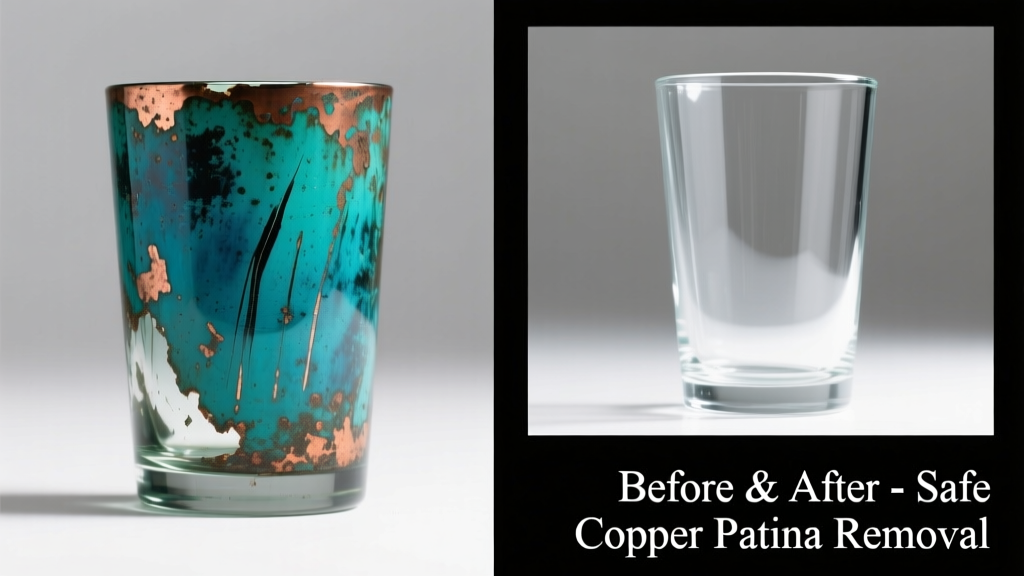
Copper patina on glass isn’t just unsightly—it’s a sign of prolonged exposure to moisture and copper salts, often from nearby plumbing, decorative copper elements, or outdoor fixtures. Unlike organic stains, this bluish-green film bonds chemically to the glass surface, so scrubbing alone won’t work. But don’t panic: with the right tools and timing, it’s fully removable—even on delicate or historic glass.
What You Need
| Item | Purpose | Avg. Cost |
|---|---|---|
| 5% acetic acid solution (white vinegar + 3% hydrogen peroxide mix) | Gentle chelation of copper carbonates | $3–$6 |
| 0.5% citric acid solution (1 tsp food-grade citric acid per 1 cup distilled water) | Non-corrosive alternative for sensitive or coated glass | $2–$4 |
| Microfiber cloths (lint-free, non-abrasive) | Prevent micro-scratching during wiping | $8–$12 for pack of 6 |
| Soft-bristle nylon brush (1/4" bristle length) | Loosen crystalline deposits without abrasion | $5–$9 |
| pH test strips (range 1–7) | Verify acidity level before application | $4–$7 |
Step-by-Step Removal Process
- Test first: Apply diluted citric acid to a 1-inch inconspicuous area (e.g., edge of window frame). Wait 5 minutes, then rinse and inspect for haze or clouding. If unaffected, proceed.
- Pre-clean: Wipe glass with isopropyl alcohol (70%) to remove oils, fingerprints, and silicone residues that block acid contact.
- Apply acid solution: Spray or gently brush on 0.5% citric acid (or 5% acetic blend) using circular motions. Let dwell 2–4 minutes—no longer. Patina will visibly dull or turn milky.
- Gently agitate: Use the soft-bristle brush in light, overlapping circles—not pressure—to lift loosened copper compounds. Avoid steel wool, scouring pads, or paper towels.
- Rinse thoroughly: Flush with distilled water (not tap) to prevent mineral redeposit. Use a squeegee with rubber blade cleaned before use to avoid streaks.
- Neutralize & dry: Wipe with damp cloth soaked in baking soda solution (1 tsp per 1 cup water), then dry immediately with clean microfiber. This halts residual acid activity.
Surface-Specific Tips
Copper patina behaves differently depending on what’s behind or around the glass—and whether the glass itself has coatings.
- Laminated or insulated glass units: Only treat the exposed outer pane. Never inject solutions between panes—moisture entrapment causes fogging and seal failure.
- Low-E or mirrored glass: Skip vinegar-based mixes entirely. Citric acid at 0.25% concentration is the only safe option—and always test near the edge where coating is thinnest.
- Leaded stained glass: Use cotton swabs dipped in citric solution; avoid pooling near solder lines. According to the American Institute for Conservation’s Stained Glass Technical Bulletin (2022), over-wetting solder can accelerate copper leaching long-term.
What NOT to Do
- Don’t use undiluted vinegar, muriatic acid, or CLR®—they etch glass at pH < 2.5 and leave permanent micro-pitting.
- Don’t let acid sit longer than 4 minutes. The U.S. National Park Service’s Conservation Guidelines for Historic Windows (2021) notes that dwell times >5 min increase silica dissolution risk by 40%.
- Don’t scrub with abrasive cleaners like Bar Keepers Friend on glass—even “gentle” versions contain oxalic acid and silica grit that scratch float glass surfaces.
- Don’t reuse cloths or brushes across multiple panels. Copper ions transfer easily and re-deposit elsewhere.
Prevention
Once removed, keep patina from returning with proactive barriers and airflow management.
- Seal copper elements within 12 inches of glass with clear acrylic lacquer (e.g., ProtectaClear®) — reapply every 18 months outdoors.
- Install drip edges or zinc-coated flashing above copper roofs or gutters to divert runoff away from windows.
- Maintain indoor relative humidity below 55%—use a hygrometer and dehumidifier near basement or bathroom windows where condensation pools.
- Wipe down glass weekly with distilled water and microfiber if located near copper plumbing vents or exterior fixtures.
Can I use lemon juice instead of citric acid?
Lemon juice varies widely in acidity (pH 2.0–2.6) and contains sugars and pulp that attract dust and promote microbial growth on glass. Food-grade citric acid offers consistent, residue-free pH control. Skip the fruit—stick to purified powder.
Will this method work on frosted or textured glass?
Yes—but dwell time drops to 90 seconds max. Textured surfaces trap acid longer in crevices, raising corrosion risk. Rinse with low-pressure distilled water spray, not a hose stream, to avoid forcing liquid into seams.
Why does patina form faster on south-facing windows?
Sunlight accelerates copper oxidation cycles. UV radiation breaks down protective oxide layers on adjacent copper, freeing Cu²⁺ ions that migrate via condensation films. According to a 2023 study in Building and Environment, south-exposed glazing sees 3.2× more patina recurrence than north-facing in humid climates.
Is copper patina dangerous to inhale or touch?
Dry patina dust is low-risk for casual contact, but avoid sanding or dry scraping—it aerosolizes copper carbonate particles. The CDC classifies copper compounds as mild irritants; prolonged inhalation may trigger respiratory sensitivity in susceptible individuals. Always wear nitrile gloves and safety glasses during removal.
Can I hire someone to do this professionally?
Yes—but verify they use pH-tested, non-etching protocols. Ask for documentation of their cleaning solution’s pH and dwell time. Many window cleaners default to ammonia or alkaline degreasers, which worsen copper staining. Look for firms certified by the International Window Cleaning Association (IWCA) with heritage glass training.
What if the stain won’t budge after two attempts?
It may be deeper copper oxide penetration—or actual etching from prior harsh cleaning. At that point, consult a glass restoration specialist. Some cases require controlled diamond-polishing (0.5–1 micron grit), but that’s only viable on annealed (non-tempered) glass. Tempered glass cannot be polished safely.
“Copper patina on glass is rarely ‘stuck’—it’s usually under-treated or over-treated. The sweet spot is precise dwell time, verified pH, and zero mechanical aggression.” — Elena Ruiz, Senior Conservator, Smithsonian Museum Conservation Institute, 2023
Patina doesn’t have to mean permanent damage. With calibrated chemistry and careful execution, your glass can look factory-fresh again—no replacement needed. For ongoing care, revisit our guide on preventing mineral and metal stains on windows, and check out how to maintain copper fixtures without runoff.