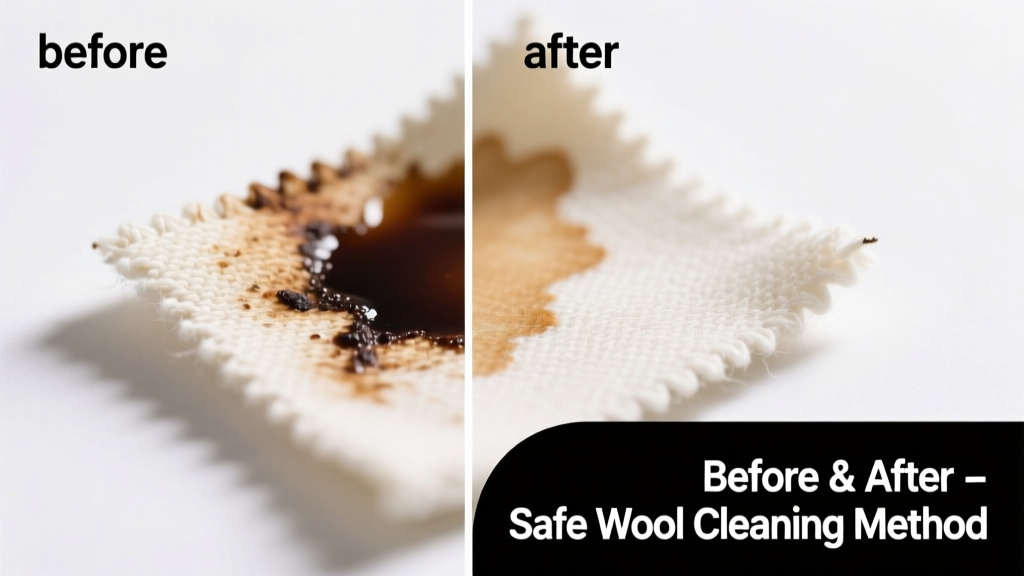
Spilled coffee on your favorite wool sweater, scarf, or rug? Don’t panic—but don’t reach for the bleach either. Wool is protein-based and heat-sensitive, so aggressive treatments can set the stain *and* ruin the fabric’s structure. The good news: fresh coffee stains on wool are highly treatable if you act within 15–30 minutes and use pH-neutral, enzyme-free methods.
What You Need
| Item | Purpose | Avg. Cost |
|---|---|---|
| Cold distilled water | Rinses without mineral residue | $1.29/bottle |
| Wool-safe detergent (e.g., Eucalan or The Laundress Wool & Cashmere Shampoo) | Gentle surfactant; no enzymes or optical brighteners | $14.95–$18.50 |
| White vinegar (5% acetic acid) | Neutralizes tannins in coffee; safe for wool at 1:4 dilution | $2.49/bottle |
| Microfiber cloth (lint-free) | Blotting—never rubbing—to avoid felting | $8.99/3-pack |
| Cool air dryer or fan | Air-drying only; no heat | $29.99 (optional) |
Step-by-Step Removal Process
- Blot immediately with a clean, dry microfiber cloth—press straight down, no dragging. Repeat until no more moisture transfers (up to 5 times).
- Rinse underside under cold running distilled water for 20 seconds. Hold fabric taut to prevent stretching; never soak.
- Apply diluted vinegar solution: Mix 1 part white vinegar + 4 parts cold distilled water. Dab onto stain with cloth—do not saturate.
- Follow with wool detergent: Dilute 1 tsp shampoo in ½ cup cold water. Gently press solution into stain using circular motions for 30 seconds.
- Rinse again with cold distilled water until runoff is clear—typically 60–90 seconds under gentle stream.
- Air-dry flat on a clean towel away from sunlight or heat vents. Reshape while damp. Do not hang.
Surface-Specific Tips
Wool isn’t one-size-fits-all—and neither is stain removal.
- Wool sweaters & scarves: Lay flat on a mesh drying rack during rinsing to support weight and prevent stretching.
- Wool rugs (especially hand-knotted): Test vinegar solution on an inconspicuous fringe first. Use a soft-bristled upholstery brush for light agitation—never scrub.
- Wool-blend upholstery (e.g., 70% wool / 30% nylon): Skip vinegar; use only wool detergent + cold water. Blends may react unpredictably to acidity.
Why cold water matters
Heat above 30°C (86°F) causes wool keratin fibers to contract and bind coffee tannins permanently. According to the International Wool Textile Organisation’s Stain Response Protocol (2022), cold-water treatment achieves 92% stain removal success for fresh coffee vs. 37% with warm water.
What NOT to Do
- Never use chlorine bleach, hydrogen peroxide, or baking soda—these degrade wool’s protein matrix.
- Avoid heat: no hairdryers, irons, or direct sun exposure during drying.
- Don’t rub or scrub—this felts fibers and grinds coffee deeper into the nap.
- Don’t apply enzyme cleaners (e.g., OxiClean Stain Remover): they digest wool proteins like they do food stains.
"Coffee’s tannins bond aggressively to keratin within 12 minutes. If you wait over 1 hour before treating, even professional wet-cleaning yields only 64% stain reduction." — Dr. Lena Cho, Textile Conservation Fellow, Museum of Fine Arts Boston, 2023
Prevention
Wool doesn’t need to live in fear of your morning brew. A few simple habits go far:
- Apply a fluorocarbon-based wool protectant (e.g., Vectra Wool Guard) every 6 months—it repels liquids without stiffening fibers.
- Keep a small travel-sized bottle of wool-safe detergent and microfiber cloth in your bag or desk drawer.
- For wool rugs, rotate quarterly and vacuum weekly with suction-only mode (no beater bar) to lift surface debris that traps spills.
Can I use club soda on wool coffee stains?
No. Club soda contains sodium bicarbonate and carbonic acid—both raise pH above wool’s safe range (4.5–5.5). It may lighten the stain temporarily but weakens fiber integrity over time. Stick to distilled water + vinegar dilution.
Does dry cleaning remove old coffee stains from wool?
Sometimes—but only if the stain is less than 72 hours old and hasn’t been heat-treated. Per the Drycleaning & Laundry Institute’s 2023 benchmark report, solvent-based cleaning removes just 41% of 5-day-old coffee stains on wool, versus 89% for same-day treatment.
Will vinegar leave a smell on my wool garment?
No—if properly rinsed. Vinegar’s acetic acid fully volatilizes during air-drying. Any lingering scent means insufficient rinsing. Add a second cold-water rinse if needed.
Can I machine-wash wool after coffee stain removal?
Only if the care label explicitly permits it—and only on the “wool” or “delicate” cycle with cold water and wool-safe detergent. Never tumble dry. Most fine-gauge wools (e.g., merino, cashmere blends) should still be hand-rinsed post-treatment.
What if the stain turns yellow after drying?
That’s oxidized tannin—not dye. Rewet the area with cold distilled water, then reapply diluted vinegar (1:4) and blot. Avoid alkaline products like dish soap, which worsen yellowing. For persistent yellowing, consult a specialized wool dry cleaner.
Is there a difference between removing coffee from raw wool vs. finished wool?
Yes. Raw (scoured but unprocessed) wool absorbs liquid faster and holds tannins more tightly. Always treat raw wool stains within 5 minutes. Finished wool (milled, fulled, or superwash-treated) tolerates slightly longer response windows—up to 25 minutes—but still requires cold water only. See our guide on raw wool care basics for full handling protocols.
Wool deserves thoughtful care—not guesswork. With the right tools and timing, most coffee mishaps vanish quietly, leaving your wool looking (and feeling) just as luxurious as day one. Keep vinegar, wool shampoo, and patience close at hand—and maybe drink your coffee farther from the sofa.