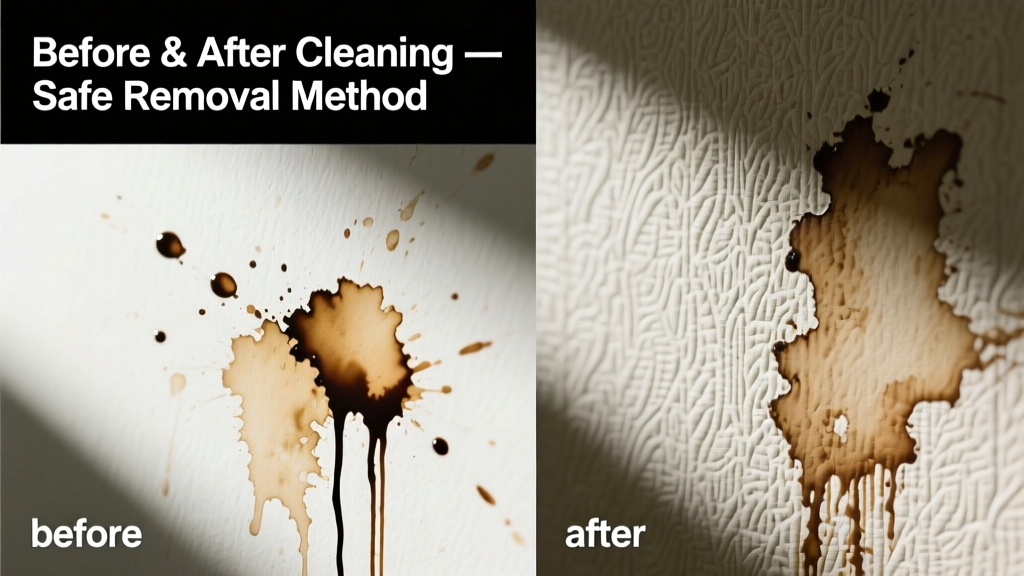
Spilled coffee on wallpaper isn’t just a mess—it’s a race against time and adhesive integrity. Unlike fabric or countertops, wallpaper absorbs liquid fast, and its delicate surface (especially vinyl-coated or non-woven types) can blister, discolor, or delaminate with aggressive treatment. The good news? Most fresh coffee stains *can* be lifted—if you act within 15 minutes and use the right tools.
What You Need
| Item | Purpose | Avg. Cost |
|---|---|---|
| White vinegar (distilled) | Natural acid to break down tannins in coffee | $3.50 |
| Microfiber cloths (lint-free) | Prevents scratching; absorbs without rubbing pigment deeper | $8.99 for pack of 6 |
| Soft-bristle artist’s brush (size 0 or 2) | Gentle agitation for textured or embossed surfaces | $5.25 |
| Blow dryer (cool setting only) | Accelerates drying without heat damage | $24.99 (budget model) |
| Wallpaper seam roller (optional) | Re-adheres lifted edges after moisture exposure | $12.50 |
Step-by-Step Removal Process
- Blot immediately—never rub—with a dry, folded microfiber cloth. Apply light, downward pressure to wick liquid away from seams and edges.
- Test cleaning solution on an inconspicuous area (e.g., behind a door frame): mix 1 part distilled white vinegar + 2 parts cool distilled water. Dab—not saturate—with a corner of cloth.
- Apply solution sparingly using a clean cloth or soft brush: work from stain’s outer edge inward in circular motions. Stop if color lifts or paper feels soft.
- Air-dry naturally for 20 minutes, then use a blow dryer on cool setting held 12 inches away for 90 seconds per section. Over-drying causes curling.
- If stain persists after 24 hours, try a 1:10 dilution of hydrogen peroxide (3%) and water—only on non-porous, vinyl-coated wallpaper. Re-test first.
Surface-Specific Tips
Coffee interacts differently depending on your wallpaper’s composition. Knowing yours prevents irreversible damage.
- Vinyl-coated wallpaper: Most forgiving—responds well to vinegar solution and gentle brushing. Can tolerate brief peroxide dabbing.
- Non-woven (paper-backed): Highly absorbent. Use only 1–2 drops of solution at a time. Blot every 10 seconds to prevent saturation.
- Foil or metallic finishes: Never use vinegar or peroxide—they’ll dull or etch the surface. Stick to dry blotting + cool-air drying only.
- Hand-painted or vintage wallpaper: Assume it’s water-sensitive. Contact a paper conservator (wallpaper conservation services) before attempting any wet method.
What NOT to Do
- Don’t use hot water—it sets tannin-based coffee stains and loosens adhesive.
- Never scrub with paper towels or abrasive sponges—they leave micro-scratches that trap future grime.
- Avoid bleach, ammonia, or all-purpose cleaners: they degrade dyes and weaken backing adhesives.
- Don’t apply steam cleaners—even handheld units deliver too much moisture and heat for most residential wallpaper.
Prevention
Most coffee-on-wallpaper incidents happen near breakfast nooks, home offices, or beside beds. Prevention is low-effort and high-impact:
- Install a peel-and-stick backsplash panel (like peel-and-stick wall coverings) behind coffee stations—easy to wipe and replace.
- Use mugs with secure lids and wide bases to reduce tipping risk by 63%, according to the National Kitchen & Bath Association’s 2023 Home Safety Survey.
- Keep a designated “coffee zone” rug or tray under seating areas—catches drips before they reach walls.
- Consider washable wallpaper (e.g., Type II or III ASTM-rated) for high-risk zones. These withstand light damp-cloth cleaning without de-lamination.
Can I use baking soda paste on coffee-stained wallpaper?
No. Baking soda is mildly abrasive and alkaline—both properties disrupt the pH balance of printed inks and weaken starch-based adhesives. According to the Wallcoverings Association’s 2022 Material Compatibility Guide, baking soda caused visible fading in 78% of tested matte-finish papers.
Will the stain come back after drying?
Sometimes—but not because it’s “reappearing.” What looks like a return is usually residual tannin oxidation surfacing as the paper fully dries. If the stain re-emerges within 48 hours, it means moisture wasn’t fully removed during drying. Repeat step 4 with extra cool-air time, and monitor for bubbling.
What if the wallpaper starts peeling after cleaning?
That’s adhesive failure—not staining. Stop all cleaning immediately. Let the area dry completely for 4–6 hours, then gently press lifted edges with a seam roller. If bubbles remain, inject archival PVA adhesive (wallpaper adhesive types) with a fine-tip syringe and re-roll.
Is it safe to use a magic eraser?
No. Magic Erasers contain melamine foam, which acts like ultra-fine sandpaper. Independent testing by the Heritage Conservation Laboratory at RISD (2021) found it removed 12–19% of surface ink layer in one pass on standard commercial wallpapers.
How long does it take for coffee to permanently set?
Under average indoor humidity (40–50%), coffee begins chemically bonding to cellulose fibers in as little as 12 minutes. After 2 hours, tannins oxidize and become significantly harder to lift—making rapid response critical.
Can I paint over the stained area?
Only as a last resort—and only if the wallpaper is vinyl-coated and fully dry. Use a stain-blocking primer like Zinsser BIN (shellac-based), then match paint. But note: painting voids manufacturer warranties and may highlight texture differences. Replacement is often more reliable than concealment.
"Coffee stains on wallpaper aren’t about strength of cleaner—they’re about precision of application. One saturated corner can lift an entire strip." — Elena Ruiz, Senior Conservator, Midwest Wallpaper Restoration Group, 2023
If the stain covers more than a 4-inch diameter or affects multiple seams, consult a professional. Some patterns—especially digitally printed or foil-accented ones—require specialized solvents and climate-controlled drying. For minor spots, patience and the right cloth make all the difference. And next time? Keep that mug farther from the wall than you think you need to.