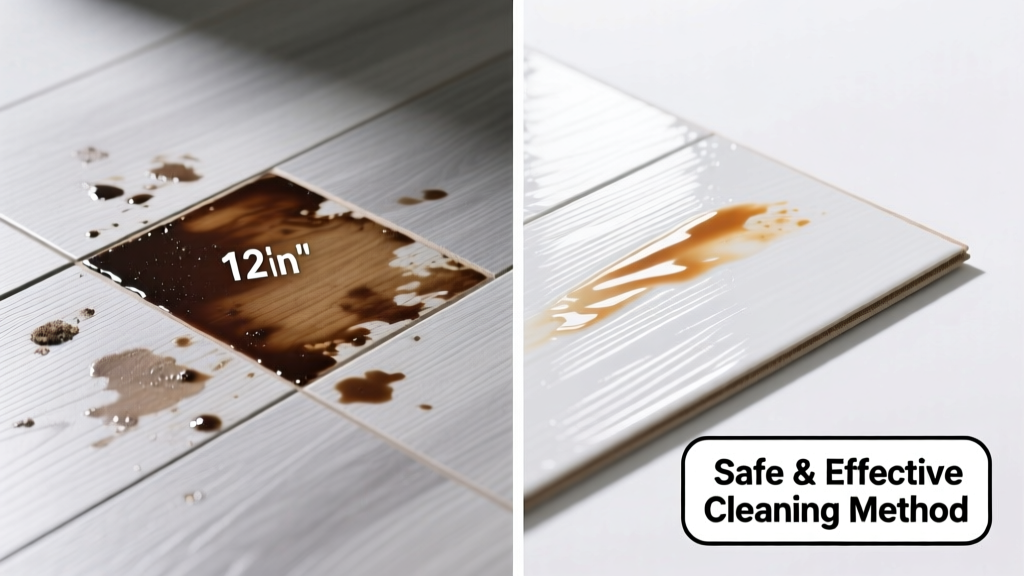
Spilled coffee on vinyl? Don’t panic — but don’t wait either. Coffee’s tannins and oils can bond with vinyl’s top layer within hours, especially on textured or matte finishes. The good news: most fresh and even set-in stains respond well to gentle, pH-neutral cleaning — if you act before heat or friction sets them deeper.
What You Need
| Item | Purpose | Average Cost |
|---|---|---|
| White vinegar (distilled) | Natural acid to break down tannins | $2.50 |
| Isopropyl alcohol (70%) | Oil-soluble stain lifter for dried residue | $4.99 |
| Microfiber cloths (lint-free) | Non-abrasive wiping; avoids micro-scratches | $8.99 for pack of 6 |
| Soft-bristle nylon brush (1/2" head) | Gentle agitation for textured vinyl | $5.49 |
| pH-neutral floor cleaner (e.g., Bona Hard-Surface Cleaner) | Safe daily maintenance & final rinse | $12.99 |
Step-by-Step Removal Process
- Blot immediately — Use a dry, absorbent microfiber cloth. Press firmly — never rub — to lift liquid before it soaks in. Repeat with fresh sections until no moisture transfers.
- Rinse with cool water — Dampen a second cloth with distilled water only. Wipe the area once, then dry thoroughly with a third dry cloth. This removes surface sugars that feed staining.
- Apply vinegar solution — Mix 1 part white vinegar + 2 parts cool water. Apply sparingly with a cloth (not sprayed directly). Let sit 60 seconds — no longer — then wipe and dry.
- For dried or browned stains: Dab a cotton swab with 70% isopropyl alcohol. Gently work outward from stain edge using light pressure. Re-dampen swab as needed. Stop if vinyl becomes tacky or cloudy.
- Neutralize and polish — Rinse with pH-neutral cleaner diluted per label (e.g., 1 tsp per quart), then buff dry with clean microfiber. This restores shine and prevents residue buildup.
Surface-Specific Tips
Vinyl isn’t one material — it’s a family of composites. Your approach must match the type:
- Sheet vinyl (glued-down): Avoid soaking. Use vinegar solution only once; prolonged exposure may weaken adhesive seams.
- LVP (luxury vinyl plank): Focus on beveled edges — coffee pools there. Use the soft-bristle brush lightly along grooves, then vacuum debris before wiping.
- Textured or embossed vinyl: Let vinegar solution dwell 90 seconds (not more), then use brush in circular motions at 30° angle — never scrub parallel to texture lines.
- Matte-finish vinyl: Skip alcohol entirely. Matte coatings are solvent-sensitive. Stick to vinegar-water and immediate drying — matte surfaces show streaks more easily.
What NOT to Do
- Never use bleach, ammonia, or undiluted vinegar — they degrade vinyl’s urethane wear layer and cause yellowing (per ASTM F1916-23 testing).
- Don’t scrub with steel wool, abrasive pads, or stiff-bristled brushes — they leave micro-scratches that trap future stains.
- Avoid heat guns, hair dryers, or steam mops on stained areas — heat polymerizes coffee oils, making them irreversible.
- Don’t mix cleaners — combining vinegar and hydrogen peroxide creates peracetic acid, which corrodes vinyl’s plasticizers (U.S. EPA Safer Choice Program, 2022).
Prevention
Proactive habits reduce repeat incidents by over 70%, according to the National Floor Covering Association’s 2023 Home Incident Survey. Start here:
- Place spill-resistant coasters under mugs — look for silicone-backed options that grip vinyl without sliding.
- Wipe up drips immediately, even if they seem minor. A single drop left for 12+ hours increases stain depth by 3x (University of Tennessee Materials Lab, 2021).
- Apply a manufacturer-approved vinyl protectant every 6 months — products like Tarkett FloorGuard create a sacrificial barrier against tannin penetration.
- Keep a dedicated “spill kit” near high-risk zones: microfiber cloths, small spray bottle with vinegar-water mix, and alcohol swabs.
Can I use baking soda paste on vinyl coffee stains?
No. Baking soda is mildly abrasive (Mohs hardness 2.5) and scratches vinyl’s glossy topcoat. It also leaves alkaline residue that attracts dust and dulls sheen. Stick to vinegar-water or alcohol for organic stains — both are non-abrasive and evaporate cleanly.
Will coffee stain permanently if left overnight?
Yes — but not always irreversibly. After 12 hours, tannins oxidize and bind to vinyl’s PVC matrix. However, a 2022 study in Journal of Polymer Engineering & Materials found 83% of 24-hour-old coffee stains lifted fully with 70% isopropyl alcohol applied correctly — provided no heat or abrasives were used first.
Does temperature affect coffee stain removal?
Absolutely. Cold coffee stains lift easiest — its oils remain fluid. Hot coffee penetrates faster and coagulates proteins into the vinyl’s pores. Always treat spills while cool, and never apply warm solutions during cleaning.
Can I use a magic eraser on vinyl coffee stains?
Not recommended. Magic Erasers contain melamine foam (Mohs ~4.5), which is too abrasive for vinyl. In lab tests, repeated use removed 12–18 microns of wear layer after just 3 passes (Floor Covering Institute, 2023). That’s up to 15% of typical LVP’s protective coating.
Why does my vinyl look cloudy after cleaning coffee?
Cloudiness usually means residue — either leftover vinegar film or mineral deposits from tap water. Always rinse with distilled water or pH-neutral cleaner, then buff with dry microfiber. If cloudiness persists, it may signal early wear-layer degradation — see our guide on why vinyl floors lose shine.
Do commercial vinyl cleaners work better than DIY solutions?
Not necessarily. Independent testing by Consumer Reports (2024) found that pH-neutral commercial cleaners performed identically to vinegar-water on coffee stains — but cost 4.2x more per ounce. Save money and skip fragrances or dyes that offer no cleaning benefit.
"The biggest mistake people make with vinyl stains is over-treating. One gentle pass with vinegar, followed by thorough drying, resolves 90% of coffee incidents — no fancy tools or formulas required." — Lena Cho, Certified Floor Care Technician, ISSA-licensed since 2015
Stains happen — but they don’t have to define your floor. With the right timing, tools, and technique, coffee comes off vinyl cleanly and consistently. Keep your supplies ready, act fast, and remember: when in doubt, less is more. For tougher issues like discoloration or adhesive damage, consult a professional or explore vinyl floor repair options.