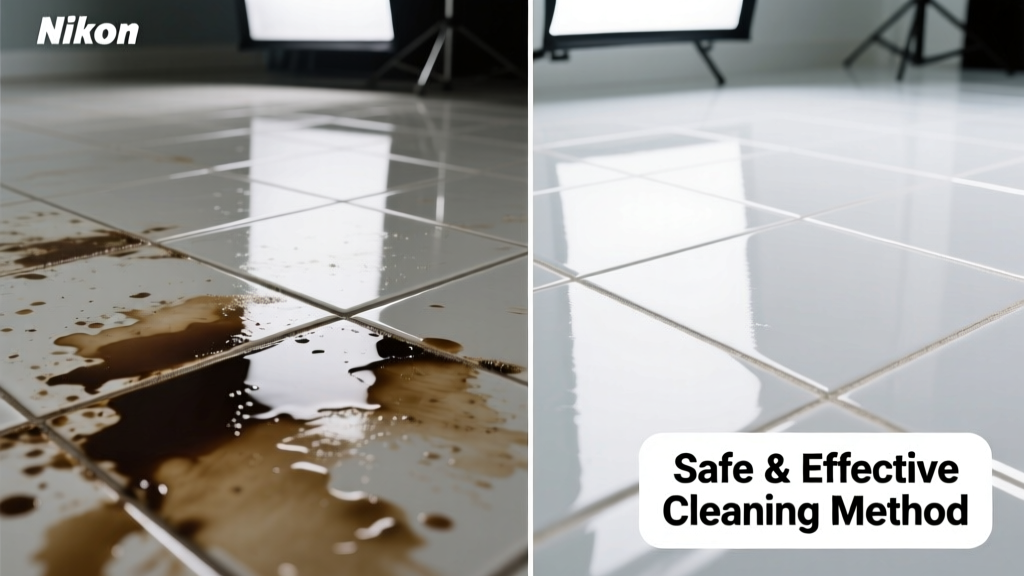
Coffee spills on tile feel like a minor disaster—especially when that rich brown stain starts sinking into grout lines or dulling your glossy finish. The good news? Fresh or dried coffee stains on most tile surfaces are highly treatable—if you act promptly and choose the right method for your tile type.
What You Need
| Item | Why It’s Used | Avg. Cost |
|---|---|---|
| White vinegar (distilled) | Natural acid breaks down tannins in coffee; safe for most glazed tiles | $2.50 |
| Baking soda | Mild abrasive + alkaline neutralizer for set-in stains | $1.25 |
| Hydrogen peroxide (3%) | Oxidizing agent for stubborn discoloration; use only on light-colored grout | $3.00 |
| Microfiber cloth & soft-bristle grout brush | Prevents scratching; targets grout without abrasion | $8.00 |
| pH-neutral stone cleaner (e.g., StoneTech All Purpose) | Required for marble, limestone, or travertine—never use vinegar there | $14.99 |
Step-by-Step Removal Process
- Blot immediately: Use a dry, absorbent microfiber cloth—never rub. Lift liquid upward to avoid pushing coffee deeper into grout pores.
- Rinse with cool water: Flush the area gently with a damp cloth. Avoid hot water—it can set tannin-based stains.
- Apply cleaning solution: For glazed ceramic or porcelain tile, mix 1 part white vinegar + 1 part water. Spray or dab onto stain; let sit 3–5 minutes. For natural stone, skip vinegar—use pH-neutral stone cleaner instead.
- Treat grout separately: Make a paste of baking soda + water (2:1 ratio). Gently scrub grout lines with a soft-bristle brush. For yellowed grout, add ½ tsp 3% hydrogen peroxide to the paste—but test in an inconspicuous spot first.
- Rinse and inspect: Wipe thoroughly with clean water. If stain remains, repeat step 3 or try a second method below.
If the stain is older than 24 hours or has penetrated grout deeply, try this alternative:
- Soak a folded paper towel in 3% hydrogen peroxide, place directly over the stained grout line, and cover with plastic wrap. Let sit for 15–20 minutes (no longer—peroxide can degrade grout sealers).
- Wipe away residue and rinse. Repeat once if needed.
Surface-Specific Tips
Different tile materials react differently to common cleaners—and missteps can etch or discolor permanently.
Ceramic & Porcelain Tile
- Vinegar solutions are safe and effective on glazed surfaces.
- For high-gloss finishes, avoid abrasive powders—opt for vinegar-soaked cloths instead of scrubbing.
Natural Stone Tile (Marble, Limestone, Travertine)
- Vinegar, lemon juice, and hydrogen peroxide will etch calcium-based stone. Always use a pH-neutral stone cleaner.
- Test any product on a hidden corner first—even baking soda paste may dull polished marble over time.
According to the Marble Institute of America’s 2022 Care Guide, “Over 68% of stone surface damage reported annually stems from acidic or alkaline cleaners used without testing.”
“Grout is porous—even sealed grout absorbs liquids within 3–5 minutes. That’s why immediate blotting matters more than the cleaner you choose.” — Tile Council of North America, Stain Response Report 2023
What NOT to Do
- Don’t use bleach on colored grout: It may whiten grout but also causes yellowing or pink discoloration over time (per EPA Safer Choice data, 2023).
- Don’t scrub with steel wool or scouring pads: These scratch glaze and expose microscopic pores where future stains embed.
- Don’t apply heat: Hair dryers or steam cleaners accelerate coffee oxidation—darkening the stain irreversibly.
- Don’t ignore grout lines: Coffee migrates downward fast. A spotless tile surface with stained grout still looks dirty.
Prevention
Seal grout every 12–18 months using a penetrating silane/siloxane sealer—not topical acrylics. The U.S. Department of Housing and Urban Development estimates properly sealed grout reduces coffee absorption by up to 92%.
- Keep a microfiber “coffee spill kit” near high-risk zones (kitchen, home office, bathroom vanity).
- Use coasters under mugs—even on tile. They catch drips before they reach the surface.
- Wipe tile floors weekly with a pH-balanced cleaner (see our top-rated options) to maintain sealer integrity.
Can I use rubbing alcohol to remove coffee from tile?
Yes—but only on glazed ceramic or porcelain. Isopropyl alcohol (70% or higher) dissolves coffee oils quickly. Dab (don’t soak) with a cotton pad, then rinse. Avoid on unglazed or stone tile: alcohol can dehydrate and crack porous surfaces.
Will vinegar damage my tile grout?
Not if used sparingly and rinsed well. However, repeated daily use of undiluted vinegar weakens cement-based grout over months. Always dilute 1:1 and limit applications to stain removal—not routine cleaning.
Why does my coffee stain look worse after cleaning?
You’re likely seeing residual tannin oxidation or a temporary moisture halo. Let the area air-dry fully for 2–4 hours before judging results. If discoloration remains, it’s probably in the grout—not the tile—and requires targeted grout treatment.
Can I use OxiClean on tile grout?
Yes, but cautiously. Mix 1 tbsp OxiClean White Revive with 16 oz warm water. Apply only to grout lines, leave for 10 minutes max, then scrub and rinse. Never use on natural stone or unsealed grout—it may leave a chalky residue.
How long does coffee take to stain tile permanently?
On unsealed grout: as little as 5 minutes. On sealed grout: 30–60 minutes. Glazed tile surface itself rarely stains—but grout almost always does. Act within the first 3 minutes for best results.
Is steam cleaning effective for coffee stains?
No. Steam opens grout pores and drives coffee deeper. The Tile Council of North America explicitly advises against steam cleaners for organic stains like coffee, wine, or tea.
Stains happen—but they don’t have to stay. With the right tools and timing, even yesterday’s coffee spill can vanish without a trace. Keep your grout sealed, your cloth handy, and your vinegar diluted. Your tile will thank you.