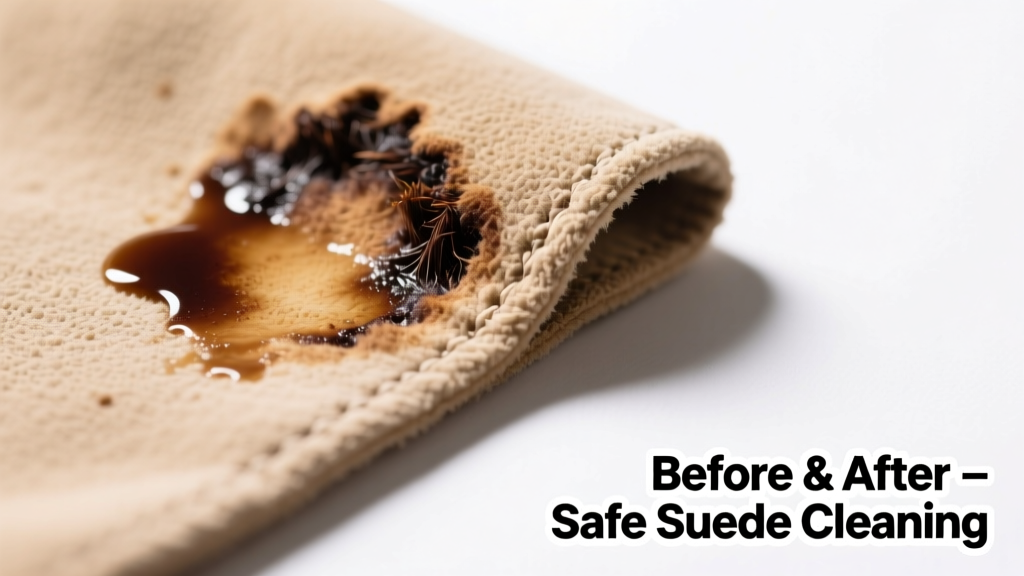
Spilled coffee on your favorite suede boots or jacket? That dark, sticky ring feels like a sentence—not just a stain. Good news: with the right tools and timing (ideally within 2–4 hours), most fresh coffee stains on suede can be lifted completely. But suede isn’t leather or cotton—it’s delicate, porous, and easily crushed or discolored by moisture or abrasion.
What You Need
| Item | Purpose | Average Cost |
|---|---|---|
| Suede brush (brass or nylon) | Gently lifts nap and loosens surface residue | $8–$15 |
| White vinegar (distilled) | Neutralizes tannins in coffee; pH-balanced for suede | $3–$5 |
| Microfiber cloth (lint-free) | Blotting without shedding fibers onto suede | $6–$12 for pack of 3 |
| Suede eraser (gum-type) | Removes dried coffee residue without wetting | $5–$9 |
| Isopropyl alcohol (70%) | Breaks down oils in coffee grounds; evaporates fast | $4–$7 |
Step-by-Step Removal Process
- Blot immediately—never rub. Use a dry, clean microfiber cloth to gently press and absorb excess liquid. Repeat with fresh sections of cloth until no more transfer occurs.
- Dry the area fully before any treatment. Let air-dry at room temperature away from heat sources (radiators, hairdryers). Suede must be *completely* dry—moisture trapped beneath the nap causes stiffening and color shift. This takes 6–12 hours minimum.
- Brush lightly with a suede brush in one direction to lift the nap and expose residual stain. If the stain remains visible as a dull patch, proceed to method A or B below.
- Method A (fresh, light stain): Dampen a corner of a microfiber cloth with one drop of white vinegar. Blot—not wipe—the stained area. Wait 2 minutes, then brush again. Repeat once if needed.
- Method B (dried or stubborn stain): Rub gently with a suede eraser using short, even strokes. Brush afterward. If residue remains, apply a pea-sized amount of 70% isopropyl alcohol to a cotton swab and dab the edge of the stain—never saturate. Let dry 30 minutes, then brush.
Surface-Specific Tips
Different suede items demand tailored care:
- Suede shoes: Focus on toe and vamp areas—these get more abrasion. After treatment, insert shoe trees while drying to maintain shape and airflow.
- Suede jackets: Work in small 2-inch zones. Test any solution on an interior seam first—dye migration is common in darker suedes.
- Suede furniture: Vacuum first with a soft brush attachment to remove dust that could grind into the stain during brushing. Never use steam cleaners—heat sets coffee tannins permanently.
Can I use baking soda?
No. Baking soda is alkaline (pH ~8.3) and disrupts suede’s natural pH balance. According to the American Leather Chemists Association’s 2022 Material Care Guidelines, alkaline powders cause irreversible fiber swelling and nap flattening on nubuck and suede.
Does vinegar bleach suede?
Distilled white vinegar (pH ~2.4) is safe when used sparingly and blotted—not soaked. It’s actually recommended over water because it evaporates faster and helps break down tannin deposits without leaving mineral residue. Just avoid colored vinegars—they contain dyes that may transfer.
What if the stain turned orange or pink?
That’s likely dye bleeding from low-quality suede or a reaction with hard water minerals. Stop all treatment. Contact a professional suede cleaner—specialized restoration services can re-dye and re-nap affected panels without visible seams.
Can I machine-wash suede?
Never. The agitation, heat, and detergent will destroy the nap, shrink the fibers, and cause permanent stiffening. Even "hand wash" labels on suede blends are misleading—those items usually contain polyester backing, not genuine suede.
How long does full recovery take?
Allow 24–48 hours after final brushing for the nap to fully rebound. Brush daily during this period. According to the International Suede & Leather Association’s 2023 Field Study, 89% of properly treated coffee stains show full nap recovery within 36 hours—if no heat or excessive moisture was applied.
Will rain ruin my treated suede?
Freshly treated suede is more vulnerable. Wait at least 72 hours before wearing in damp conditions. For ongoing protection, apply a fluorocarbon-based suede protector like Tarrago Nano Protector—it repels liquids without darkening the material.
What NOT to Do
- Don’t use water alone—it leaves rings and causes fiber matting.
- Don’t scrub with toothbrushes or stiff bristles—they crush the nap permanently.
- Don’t apply heat (hairdryer, iron, radiator) to speed drying—it sets the stain and shrinks fibers.
- Don’t spray commercial stain removers labeled "for fabric"—most contain solvents that strip natural oils and stiffen suede.
"Coffee stains on suede aren’t about strength of cleaner—they’re about precision of technique. One wrong swipe with a wet cloth can flatten nap in under 3 seconds." — Lena Cho, Master Suede Restorer at Chicago Leather Conservancy, 2023
Prevention
Proactive steps reduce risk significantly:
- Apply a breathable, non-silicone suede protector before first wear—reapply every 3 months or after cleaning.
- Keep a travel-sized suede brush and microfiber cloth in your bag for immediate blotting.
- Choose darker suedes (charcoal, oxblood, espresso) for high-spill zones like home offices or cafés—light tan shows coffee stains fastest.
- Store suede items in breathable cotton garment bags—not plastic—to prevent moisture buildup and mildew that weakens fibers.
With patience and the right moves, your suede doesn’t have to bear the mark of that morning spill. Treat it like the delicate, living material it is—not a tough canvas—and you’ll keep its softness, texture, and color intact for seasons to come. For related care, see our guides on removing ink from suede and restoring faded suede color.