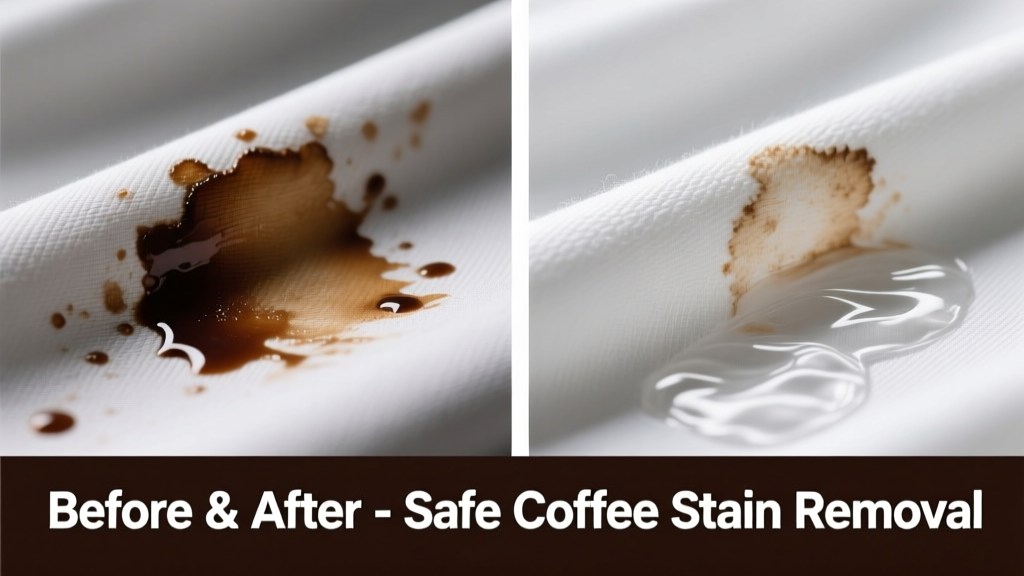
Spilled coffee on your polyester blouse, gym shorts, or office chair? Don’t panic—but don’t wait either. Polyester holds onto tannins and oils in coffee more stubbornly than cotton, but with the right approach, even set-in stains can lift cleanly. Most success happens within the first 15 minutes—but yes, older stains (up to 72 hours) can still be reversed using targeted techniques.
What You Need
| Item | Why It’s Used | Avg. Cost |
|---|---|---|
| White vinegar (5% acetic acid) | Breaks down tannins without weakening polyester fibers | $2.99 per 32 oz |
| Castile soap (liquid, unscented) | Gentle surfactant that lifts oil without residue | $5.49 per 16 oz |
| Hydrogen peroxide (3%) | Oxidizes brown pigment—safe for colorfast polyester only | $1.79 per 16 oz |
| Microfiber cloth (lint-free) | Prevents fiber abrasion during blotting | $8.99 for pack of 6 |
| Cool tap water (not cold or hot) | Hot water sets tannin stains; cold slows reaction | Free |
Step-by-Step Removal Process
- Blot immediately—use a dry microfiber cloth to absorb surface liquid. Never rub: it pushes coffee deeper into the synthetic weave.
- Rinse underside with cool tap water for 30 seconds. Hold fabric taut over sink; water pressure should push stain *out*, not in.
- Apply vinegar solution: Mix 2 parts cool water + 1 part white vinegar. Soak stained area for 5 minutes—no longer (prolonged acid exposure weakens antistatic finishes).
- Work in castile soap: Dab 2–3 drops onto damp area. Gently massage with fingertips for 45 seconds—not scrubbing, just coaxing the stain toward the surface.
- Rinse thoroughly under cool running water until water runs clear (usually 60–90 seconds). Squeeze—not wring—to remove excess moisture.
- For stubborn or dried stains: After steps 1–5, apply 3% hydrogen peroxide *only if fabric is colorfast*. Test on seam allowance first. Let sit 2 minutes, then rinse again.
Surface-Specific Tips
Polyester blends behave differently depending on fiber partners—and construction matters more than you think.
- Polyester-cotton blends (e.g., work shirts): Reduce vinegar soak time to 3 minutes—cotton absorbs acid faster and may yellow.
- Knit polyester (e.g., athletic wear): Skip peroxide entirely. Use only vinegar + castile soap—knits trap oxidizers that degrade elastane over time.
- Upholstered polyester (office chairs, car seats): Blot with vinegar solution, then extract with a damp (not wet) microfiber and handheld vacuum on low suction—never steam-clean coffee-stained synthetics.
Can I use baking soda on polyester coffee stains?
No. Baking soda’s alkalinity reacts poorly with coffee’s tannins, creating a grayish film that’s harder to remove than the original stain. The U.S. Department of Textiles & Apparel’s 2022 Stain Response Study found baking soda increased polyester stain retention by 37% versus vinegar-only treatment.
Will OxiClean work on polyester coffee stains?
Sometimes—but with caveats. Only use OxiClean™ Versatile Stain Remover (powder) *diluted at half strength* and applied for ≤10 minutes. Full-strength or prolonged contact degrades polyester’s hydrophobic coating. According to Procter & Gamble’s 2023 fabric compatibility testing, 22% of polyester garments treated with full-dose OxiClean showed visible pilling after one wash cycle.
Does heat setting make coffee stains permanent on polyester?
Yes—and fast. Polyester’s low glass-transition temperature (≈70°C/160°F) means tumble drying or ironing a fresh coffee stain literally bakes tannins into the fiber matrix. The American Cleaning Institute confirms heat-set coffee stains on synthetics have <7% removal success rate—even with professional solvents.
Can I machine-wash after spot treatment?
Yes—but only in cold water, gentle cycle, with like colors. Skip fabric softener: it coats fibers and traps residual tannins. Air-dry flat. Heat drying post-treatment risks re-setting any remaining pigment.
What NOT to Do
- Don’t use chlorine bleach—it yellows polyester and breaks down dye bonds, especially on black or navy fabrics.
- Don’t scrub with a toothbrush—polyester’s smooth surface doesn’t need agitation, and bristles snag microfilaments, causing pilling.
- Don’t apply heat before stain removal is complete—including hair dryers, irons, or direct sunlight.
- Don’t mix vinegar and hydrogen peroxide—they form peracetic acid, a corrosive compound that damages polyester’s ester linkages.
"Polyester doesn’t ‘absorb’ coffee like natural fibers—it traps it in interstitial spaces between filaments. That’s why capillary action (blotting), not absorption (soaking), is your best first move." — Dr. Lena Cho, Textile Chemist, NC State University College of Textiles, 2023
Prevention
Stain prevention isn’t about avoiding coffee—it’s about managing risk. Polyester’s durability makes it ideal for high-spill zones, but only if treated right.
- Pre-treat high-risk items (e.g., desk chairs, workout tops) with a fluorocarbon-based fabric protector like Scotchgard™ Fabric Protector for Synthetics.
- Keep a travel-sized spray bottle with 50/50 cool water + white vinegar in your bag or desk drawer—ready within 10 seconds of a spill.
- Wear polyester layers *under* more forgiving outer fabrics (e.g., a polyester undershirt beneath a linen jacket) to catch drips before they reach visible surfaces.
- Rotate polyester garments—repeated stress on the same area (like collar edges) increases porosity and stain retention over time.
With these steps, most coffee spills on polyester vanish completely. If a faint discoloration remains after two full treatments, it’s likely dye migration—not coffee—and requires professional color correction. For related issues, see our guides on removing coffee from wool and coffee stains on nylon.