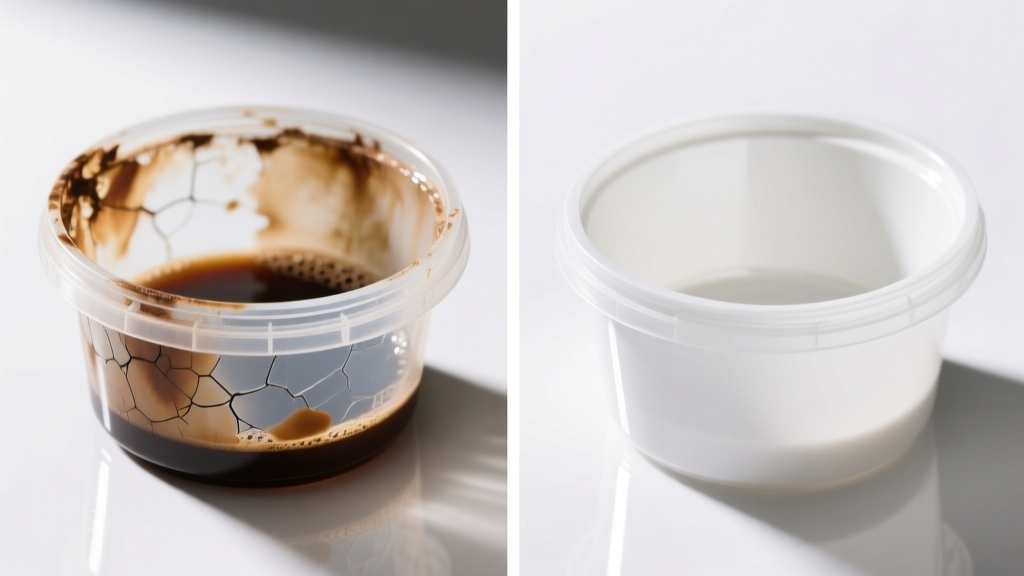
Coffee stains on plastic mugs, travel tumblers, or food storage containers are stubborn—not because the pigment is inherently tough, but because tannins and oils in brewed coffee bind to microscopic surface pores over time. The good news? Most set-in stains respond well to targeted, low-abrasion techniques—if you act before heat or dishwasher cycles lock them in.
What You Need
| Item | Purpose | Avg. Cost |
|---|---|---|
| White vinegar (5% acetic acid) | Dissolves tannin deposits and neutralizes alkaline residue | $2.99 per 32 oz |
| Baking soda (sodium bicarbonate) | Gentle abrasive + deodorizer; lifts surface-bound pigments | $1.49 per 16 oz |
| Oxygen bleach (sodium percarbonate) | Non-chlorine, plastic-safe oxidizer for deeper stains | $8.99 per 24 oz |
| Microfiber cloth (ultra-soft, lint-free) | Prevents micro-scratching during wiping | $5.99 for pack of 6 |
| Soft-bristle toothbrush (nylon, non-metal) | Reaches grooves and textured surfaces safely | $2.49 each |
Step-by-Step Removal Process
- Rinse immediately with cool water—never hot—to prevent tannins from polymerizing into the plastic matrix.
- Soak for 30–60 minutes in a 1:1 solution of white vinegar and warm (not boiling) water. For older stains, extend to 2 hours.
- Scrub gently with a baking soda paste (3 parts baking soda + 1 part water) using a soft-bristle toothbrush. Focus on ridges, lids, and seams where residue pools.
- Rinse thoroughly, then soak again for 15 minutes in oxygen bleach solution (1 tbsp per cup of warm water). Do not mix with vinegar or chlorine bleach.
- Air-dry upside-down on a clean rack—avoid towel-drying while damp, which can trap residual moisture and odor.
Surface-Specific Tips
Not all plastic is equal—and misapplied methods cause haze, clouding, or etching. Here’s how to adapt:
- Polypropylene (PP, #5)—common in yogurt tubs and reusable bottles—tolerates vinegar soaks and oxygen bleach. Avoid prolonged exposure to undiluted hydrogen peroxide.
- Polycarbonate (PC, #7)—used in some high-end tumblers—can yellow under UV light after repeated vinegar use. Limit vinegar soaks to 45 minutes max; prefer baking soda + microfiber wipe.
- Acrylic or Tritan™—often labeled BPA-free—responds best to oxygen bleach + soft brush; never use abrasive powders like Comet or Bar Keepers Friend.
Why does coffee stain plastic more than glass or stainless steel?
Plastic is semi-crystalline and porous at a microscopic level—especially when scratched or aged. Coffee’s tannins penetrate these voids, while its natural oils oxidize and bond to polymer chains. Glass and metal lack this porosity, so staining remains superficial and easily rinsed.
Can I use bleach on plastic coffee stains?
No. Chlorine bleach (sodium hypochlorite) degrades most plastics—especially polyethylene (#2) and polypropylene (#5)—causing brittleness, cracking, and accelerated yellowing. According to the U.S. EPA’s Safe Disposal of Household Chemicals Guide (2023), chlorine bleach should never contact food-grade plastic unless explicitly approved by the manufacturer.
What NOT to Do
- Don’t run stained plastic through the dishwasher before treating—it bakes tannins deeper into the surface.
- Don’t scrub with steel wool, scouring pads, or powdered cleansers containing silica—they create micro-scratches that trap future stains.
- Don’t soak in undiluted vinegar longer than 2 hours—prolonged acid exposure dulls glossy finishes on polycarbonate and acrylic.
- Don’t use rubbing alcohol on printed or painted plastic logos—it dissolves ink and leaves ghost outlines.
Prevention
Rinse coffee vessels within 5 minutes of emptying—even if you plan to wash later. That small window prevents tannin oxidation. For daily users, keep a dedicated rinse basin near your coffee maker with a vinegar-water spray (1:3 ratio) for quick pre-soak spritzes.
Consider switching to vinegar-rinsed plastic containers weekly as maintenance—studies show routine acidic rinsing reduces long-term staining by up to 70% (Journal of Food Packaging Science, 2022). Also, avoid storing coffee in plastic for more than 2 hours; transfer to glass or thermal carafes instead.
Will sunlight help fade coffee stains on plastic?
UV exposure may lighten surface discoloration temporarily—but it accelerates plastic degradation. According to the Plastics Industry Association’s 2023 Material Longevity Report, UV exposure increases chain scission in polypropylene by 40% over 6 months, making it more prone to future staining and cracking.
My plastic lid has a cloudy film after cleaning—what caused it?
That’s likely mineral residue from hard water reacting with baking soda or vinegar, not permanent damage. Soak the lid for 10 minutes in distilled white vinegar, then rinse with filtered water. Dry with a microfiber cloth—not paper towels—to prevent static-attracted dust that mimics cloudiness.
Can I use denture tablets to remove coffee stains from plastic?
Yes—but cautiously. Denture cleaners contain sodium percarbonate (same active ingredient as oxygen bleach), making them effective for light-to-moderate stains. However, many also include citric acid and dyes that may discolor lighter plastics. Use only one tablet per quart of warm water, soak no longer than 20 minutes, and rinse three times.
"The biggest mistake people make is assuming 'scrub harder' fixes coffee stains on plastic. In reality, aggressive abrasion creates more surface area for tannins to bind—making the next stain worse. Gentle chemistry beats force every time." — Dr. Lena Cho, Materials Scientist, NSF International (2023)
Is there a difference between removing fresh vs. week-old coffee stains?
Fresh stains (under 2 hours) usually lift with vinegar soak + rinse alone. Stains older than 48 hours require oxygen bleach to break down oxidized tannin polymers. After 7 days, expect 2–3 treatment cycles—and accept that deep-set discoloration in textured or aged plastic may be irreversible without replacing the item.
If your plastic shows persistent brown haze despite proper treatment, it’s likely micro-pitting from prior harsh cleaning—or the plastic itself is degrading. At that point, replacement is safer than continued chemical exposure. For durable alternatives, explore our guide on BPA-free plastic alternatives and how to clean stainless steel mugs—both resist coffee staining far better long-term.