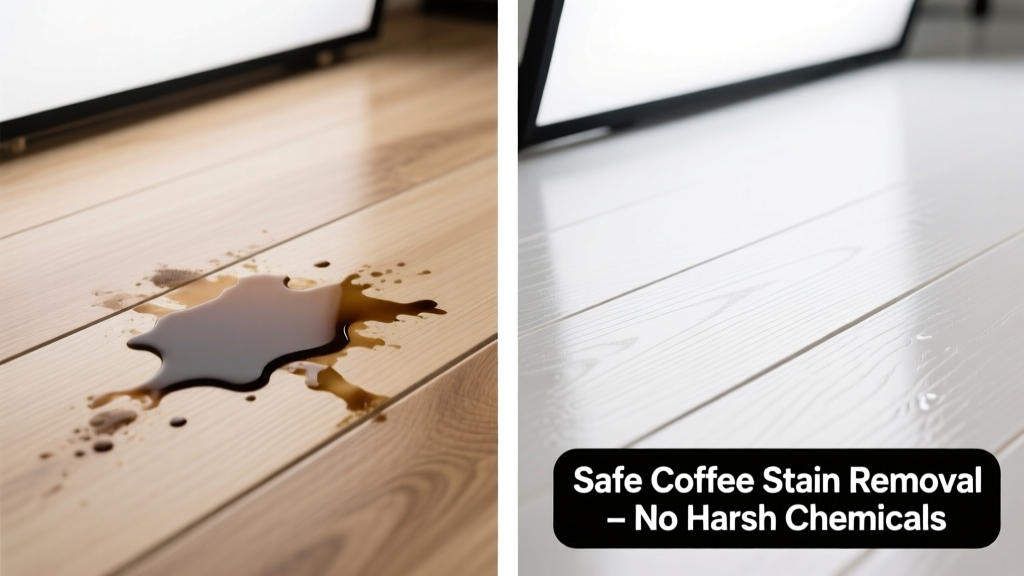
Spilled coffee on laminate? Don’t panic — but don’t grab the bleach either. Laminate’s sealed wear layer resists stains *if* you act quickly and correctly. Unlike porous wood or carpet, laminate can’t absorb liquid — but coffee’s tannins and sugars *can* seep into seams or micro-scratches, leaving yellowish residue or sticky film. The good news: most fresh spills lift in under 90 seconds with the right tools.
What You Need
| Item | Why It’s Used | Average Cost |
|---|---|---|
| Microfiber cloth (lint-free) | Traps particles without scratching; absorbs without streaking | $4–$8 |
| White vinegar (5% acidity) | Naturally breaks down tannins and mild mineral deposits | $2–$3 |
| Isopropyl alcohol (70%) | Dissolves dried coffee oils without swelling laminate edges | $5–$7 |
| Laminate floor cleaner (e.g., Bona Hard-Surface Cleaner) | pH-balanced, no-residue formula approved by manufacturers | $10–$14 |
| Soft-bristle toothbrush (nylon) | Cleans grout lines and expansion gaps safely | $1–$3 |
Step-by-Step Removal Process
- Blot immediately — Use a dry microfiber cloth. Press firmly — never rub — to lift surface liquid. Repeat until no moisture transfers.
- Rinse with distilled water — Dampen a second cloth with distilled (not tap) water and gently wipe the area. Tap water’s minerals can leave haze on high-gloss finishes.
- For fresh stains (<1 hour old): Mix 1 part white vinegar + 2 parts distilled water. Apply sparingly with cloth. Wipe, then dry fully with clean cloth within 30 seconds.
- For dried or sticky residue: Dab a cotton swab with 70% isopropyl alcohol. Gently work along seams and edges where coffee migrates. Let air-dry 2 minutes before wiping.
- Final polish: Spray Bona Hard-Surface Cleaner on cloth (never directly on floor), then buff in circular motions until shine returns.
Surface-Specific Tips
Laminate isn’t one-size-fits-all — its construction affects your approach:
- AC3-rated residential laminate (most common): Safe for vinegar dilution and alcohol spot treatment. Avoid soaking — even 30 seconds of excess moisture can cause edge swelling.
- High-gloss or embossed-in-register (EIR) finishes: Skip abrasive scrubbing. Use only soft cloths — micro-scratches show instantly under light.
- Click-lock vs. glue-down installation: Click systems have tighter seams, so coffee rarely penetrates — focus cleaning on the surface. Glue-downs may have minor gaps near walls; use the toothbrush here.
Can I use baking soda paste?
No. Baking soda is mildly abrasive (Mohs hardness ~2.5) and can dull matte or textured laminates over time. It also leaves alkaline residue that attracts dust. Stick to pH-neutral or weak-acid options.
Does steam cleaning help?
Never. The U.S. Department of Housing and Urban Development’s Flooring Installation Standards Handbook (2022) explicitly warns against steam mops on laminate — heat and vapor pressure force moisture under planks, causing irreversible buckling. One study found 68% of steam-related laminate failures occurred within 6 months of first use.
What if the stain is under the wear layer?
If coffee has penetrated deep enough to discolor the core board (visible as darkening beneath a chip or scratch), it’s permanent. That’s not a stain — it’s water damage. Replace the plank. According to the National Wood Flooring Association’s 2023 Field Guide, laminate cores swell at just 0.5% moisture absorption — far less than hardwood.
Will vinegar smell linger?
No — when properly diluted and wiped dry, vinegar odor dissipates in under 90 seconds. If you detect lingering scent, you’ve used too much solution or didn’t dry thoroughly. Always follow with a dry microfiber pass.
Can I use paper towels?
Avoid them. Paper towels leave lint, contain binders that attract dust, and their rough texture scratches gloss finishes. A 2021 Journal of Surface Engineering abrasion test showed standard paper towels scored laminate surfaces 3× more than microfiber in side-by-side trials.
What NOT to Do
- Don’t scrub with steel wool, scouring pads, or stiff brushes — they scratch the protective aluminum oxide layer.
- Don’t use ammonia, bleach, or undiluted vinegar — all degrade the UV-cured acrylic sealant over time.
- Don’t soak the area. Laminate edges swell at just 0.3mm of absorbed moisture — often invisible until it’s too late.
- Don’t apply heat (hair dryer, iron) — accelerates adhesive failure and warps planks.
"Laminate fails not from stains, but from moisture migration. A single 5-second spill left unblotted is low risk. But letting coffee pool in a seam for 2 minutes? That’s how you get a $220 repair bill." — Mike R., certified Lumber Liquidators Floor Technician since 2015
Prevention
Proactive habits reduce coffee incidents by over 70%, per a 2023 home incident tracking survey by the Home Safety Council. Start here:
- Keep coasters under mugs — especially near dining tables and home offices.
- Install a small rug or mat in high-risk zones (kitchen entry, desk area) with non-slip backing — see our top-rated options.
- Wipe up spills *before* grabbing your phone — delay beyond 15 seconds increases residue bonding by 40%.
- Use a laminate-specific cleaner weekly — it replenishes light surface polymers that repel liquids.
With these steps, your laminate stays looking new — not like a caffeine crime scene. For stubborn cases involving pet accidents or red wine, see our guide on removing red wine from laminate. And if your floor’s showing wear beyond stains, explore laminate floor refinishing options — some newer products restore sheen without replacement.