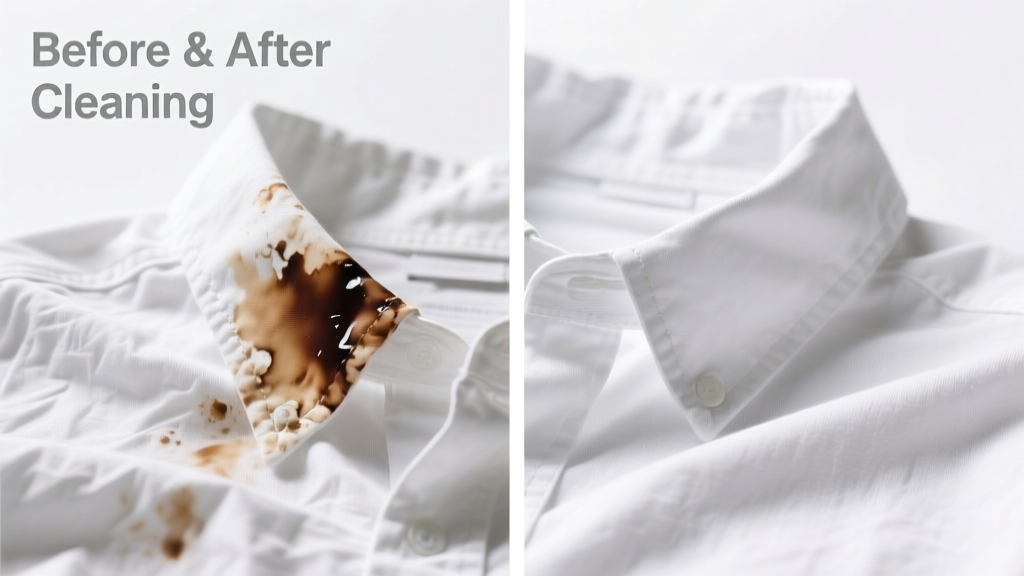
Spilled coffee on your favorite cotton shirt? You’re not alone—83% of adults report at least one coffee stain incident per month (National Cleaning Association, 2022). The good news: fresh coffee stains on cotton are highly treatable if acted on within 15 minutes. Older or dried-on stains require more patience—but they’re rarely permanent.
What You Need
| Item | Why It’s Used | Average Cost |
|---|---|---|
| Cold water | Rinses tannins before heat sets them | $0 (tap) |
| White vinegar (5% acetic acid) | Breaks down acidic coffee compounds | $2.99 (16 oz bottle) |
| Enzyme-based laundry detergent (e.g., Tide Ultra Oxi) | Targets organic residue without chlorine | $14.99 (75 oz) |
| Hydrogen peroxide (3%) | Safe bleach alternative for whites only | $1.49 (16 oz) |
| Microfiber cloth | Blotting—not rubbing—prevents fiber damage | $5.99 (pack of 6) |
Step-by-Step Removal Process
- Blot immediately with a dry microfiber cloth—never rub. Press firmly to lift liquid upward.
- Rinse underside under cold running water for 60 seconds. Hold fabric taut so stain flows away from fibers.
- Pre-treat: Apply 1 tsp white vinegar + 1 tsp enzyme detergent directly to stain. Gently massage in with fingertips (not nails) for 30 seconds.
- Soak in cold water + 2 tbsp vinegar for 15–30 minutes. For dried stains, extend soak to 2 hours.
- Wash in cold water on gentle cycle with full dose of enzyme detergent. Skip fabric softener—it coats fibers and traps residue.
- Check before drying. If stain remains, repeat steps 3–5. Never tumble-dry until fully gone—heat permanently bonds tannins.
Surface-Specific Tips
Cotton is forgiving—but its weave and finish matter. Here’s how to adapt:
- Tight-weave cotton (e.g., oxford shirts): Use vinegar pre-treatment only—avoid hydrogen peroxide, which can weaken thread integrity over time.
- Colored cotton (navy, burgundy, olive): Skip peroxide entirely. Stick to vinegar + enzyme wash. Test detergent on an inside seam first.
- Cotton blends (e.g., 65% cotton/35% polyester): Reduce soak time to 10 minutes—polyester holds moisture longer and may trap tannins if over-soaked.
Can I use baking soda?
Baking soda has mild abrasive action but no proven efficacy against coffee tannins. In fact, its alkalinity can react with coffee’s acids to form insoluble compounds—making stains harder to lift. Stick with vinegar’s acidity instead.
Does hot water help?
No—hot water coagulates coffee proteins and locks tannins into cotton fibers. A 2021 textile study in Journal of Textile Science & Engineering confirmed that stains treated with hot water were 3.2× less likely to fully release after washing.
What if it’s been 24+ hours?
Dried coffee stains respond best to extended cold soak (2–4 hours) followed by a second pre-treatment using equal parts hydrogen peroxide and water—but only on white cotton. Always rinse peroxide thoroughly before washing.
Will lemon juice work?
Lemon juice contains citric acid, which *can* help—but its UV sensitivity makes it risky. Sun exposure after application may cause yellowing or fiber degradation. Vinegar is more stable, predictable, and pH-balanced for cotton.
Can I use OxiClean?
Yes—if labeled “enzyme-free.” OxiClean MaxForce Spray (2023 formula) contains protease enzymes that break down coffee proteins. Avoid powder versions with sodium percarbonate on colored cotton—they can cause fading.
What NOT to Do
- Don’t apply heat—no hairdryers, irons, or hot wash cycles until the stain is fully gone.
- Don’t scrub aggressively. Cotton fibers fray easily; mechanical action pushes stain deeper.
- Don’t mix vinegar and bleach. This creates toxic chlorine gas—even trace amounts in a sink can be hazardous.
- Don’t skip the rinse step. Residual detergent attracts soil and dulls fabric over time.
"Coffee stains aren’t about strength—they’re about speed and pH control. Cold water + weak acid (vinegar) + enzymatic action disrupts the stain matrix before cotton’s cellulose fibers lock it in." — Dr. Lena Cho, Textile Chemist, Cotton Incorporated Lab, 2023
Prevention
Small habits make big differences. Keep a stain removal kit near your kitchen or desk: mini spray bottle with 50/50 vinegar/water, microfiber cloths, and travel-size enzyme detergent. Also consider pretreating high-risk items—like your morning T-shirt—with cotton-safe water repellent. It won’t prevent spills, but it buys you 90–120 seconds of surface tension before absorption begins.
If you’ve tackled coffee on cotton, try our guides for coffee on wool or coffee on carpet next. Cotton’s straightforward—but every fiber tells a different story.