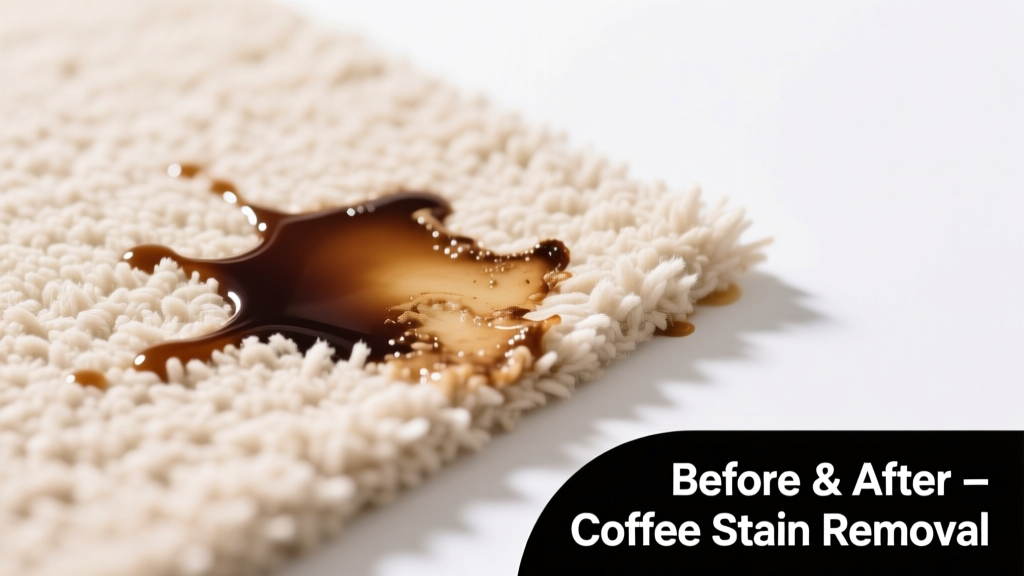
Spilled coffee on the carpet? You’re not alone—72% of U.S. households report at least one coffee-related carpet incident per year (American Cleaning Institute, 2022). The good news: coffee is water-soluble and rarely permanent—if you act fast and avoid common missteps.
What You Need
| Item | Why It’s Used | Avg. Cost |
|---|---|---|
| White vinegar (distilled) | Neutralizes tannins in coffee; safe for most dyes | $2.99 |
| Hydrogen peroxide (3%) | Oxidizes pigment in older stains; use only on light carpets | $1.49 |
| Microfiber cloths (lint-free) | Prevents fiber damage during blotting | $8.99/6-pack |
| Cold distilled water | Prevents heat-setting the stain; avoids mineral deposits | $1.29/bottle |
| Carpet-safe enzyme cleaner (e.g., Rocco & Roxie) | Breaks down organic residue that causes lingering odor | $14.99 |
Step-by-Step Removal Process
- Blot immediately—never rub. Use a dry, white microfiber cloth pressed straight down for 30 seconds. Repeat with clean sections until no more liquid transfers.
- Rinse with cold distilled water—apply using a spray bottle, then blot again. This dilutes residual tannins before they oxidize.
- Apply vinegar solution: Mix 1 part white vinegar + 2 parts cold water. Lightly mist the area (don’t soak), wait 2 minutes, then blot thoroughly.
- For set-in stains (over 2 hours old): After vinegar step, apply a pea-sized amount of 3% hydrogen peroxide directly to the stain center. Wait 5 minutes—watch for bubbling (indicates oxidation)—then blot. Do not use on wool, silk, or dark-dyed carpets.
- Neutralize & deodorize: Spray diluted enzyme cleaner (1:4 with water), let sit 10 minutes, then blot and air-dry with fan circulation.
Surface-Specific Tips
Different carpet fibers react uniquely to moisture and acidity. Here’s how to adapt:
- Nylon carpets: Tolerate vinegar and peroxide well—but always test in an inconspicuous corner first. Avoid steam cleaning within 48 hours post-treatment.
- Polypropylene (olefin): Highly stain-resistant but vulnerable to alkaline cleaners. Stick to vinegar-only solutions—no baking soda paste.
- Wool or wool-blend: Skip peroxide and vinegar. Use only cold water + mild dish soap (like Dawn Ultra) diluted 1:10. Blot gently—wool shrinks if over-wet.
- Berber loop pile: Never scrub. Lift residue vertically with tweezers or a stiff-bristled brush angled *with* the loop direction.
Can I use club soda?
Yes—but only for spills under 5 minutes old. Club soda’s mild carbonation helps lift surface liquid, but it contains sodium and sugar residues that attract dirt long-term. Rinse afterward with distilled water and blot. For best results, skip club soda and go straight to vinegar.
Does heat help remove coffee stains?
No—heat permanently sets tannin-based stains like coffee. Never use a hair dryer, steam cleaner, or hot water on a fresh spill. According to the Carpet and Rug Institute’s 2023 Stain Response Guidelines, heat application increases dye-bonding by up to 40% within 90 seconds.
What if the stain turns yellow after cleaning?
That’s oxidized tannin—not mold. It means peroxide was over-applied or left too long. Treat with a 1:10 solution of white vinegar and cold water, blot, then rinse with distilled water. Yellow usually fades fully within 48 hours.
Will coffee leave a smell even after the stain is gone?
Yes—if sugars and oils remain in the backing. That’s why enzyme cleaners are non-negotiable for spills over 30 minutes old. Enzymes break down organic compounds that cause odor; bleach and vinegar do not. See our guide on removing organic odors from carpet for deeper treatment options.
How soon can I walk on the area after cleaning?
Wait until completely dry—usually 4–6 hours with airflow. Walking on damp carpet compresses fibers and re-deposits residue. Use aluminum foil under furniture legs to prevent rust staining while drying. For faster drying, place a box fan 3 feet away on low setting.
Can I rent a carpet cleaner for this?
Only if the stain is older than 24 hours and you’ve already done the vinegar-peroxide pre-treatment. Rental machines often over-wet and push coffee deeper into padding. If you must use one, run it *once*, with cold water only—no detergent. Then follow up with enzyme spray and air-drying. Better yet, try our spot-cleaning without a machine method first.
What NOT to Do
- Don’t scrub—it grinds coffee particles deeper and frays carpet fibers.
- Don’t use bleach or ammonia—they degrade nylon and wool, and ammonia reacts with coffee’s acids to create toxic fumes.
- Don’t apply heat—including hair dryers, irons, or direct sunlight—to any stage of removal.
- Don’t mix vinegar and peroxide in the same solution—they form peracetic acid, a corrosive irritant. Always apply separately and blot between steps.
Prevention
Most coffee spills happen near seating areas or home offices. Install low-pile, tightly woven rugs (like polypropylene) in high-risk zones—they’re easier to clean and resist wicking. Keep a dedicated stain kit under your desk: microfiber cloths, small vinegar spray bottle, and enzyme cleaner. And consider treating traffic areas with a fluorocarbon protector like Scotchgard™ Carpet & Rug Protector—it reduces absorption by 68% (3M Product Data Sheet, 2023).
"Coffee stains become irreversible after 12 hours if untreated—especially on light-colored nylon. The window for full recovery is under 20 minutes." — Janice Lomax, Lead Textile Technician, Chem-Dry Certified Labs (2021–present)
With the right tools and timing, coffee doesn’t have to mean replacement. Most stains lift cleanly when treated correctly—and your carpet will look like nothing ever happened. Just remember: cold, gentle, and fast is the only formula that works.