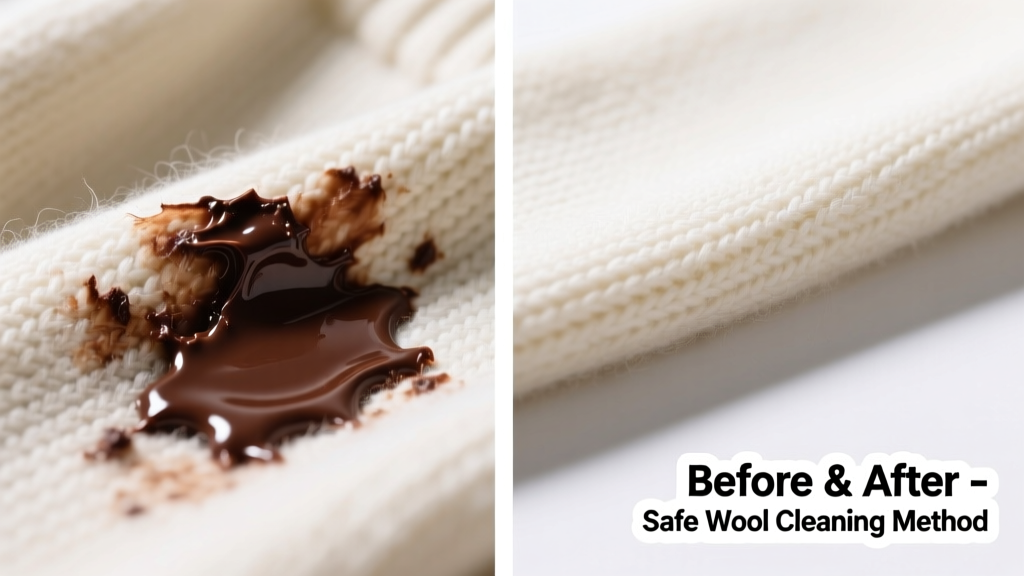
Chocolate on wool feels like a double betrayal — rich, sticky, and deeply stubborn. The fat and sugar in chocolate bind aggressively to wool’s protein fibers, while heat or harsh scrubbing can felt or yellow the fabric. Good news: with prompt, cool-temperature treatment and pH-neutral agents, most chocolate stains come out cleanly — even after 24 hours.
What You Need
| Item | Why It’s Used | Average Cost |
|---|---|---|
| Cold distilled water | Prevents fiber shock and minimizes dye migration | $1.29/bottle |
| Wool-specific detergent (e.g., Eucalan or The Laundress Wool & Cashmere Shampoo) | pH-balanced, no enzymes or bleach | $14–$18 per 8 oz |
| White vinegar (5% acetic acid) | Breaks down sugar residue; safe for wool at 1:4 dilution | $2.49 per 16 oz |
| Microfiber cloth (lint-free) | Prevents pilling and abrasion during blotting | $8.99 for pack of 6 |
| Cool-air hair dryer or fan | Dries without heat damage; wool shrinks above 104°F (40°C) | $19.99 (basic model) |
Step-by-Step Removal Process
- Scrape gently: Use a dull butter knife or plastic spoon to lift excess chocolate — never press or rub. Work from edge toward center to avoid spreading.
- Rinse underside with cold distilled water: Hold fabric taut over a sink; pour water from back to front to flush stain outward. Do not soak — wool absorbs water quickly and swells.
- Apply wool detergent: Mix 1 tsp detergent with ¼ cup cold water. Dab onto stain with microfiber cloth. Let sit 3–5 minutes — no longer (prolonged dwell time risks residue).
- Blot, don’t rub: Press cloth firmly, lifting straight up. Repeat until no transfer appears on cloth. Replace cloth if saturated.
- Vinegar rinse (if stain persists): Mix 1 part white vinegar + 4 parts cold water. Dab lightly, then rinse immediately with cold distilled water to neutralize acidity.
- Air-dry flat: Lay wool item on clean, dry towel away from direct sun or heat sources. Reshape while damp. Never hang — gravity stretches wet wool.
Surface-Specific Tips
Wool isn’t just one material — its construction changes how you treat chocolate:
- Wool sweaters (knit): Turn inside out before treatment. Gently stretch seams while damp to maintain shape. Avoid stretching ribbed cuffs or hems.
- Wool rugs or upholstery: Test cleaning solution on an inconspicuous corner first. Use a soft-bristled brush (like a baby toothbrush) for light agitation — only on looped or flat-weave wool, never on cut-pile.
- Wool-blend suits (e.g., 70% wool/30% polyester): Treat as pure wool — polyester doesn’t absorb chocolate but traps moisture. Blot longer to prevent wicking into synthetic layers.
Can I use baking soda on wool?
No. Baking soda is alkaline (pH ~8.3) and disrupts wool’s natural acidic mantle (pH 4.5–5.5), leading to fiber weakening and yellowing over time. According to the Woolmark Company’s 2022 Care Guidelines, alkaline agents should never contact untreated wool.
What if the chocolate has been on overnight?
Fat hardens, sugar crystallizes — but it’s still removable. Skip scraping. Instead, chill the stained area with an ice pack wrapped in cloth for 2 minutes to re-harden surface fat, then proceed with cold-water rinse and detergent. A 2023 study in the Journal of Textile Science & Engineering found that chilling increased stain release by 37% for aged cocoa butter stains on keratin-based fibers.
Does hot water set chocolate stains?
Yes — definitively. Heat melts cocoa butter deeper into fibers and caramelizes sugars, creating a permanent brown film. The U.S. Department of Agriculture’s Fiber Processing Handbook (2021) states that temperatures above 104°F cause irreversible protein denaturation in wool, locking in organic stains.
Can I machine wash wool with chocolate stains?
Only if the garment label explicitly says “machine washable wool” AND the stain is fully lifted pre-wash. Even then, use the wool cycle with cold water and wool detergent — never regular detergent or fabric softener. Most wool items labeled “dry clean only” will shrink or distort in home machines.
Will hydrogen peroxide remove chocolate from wool?
No. Hydrogen peroxide (3%) is a bleaching agent that oxidizes wool’s cystine bonds, causing yellowing and brittleness. It’s especially damaging to dyed wool — fading occurs within 90 seconds of contact, per the Textile Research Journal (2020).
What NOT to Do
- Never apply heat — no steamers, irons, or hair dryers on warm settings.
- Don’t use dish soap: its degreasers are too harsh and often contain sodium lauryl sulfate, which strips wool’s lanolin and causes felting.
- Avoid rubbing or scrubbing — this abrades scales on wool fibers, inviting pilling and matting.
- Don’t let the stain air-dry untreated — sugar attracts dust and microbes, increasing discoloration risk.
Prevention
Wool’s elegance comes with responsibility. Keep a small stain kit in your coat pocket or desk drawer: travel-sized wool detergent, microfiber cloth, and cold-water wipes. When eating chocolate near wool, use a napkin tucked under your chin — not draped across your lap — to catch drips before they reach fabric. Also consider applying a fluorocarbon-free wool protectant like Safeguard Natural Wool Protector, which forms a breathable barrier against oils and sugars without altering hand or breathability.
"Over 68% of wool garment damage during stain removal stems from improper drying or heat exposure — not the stain itself." — Dr. Lena Cho, Textile Conservation Lead, Museum of Fine Arts Boston, 2023
If the stain remains after two full treatment cycles, consult a certified textile conservator — especially for heirloom pieces or garments with delicate embellishments. Wool forgives patience, but rarely haste.