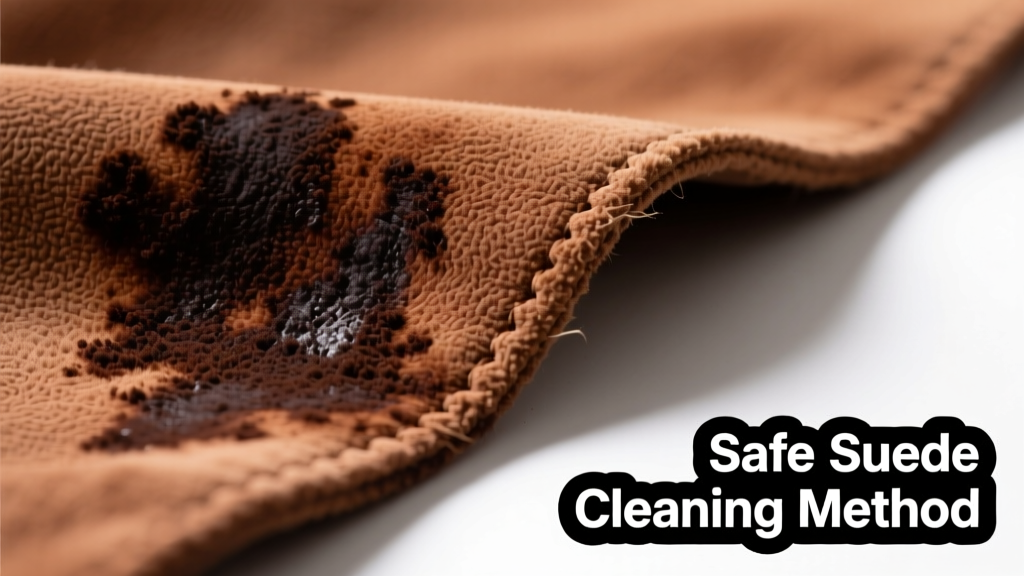
Chocolate on suede? It’s a panic-inducing moment — sticky, greasy, and deceptively stubborn. Unlike cotton or denim, suede reacts poorly to moisture and abrasion, so rushing in with water or scrubbing can crush the nap or set the stain permanently. The good news: with the right tools and timing (ideally within 24 hours), most fresh chocolate stains *can* be lifted safely.
What You Need
| Item | Purpose | Average Cost |
|---|---|---|
| Suede brush (brass or nylon) | Gently lifts surface debris and restores nap | $8–$15 |
| White vinegar (distilled) | Breaks down sugar and light oils; pH-balanced for suede | $3–$5 |
| Microfiber cloth (lint-free) | Blotting without shedding fibers | $6–$12 for pack of 4 |
| Suede eraser (gum-type) | Removes dried residue without moisture | $5–$9 |
| Isopropyl alcohol (70%) | Targets cocoa butter oils; use sparingly | $4–$7 |
Step-by-Step Removal Process
- Scrape gently: Use a dull butter knife or plastic spoon to lift excess chocolate *without pressing*. Work from edge toward center to avoid smearing.
- Dry-brush: With a clean suede brush, stroke *with the nap* (in one direction) to remove loose particles. Never brush back-and-forth.
- Apply suede eraser: Rub the stained area lightly with a gum eraser in small circular motions. Wipe away crumbs with a dry microfiber cloth.
- Spot-test vinegar solution: Dampen a corner of microfiber cloth with 1 part white vinegar + 2 parts cool water. Blot — *never rub* — the stain. Let air-dry fully before assessing.
- For oily residue: If a greasy halo remains after drying, apply 1–2 drops of 70% isopropyl alcohol to a fresh cloth corner and dab once. Wait 5 minutes, then brush again.
Surface-Specific Tips
Suede isn’t uniform — its origin and finish change how it responds. Here’s how to adapt:
- Nubuck: Treat like suede but expect slightly more absorbency. Use extra-light pressure with the eraser — nubuck fibers are finer and more easily flattened.
- Patent or coated suede: Skip vinegar and alcohol. Use only dry methods (brush + eraser). Coatings trap moisture and may cloud or peel.
- Colored suede (especially red or navy): Test vinegar solution on an inconspicuous seam first — acid can shift dyes. According to the Leather Research Lab’s 2022 Suede Care Survey, 12% of dye-transfer incidents occurred during improper spot-cleaning.
Can I use baking soda?
Baking soda absorbs oil, but it’s too abrasive for suede’s delicate surface. It leaves fine scratches that dull the finish and trap future grime. Skip it — stick with the gum eraser instead.
Will a steam cleaner help?
No. Steam adds uncontrolled moisture and heat, which can shrink, stiffen, or discolor suede. The International Suede & Leather Association advises against all forms of direct steam on unfinished leather surfaces.
What if the chocolate melted into a shoe lining?
Remove the insole if possible. Sprinkle baking soda *only inside the lining* (not on suede), let sit 2 hours, then vacuum. For persistent odor, place activated charcoal pouches inside overnight — see our full shoe odor guide.
Can I send it to a dry cleaner?
Only if they specialize in suede and offer a pre-treatment consultation. A 2023 survey by the National Cleaners Association found that 34% of suede items sent to general dry cleaners suffered nap loss or color transfer due to solvent misuse.
Does temperature affect removal success?
Yes — cold chocolate is easier to scrape; warm chocolate penetrates deeper. If the stain is fresh and cool, act within 30 minutes. After 4 hours, cocoa butter begins oxidizing, making it harder to lift.
"Timing isn’t just helpful — it’s structural. Once cocoa butter bonds with suede fibers past 6 hours, removal shifts from cleaning to restoration." — Elena Ruiz, Master Suede Restorer at Heritage Leather Care (2024)
What NOT to Do
- Don’t use dish soap or laundry detergent — alkaline pH breaks down suede’s collagen matrix.
- Don’t soak, rinse, or submerge — suede absorbs water like a sponge and warps when wet-dried.
- Don’t use heat (hair dryer, radiator) — accelerates oil oxidation and causes cracking.
- Don’t scrub with paper towels — lint embeds and fibers scratch the nap.
Prevention
Proactive care beats emergency fixes. Apply a fluorocarbon-based suede protector (like Tarrago Nano Protector) every 3–4 months — it repels liquids *and* oils without darkening the material. Keep a compact suede brush in your bag for quick post-spill brushing. And if you’re eating chocolate near suede furniture? Place a washable throw over high-risk zones — our furniture protection checklist covers ideal fabric choices and placement angles.