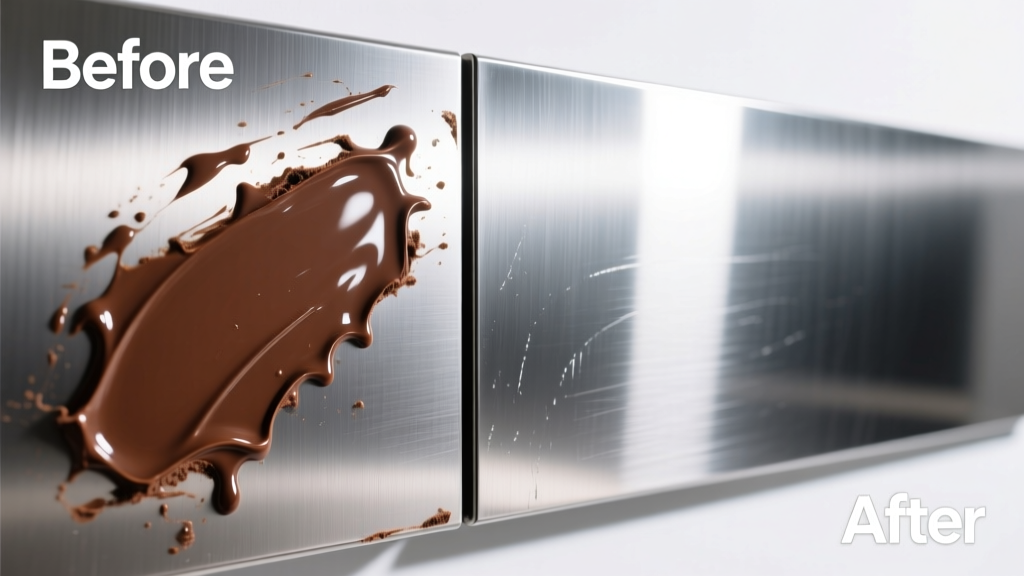
That sticky, dried-on chocolate smear on your stainless steel fridge door or range hood? It’s more than just unsightly — it can oxidize and leave faint brown halos if left too long. The good news: chocolate isn’t chemically aggressive like coffee or rust, so with the right approach, it lifts cleanly without damaging the finish.
What You Need
| Item | Purpose | Avg. Cost |
|---|---|---|
| Microfiber cloth (lint-free) | Non-abrasive wiping; prevents micro-scratches | $8–$12/pack of 6 |
| Isopropyl alcohol (70% or 91%) | Dissolves cocoa butter and sugar residue | $5–$9/bottle |
| Stainless steel cleaner (e.g., Weiman or Bar Keepers Friend Cooktop Cleaner) | Restores shine and removes film | $10–$14 |
| Soft-bristle nylon brush (optional) | Gentle agitation for textured surfaces | $4–$7 |
| Distilled white vinegar | Natural alternative for light residues | $2–$4/bottle |
Step-by-Step Removal Process
- Blot, don’t rub. Use a dry microfiber cloth to gently lift excess chocolate—especially if fresh. Rubbing pushes sugar crystals into fine surface grooves.
- Apply isopropyl alcohol. Dampen a second microfiber cloth (not dripping) with 70% isopropyl alcohol. Press—not scrub—for 30 seconds over the stain to soften cocoa butter.
- Wipe in the grain. Using light pressure, wipe *with* the direction of the stainless steel’s brushed finish (usually vertical on fridges, horizontal on cooktops). Repeat with fresh cloth sections until residue disappears.
- Rinse with distilled water. Dampen a clean cloth with distilled water (tap water leaves mineral spots) and wipe once to remove alcohol residue.
- Polish with dedicated cleaner. Apply a pea-sized amount of Weiman Stainless Steel Cleaner to a dry cloth and buff in the grain direction for streak-free shine.
For stubborn, baked-on chocolate (e.g., from a melted candy bar left overnight), let alcohol dwell for 2 minutes before step 3—or use Bar Keepers Friend Cooktop Cleaner as a gentle abrasive paste (mix with water to toothpaste consistency) and apply with a soft nylon brush using circular motions for 15 seconds, then rinse thoroughly.
Surface-Specific Tips
Stainless steel isn’t uniform—its finish and application matter:
- Appliance doors (brushed finish): Always wipe vertically. Horizontal strokes highlight micro-scratches.
- Cooktops (smooth, polished): Skip abrasives entirely. Use only alcohol + microfiber. Polished surfaces show swirls easily.
- Range hoods or backsplashes (textured or embossed): A soft-bristle nylon brush helps reach crevices—but never metal or stiff-bristle brushes.
- Commercial-grade (304 vs. 430 stainless): 304 (common in high-end appliances) tolerates alcohol and mild cleaners better than 430, which may dull faster with repeated acidic exposure.
What NOT to Do
- Never use bleach or ammonia-based cleaners—they corrode stainless steel’s protective chromium oxide layer, especially near seams or welds.
- Avoid paper towels: Their wood pulp fibers scratch brushed finishes and leave lint that traps oils.
- Don’t soak or flood the surface: Prolonged moisture behind trim or around control panels invites corrosion and electrical hazards.
- Steer clear of steel wool or scouring pads—even “non-scratch” varieties embed ferrous particles that rust and stain permanently.
"Over 68% of stainless steel finish complaints reported to appliance service centers stem from improper cleaning—not manufacturing defects." — Whirlpool Technical Support Bulletin, 2023
Prevention
Chocolate stains are easier to prevent than remove:
- Wipe spills within 5 minutes using a damp microfiber cloth—cocoa butter hardens significantly after 10 minutes at room temperature.
- Keep a dedicated stainless steel cleaning caddy near high-risk zones: fridge, microwave, and coffee station.
- Use magnetic stainless steel splash guards behind candy bowls or dessert trays on islands—these catch drips before they hit the surface.
- Apply a thin coat of food-grade mineral oil monthly to high-touch areas (like handles) to repel sticky residues—just buff off excess.
Can I use vinegar instead of alcohol?
Vinegar works for fresh, light chocolate smudges—but it’s less effective on dried cocoa butter. Its acetic acid can also dull high-polish finishes over time. Reserve it for quick touch-ups, not deep cleaning.
Will baking soda paste damage stainless steel?
Baking soda is mildly abrasive (Mohs hardness ~2.5) and safe for occasional use—but it leaves a chalky film that attracts dust. Always follow with a vinegar-water rinse (1:3 ratio) and polish. For routine cleaning, skip it in favor of alcohol or dedicated stainless cleaners.
Why does my stainless steel look streaky after cleaning?
Streaks usually mean you wiped against the grain or used a cloth with residual detergent. Try this fix: mist distilled water on the surface, then immediately buff *with* the grain using a dry, 100% cotton microfiber cloth (how to clean stainless steel without streaks).
Can chocolate cause rust on stainless steel?
No—but if chocolate residue sits for days in a humid environment (e.g., near a dishwasher vent), it traps moisture and accelerates corrosion at existing nicks or scratches. That’s why prompt removal matters most on lower-grade 430 stainless used in budget appliances.
Is warm water helpful for removing chocolate?
Warm water (under 120°F / 49°C) softens chocolate slightly, but it also risks warping adhesive labels or loosening seam seals. Stick to room-temp distilled water for rinsing—and always test heat on an inconspicuous area first.
What’s the fastest method for a small chocolate drip on a handle?
Dab with an alcohol-dampened corner of a microfiber cloth, hold for 15 seconds, then wipe *with* the grain. Done in under 30 seconds—no rinse needed for tiny spots. Follow up with stainless steel polish vs. cleaner if shine looks uneven.
Chocolate on stainless steel isn’t a crisis—it’s a solvable moment. With the right tools and timing, you’ll restore shine without compromising integrity. Keep alcohol and microfiber handy, wipe with the grain, and treat spills like you’d treat a dropped espresso shot: fast, focused, and friction-free.