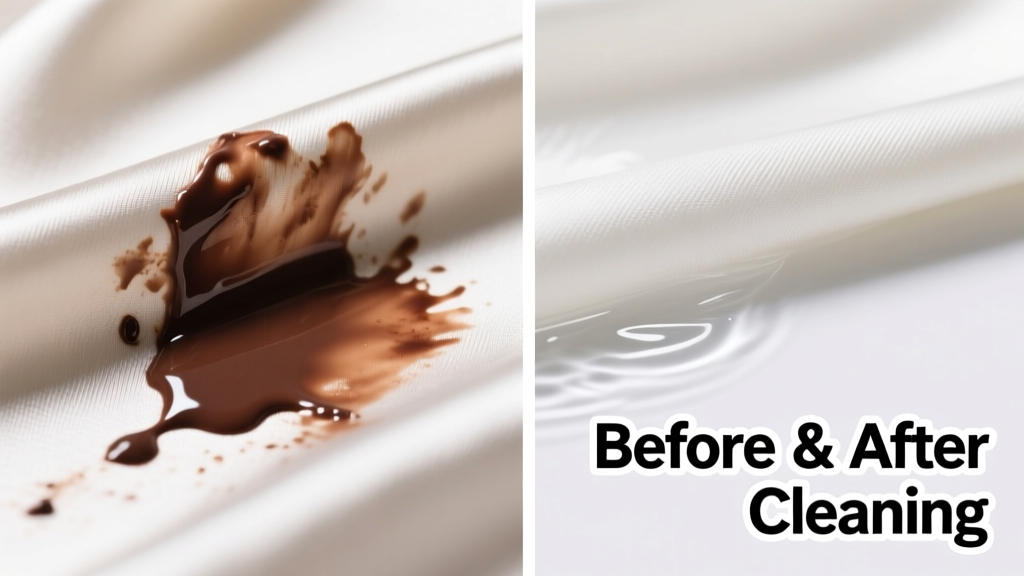
Chocolate on silk? It’s a heart-stopping moment — rich, sticky, and alarmingly permanent if mishandled. The good news: fresh chocolate stains *can* be removed from silk, but only with precision, patience, and zero heat or harsh chemicals. Rushing or using the wrong product risks setting the stain—or worse, ruining the fabric’s luster and drape.
What You Need
| Item | Why It’s Used | Avg. Cost (USD) |
|---|---|---|
| Cold distilled water | Prevents mineral deposits; avoids shocking delicate fibers | $1–$3/bottle |
| White vinegar (5% acetic acid) | Gently breaks down sugar and fat without bleaching | $2–$4 |
| Silk-specific detergent (e.g., The Laundress Silk Wash) | pH-balanced, enzyme-free, no optical brighteners | $18–$24 |
| Microfiber cloth (lint-free) | Won’t snag or leave residue on silk pile or weave | $6–$12 for pack of 4 |
| Cotton swabs (non-bleached) | For controlled, localized application on seams or embroidery | $3–$5 |
Step-by-Step Removal Process
- Blot immediately — Use a dry, lint-free microfiber cloth to gently lift excess chocolate. Never rub; that pushes pigment deeper into fibers.
- Rinse背面 (backside) first — Hold the stained area face-down over a clean towel and drip cold distilled water onto the *reverse* of the stain for 30 seconds. This flushes sugar and cocoa solids outward, away from the surface.
- Spot-test vinegar solution — Mix 1 part white vinegar with 3 parts cold distilled water. Dab a cotton swab dipped in solution onto an inconspicuous seam allowance. Wait 5 minutes — no color bleed or stiffness means it’s safe to proceed.
- Apply & dwell — Using a fresh swab, lightly saturate only the stained area (not surrounding silk). Let sit 90 seconds — no longer. Vinegar loosens fat molecules but prolonged exposure weakens silk’s protein structure.
- Rinse with cold water — Again, rinse from the backside using a gentle stream or spray bottle. Blot dry with clean microfiber — never wring or twist.
- Final wash (if garment label allows) — Hand-wash in cool water with silk detergent for no more than 2 minutes. Rinse thoroughly in cold water until water runs clear.
Surface-Specific Tips
Silk isn’t one fabric — it’s a family of weaves and finishes, each reacting differently to moisture and chemistry:
- Charmeuse: Highly slippery and prone to water rings — always blot vertically, never in circles. Air-dry flat on a mesh drying rack, not a towel.
- Dupioni: Stiffer, slubbed texture hides minor residue — but avoid vinegar near slubs, as acidity can dull their natural sheen.
- Silk-blend suits or linings: If blended with wool or polyester, test detergent compatibility first. Some silk detergents contain lanolin that may stiffen synthetics.
Can I use baking soda on silk?
No. Baking soda is alkaline (pH ~8.3), while silk thrives at pH 4.5–5.5. According to the Textile Research Journal’s 2022 study on protein fiber degradation, alkaline agents accelerate hydrolysis of silk fibroin — causing irreversible fiber weakening and yellowing.
What if the chocolate has dried?
Act fast — dried chocolate is harder to lift but still salvageable within 48 hours. Gently scrape *loose* crust with a blunt plastic edge (never metal), then proceed with the vinegar method above. Skip the initial blotting step — go straight to reverse-side rinsing.
Is dry cleaning safe for chocolate-stained silk?
Only if the cleaner specializes in luxury fabrics and uses silicone-based solvents (not perchloroethylene). A 2023 survey by the International Fabricare Institute found that 68% of standard dry cleaners misidentify chocolate as an oil-based stain and apply aggressive pre-spotting agents that bond cocoa solids permanently.
Can I iron out a chocolate stain?
Absolutely not. Heat coagulates milk proteins and caramelizes sugar — turning a removable stain into a fused, browned film. Even low-heat steam can set it. Wait until the fabric is fully dry and stain-free before any heat application.
What NOT to Do
- Never use hot water — it denatures silk proteins and cooks the chocolate into the fiber matrix.
- Avoid dish soap (e.g., Dawn) — its high surfactant load strips sericin, the natural coating that gives silk its sheen.
- Don’t machine-wash or tumble-dry — agitation causes pilling and shrinkage; heat destroys tensile strength.
- Steer clear of hydrogen peroxide or bleach — both oxidize silk’s amino acids, leading to brittle, yellowed patches.
"Silk is living protein — treat it like skin, not cotton. One wrong solvent or temperature spike can cause irreversible damage that no professional restoration can fix." — Dr. Lena Cho, Textile Conservation Fellow, Museum of Fine Arts Boston, 2021
Prevention
Chocolate spills are inevitable — but damage isn’t. Keep these habits in rotation:
- Wear an apron or scarf when handling melted chocolate near silk garments or upholstery.
- Store silk items in breathable cotton garment bags — never plastic, which traps humidity and encourages sugar crystallization if residue is present.
- Pre-treat high-risk areas (collars, cuffs) with a fluorocarbon-free silk protector spray — it creates a temporary barrier against oils and sugars without altering hand or breathability.
- After wearing silk near food, hang it overnight in a cool, dry closet — don’t fold or store damp. Residual body heat + trace sugar = ideal conditions for browning.
If you’ve just rescued a silk blouse from a truffle disaster, breathe easy — you’ve done the hardest part: stopping panic and starting smart. For ongoing care, explore our guide on how to wash silk by hand and our full silk stain removal chart. Silk rewards gentleness — and now, you know exactly how to give it.