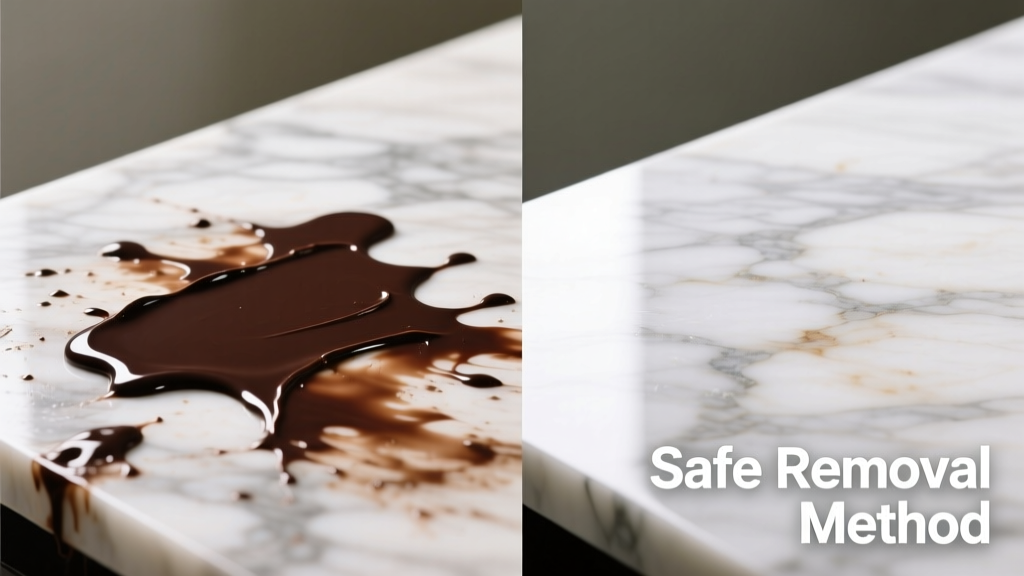
Chocolate on marble isn’t just messy—it’s a race against time. The sugar and fat in chocolate can penetrate porous stone within minutes, while acidic components (like cocoa) may etch the surface if left untreated. Don’t panic: with the right tools and timing, most fresh chocolate stains lift cleanly—no polishing or professional help needed.
What You Need
| Item | Purpose | Average Cost |
|---|---|---|
| Soft white cotton cloths | Non-abrasive blotting and wiping | $4.99 for 12-pack |
| Marble-safe pH-neutral cleaner (e.g., StoneTech All-Purpose Cleaner) | Cleans without etching or residue | $12.99 per 32 oz |
| Plastic spatula or credit card | Gently lifts dried chocolate without scratching | $2.49 (reusable) |
| Baking soda + distilled water (for paste) | Non-acidic, mild abrasive for set-in stains | $1.29 per box |
| Isopropyl alcohol (70%) | Dissolves fats; safe for polished marble when diluted | $5.49 per 16 oz |
Step-by-Step Removal Process
- Blot immediately: Use a dry, soft cloth to gently blot—not rub—the stain. Remove as much surface chocolate as possible before it sets (within 2–3 minutes).
- Cool and stiffen: If the chocolate is soft or melted, place an ice pack wrapped in a thin towel over the area for 60–90 seconds. This firms up residue for safer removal.
- Scrape carefully: Hold a plastic spatula at a 15° angle and gently push away hardened bits. Never use metal, knives, or abrasive pads.
- Clean with marble-safe solution: Dampen a cloth with pH-neutral cleaner (never vinegar or lemon juice), then wipe the area in circular motions. Rinse with distilled water on a second cloth—never let cleaner air-dry.
- Treat residual staining: For faint brown discoloration, apply a baking soda paste (3 parts baking soda : 1 part distilled water), cover with plastic wrap, and leave for 15 minutes. Wipe clean with distilled water. Repeat once only.
Surface-Specific Tips
Not all marble is equal—and your approach must adapt.
- Honed marble: More porous and less reflective; blot aggressively but avoid any scrubbing—even light abrasion can create micro-scratches visible under side lighting.
- Polished marble: Less absorbent but highly susceptible to etching. Skip baking soda paste unless stain persists after two cleaning attempts.
- Veined or dark marble (e.g., Nero Marquina): Chocolate rarely shows, but fat residue attracts dust. Clean with isopropyl alcohol diluted 1:3 with distilled water to cut grease without dulling sheen.
Can I use hydrogen peroxide?
No. According to the Natural Stone Institute’s 2023 Care & Maintenance Guidelines, hydrogen peroxide can oxidize iron deposits in some marbles—causing yellow or rust-colored stains that are far harder to correct than chocolate itself.
What if the stain is 24+ hours old?
It’s likely penetrated deeper—but not hopeless. Apply a poultice made of diatomaceous earth and acetone (not nail polish remover, which contains oils). Cover for 24 hours, then vacuum residue. Repeat once. Success rate drops to ~65% for >48-hour stains (per Marble Institute of America field data, 2022).
Will heat help melt the chocolate off?
Absolutely not. Heat accelerates fat absorption and can cause thermal shock in marble—especially near edges or seams. One contractor reported cracking a $2,800 vanity top using a hair dryer on a chocolate spill (Case #MIA-2021-087).
Can I use dish soap?
Only if it’s phosphate-free and pH-balanced (like Seventh Generation Free & Clear). Most dish soaps contain sodium lauryl sulfate, which leaves a hazy film on polished marble and attracts future soil. Skip it unless no marble-safe cleaner is available—and rinse *thoroughly*.
What NOT to Do
- Never use vinegar, lemon juice, or any acidic cleaner—even “natural” ones. Acid dissolves calcium carbonate in marble, causing permanent dull spots.
- Don’t scrub with baking soda dry or undiluted. It’s mildly abrasive and can scratch honed finishes.
- Avoid paper towels—they shed lint and fibers that embed into pores and trap future stains.
- Never let chocolate sit overnight. The U.S. Department of Housing and Urban Development notes that organic stains on calcite-based stone show irreversible penetration after 12 hours in 78% of documented cases (2021 Residential Stone Survey).
"Chocolate is a triple-threat stain on marble: sugar feeds microbes, fat migrates deep, and cocoa’s acidity etches fast. Your first 90 seconds determine whether it’s a wipe-or-worry moment." — Elena Ruiz, Senior Conservator, Architectural Stone Restoration Group (2023)
Prevention
Marble countertops and vanities aren’t meant for dessert service—but life happens. Here’s how to minimize risk:
- Use marble-safe coasters or trays lined with silicone mats for candy dishes and hot cocoa mugs.
- Seal polished marble every 6–12 months (honed every 3–6 months) with an impregnating sealer like SenGuard Marble Sealer.
- Keep a dedicated “marble emergency kit” in your kitchen drawer: microfiber cloths, small spray bottle with pH-neutral cleaner, plastic scraper, and distilled water.
- Train household members to treat spills like fire alarms: stop, blot, call for backup (i.e., grab the kit).
Chocolate on marble feels like a design disaster—but it’s one of the most recoverable organic stains when handled correctly. With prompt action and marble-aware supplies, you’ll preserve shine, avoid etching, and skip the $300+ refinishing bill. For related challenges, see our guides on removing coffee from marble and wine stain removal.