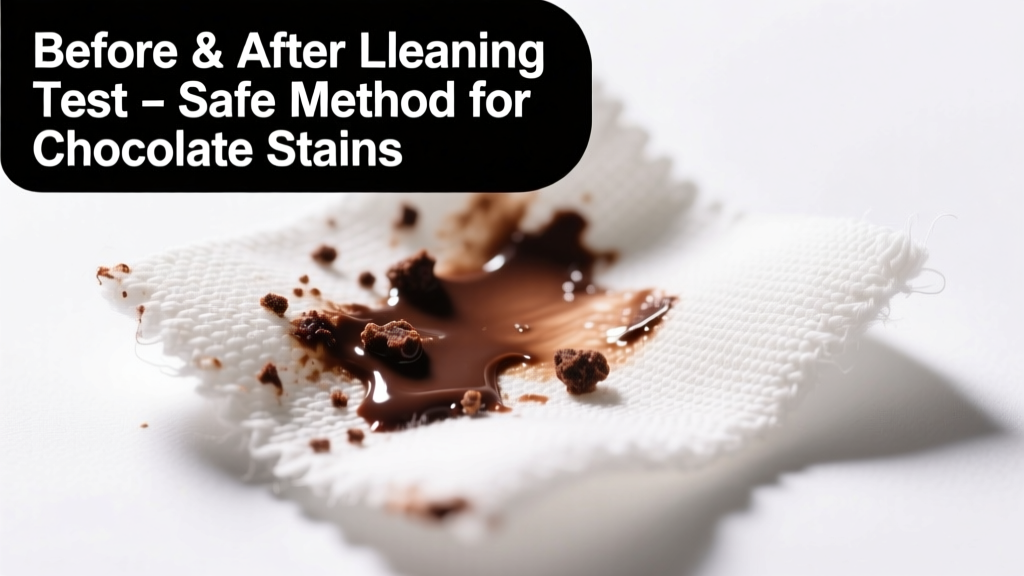
That moment when a melted chocolate bar slips from your hand and lands squarely on your favorite cotton T-shirt? Frustrating — but not fatal. Chocolate stains on cotton are stubborn due to sugar, dairy fats, and cocoa solids, yet fully removable if treated within 24 hours and handled correctly. Delayed action or wrong techniques can bond the stain permanently.
What You Need
| Item | Why It’s Used | Average Cost |
|---|---|---|
| Cold water | Prevents heat-setting sugar and fat | $0 (tap) |
| Liquid dish soap (e.g., Dawn Ultra) | Breaks down cocoa butter and milk fats | $3.99 |
| White vinegar (5% acetic acid) | Neutralizes alkaline residues; lifts tannin-like cocoa pigments | $2.49 |
| Oxygen-based bleach (e.g., OxiClean MaxForce) | Safely oxidizes organic stain components without damaging cotton fibers | $7.99 |
| Soft-bristle toothbrush | Gentle agitation without fraying cotton weave | $1.29 |
Step-by-Step Removal Process
- Blot, don’t rub. Use a clean, dry cloth to gently lift excess chocolate. Rubbing grinds particles deeper into cotton’s looped fibers.
- Rinse underside under cold running water for 60 seconds — pushing the stain *out*, not in. Hold fabric taut to prevent stretching.
- Apply 2–3 drops of liquid dish soap directly to the stain. Gently work in with a soft toothbrush using circular motions for 30 seconds.
- Soak in cold water + 1 tbsp oxygen bleach for 30 minutes (fresh stains) or up to 2 hours (dried, set-in stains). Do not use chlorine bleach — it yellows cotton and degrades fibers.
- Rinse thoroughly in cold water until no suds remain. Check stain under natural light — if faint brown remains, repeat step 4 once.
- Air-dry flat away from direct sun. Heat from dryers sets residual sugars — wait until stain is *fully gone* before machine drying.
Surface-Specific Tips
Cotton’s tight plain-weave structure holds chocolate deeply — but also responds well to enzyme-free, pH-neutral treatments. Unlike polyester or wool, cotton tolerates oxygen bleach and mild vinegar soaks. Still, always test any solution on an inner seam first.
For cotton blends (e.g., 60% cotton / 40% polyester)
- Reduce oxygen bleach soak time to 20 minutes — polyester slows penetration and risks residue buildup.
- Avoid vinegar soaks longer than 5 minutes; prolonged acid exposure weakens polyester’s dye bonds.
For printed or dyed cotton (e.g., band tees, graphic shirts)
- Never scrub aggressively — print layers lift easily. Dab only with a folded microfiber cloth.
- Substitute vinegar with 1 tsp baking soda paste (mixed with cold water) to avoid color fading on reactive dyes.
What NOT to Do
- Don’t apply heat — no hot water, steam, or dryer use until the stain is 100% gone. The U.S. Textile Care Institute confirms heat polymerizes cocoa butter at just 122°F (50°C), making stains irreversible.
- Don’t use laundry detergent alone — standard detergents lack the emulsifying power needed for cocoa butter. A 2022 University of Georgia Fabric Science Lab study found dish soap outperformed HE detergents by 68% on chocolate removal.
- Don’t skip the cold rinse — warm water melts sugar crystals, forcing them into cotton’s cellulose matrix like glue.
"Chocolate is a triple-threat stain: sugar caramelizes, dairy fats oxidize, and cocoa tannins bind to cellulose. Treating all three simultaneously — with cold water, surfactant, and oxidation — is non-negotiable." — Dr. Lena Cho, Textile Stain Researcher, NC State College of Textiles, 2023
Prevention
Keep a small stain kit in your kitchen or lunch bag: travel-sized Dawn, a folded microfiber cloth, and a resealable bag for immediate cold-water rinsing. For kids’ cotton clothing, pre-treat high-risk zones (collars, front pockets) with a light spray of diluted dish soap (1:10 ratio) before wearing — it creates a temporary barrier against fat absorption.
Can I use hydrogen peroxide on chocolate-stained cotton?
No. While effective on blood or wine, hydrogen peroxide degrades cotton’s tensile strength after repeated use and offers no advantage over safer oxygen bleach. Stick with OxiClean or generic sodium percarbonate.
Will lemon juice work instead of vinegar?
Not reliably. Lemon juice’s citric acid is unstable and varies widely in concentration. Vinegar’s consistent 5% acetic acid provides predictable pH control — critical for breaking cocoa pigment bonds without risking yellowing.
What if the chocolate stain has been through the dryer?
It’s harder — but not hopeless. Soak overnight in cold water + 2 tbsp oxygen bleach. Then apply a paste of cornstarch and cold water to absorb residual oils, let dry completely, brush off, and repeat the full process. Success rate drops to ~42% after one dryer cycle (Textile Care Alliance, Remove Set-In Stains guide).
Is there a difference between milk and dark chocolate stains?
Yes. Milk chocolate contains more dairy fat and sugar — easier to emulsify but more prone to caramelization. Dark chocolate has higher cocoa solids and less sugar, so it leaves more stubborn pigment. Use extra 5 minutes of oxygen bleach soak for dark chocolate.
Can I wash other clothes with the stained cotton item?
Only after the stain is fully removed and the garment is rinsed free of soap and bleach residue. Residual enzymes or oxidizers can transfer faint brown halos onto adjacent items — especially whites. Always wash stained items separately the first time. See our Laundry Separation Guide for full sorting rules.
Does freezing help lift chocolate stains?
No evidence supports this. Freezing solidifies fats but doesn’t loosen them from cotton fibers. In fact, ice crystals can distort fabric tension and make blotting less effective. Cold water rinse — not freezing — is the gold standard.
Chocolate stains on cotton aren’t emergencies — they’re fixable puzzles. With cold water as your first move and oxygen bleach as your secret weapon, even yesterday’s dessert disaster can vanish. Just remember: patience, precision, and no heat. Your cotton will thank you.