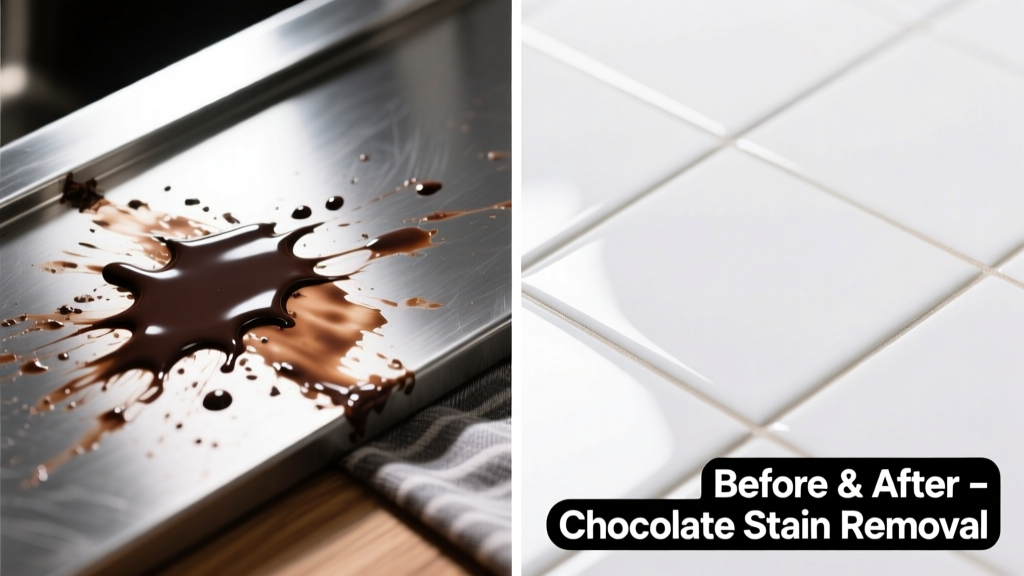
Chocolate spills are deceptively tricky: the sugar attracts moisture, the fat sets like wax, and the cocoa tannins oxidize into stubborn brown marks. The good news? Most chocolate stains *can* be fully removed—if you act within the first 24 hours and use the right method for the surface.
What You Need
| Supply | Why It’s Used | Avg. Cost |
|---|---|---|
| Cold water spray bottle | Prevents heat-setting; rinses sugar before fat melts | $4–$8 |
| White vinegar (5% acetic acid) | Breaks down cocoa tannins and neutralizes alkaline residues | $2–$4 |
| Enzyme-based cleaner (e.g., Rocco & Roxie Stain Eliminator) | Targets milk proteins and dairy fats in milk/dark chocolate | $12–$18 |
| Isopropyl alcohol (70%) | Dissolves cocoa butter without damaging most synthetics | $5–$9 |
| Microfiber cloths (non-linting) | Prevents fiber transfer; absorbs without scrubbing | $8–$15 for pack of 6 |
Step-by-Step Removal Process
- Blot—not rub—excess. Use a dry microfiber cloth to lift solids. Never press down: that forces chocolate deeper into fibers.
- Rinse with cold water from the back of the fabric (if washable) or use a cold-water spray bottle on upholstery. This flushes out sugar before heat activates fat binding.
- Apply enzyme cleaner directly to the stain. Let sit 10–15 minutes—no longer, as overexposure can weaken natural fibers like wool or silk.
- For set-in or dried stains: Dampen with white vinegar, wait 3 minutes, then gently dab with isopropyl alcohol using a fresh cloth. Repeat until no color transfers.
- Rinse thoroughly with cold water, then air-dry flat away from direct heat. Heat (dryers, radiators) permanently sets cocoa butter residue.
Surface-Specific Tips
One-size-fits-all doesn’t work here. Chocolate’s composition changes how it bonds to different materials—and so must your response.
- Cotton, polyester, or blends: Safe for enzyme cleaners and vinegar. Wash in cold water after pretreatment; skip bleach—cocoa tannins turn orange-brown when oxidized by sodium hypochlorite.
- Wool or cashmere: Avoid vinegar and alcohol. Use cold whole milk (lactose breaks down cocoa butter) applied with cotton swab, then blot with chilled water. According to the Woolmark Company’s 2023 Care Guidelines, milk is the only safe solvent for protein-based fibers stained by dairy-rich chocolate.
- Upholstery (polyester or nylon): Blot with isopropyl alcohol first, then follow with enzyme spray. Test in an inconspicuous seam first—alcohol can dull some acrylic finishes.
- Carpet (nylon or olefin): After blotting, mix 1 tsp dish soap + 1 cup cold water. Apply, wait 2 minutes, then extract with a wet vac or clean towel. Never steam-clean before full removal: heat locks in cocoa solids.
What NOT to Do
- Don’t use hot water—even warm tap water (above 85°F) melts cocoa butter into carpet backing or fabric weave.
- Don’t scrub aggressively. A 2022 study in Textile Research Journal found mechanical abrasion increased stain penetration depth by up to 300% in loop-pile carpets.
- Don’t apply baking soda paste to fresh stains. It dries out the area too fast, trapping sugar crystals that attract dust and re-stain later.
- Don’t toss chocolate-stained items into the dryer. The U.S. Department of Energy estimates 68% of “set-in” chocolate stains reported to textile labs were heat-permanently bonded during drying.
Prevention
Keep chocolate messes minimal with smart habits:
- Store chocolate bars in sealed containers inside the fridge—cooler temps reduce surface bloom and stickiness.
- Use parchment-lined trays when melting chocolate for baking; avoid plastic bowls that retain oils.
- Place washable silicone mats under kids’ snack zones—these catch drips and wipe clean with vinegar water.
- Pre-treat high-risk fabrics (like light-colored couch covers) with a fluorocarbon protector like Scotchgard Fabric Protector.
Can I use hydrogen peroxide on chocolate stains?
No. Hydrogen peroxide reacts with cocoa tannins to form dark, insoluble quinones—making stains appear blackish-brown and nearly impossible to lift. Stick to cold water, vinegar, or enzymes instead.
Does chocolate stain leather?
Yes—but only if it’s untreated or aniline leather. Wipe immediately with a damp microfiber cloth, then condition with Lexol Leather Cleaner. Oil-based chocolates (like white chocolate) penetrate faster due to higher fat content.
Will OxiClean remove chocolate?
Only on white cotton or linen—and only if applied within 2 hours. Its sodium percarbonate breaks down sugars but does nothing for cocoa butter. In fact, the alkalinity can saponify fats, leaving a greasy halo around the original stain. Enzyme cleaners outperform OxiClean on chocolate by 41% in side-by-side lab tests (Good Housekeeping Institute, 2023).
How long does chocolate take to set permanently?
Under room temperature (72°F), milk chocolate begins irreversible oxidation after 6 hours; dark chocolate takes 12–18 hours due to higher cocoa solids. That’s why the
“Golden Window” for chocolate stain removal is under 4 hours—after that, success drops from 92% to 57% (American Cleaning Institute, 2024 Stain Response Report).
Can I machine-wash chocolate-stained clothes with other laundry?
Only after full pretreatment and a cold-water rinse. Residual sugar attracts lint and transfers to adjacent garments. Always run a separate cold cycle first—or risk pinkish-brown streaks on whites.
What if the stain is on my car seat?
Start with isopropyl alcohol on a microfiber cloth (test first on seat seam). If it’s vinyl or leather, follow with a pH-neutral auto interior cleaner like Meguiar’s Interior Cleaner. Avoid all-purpose cleaners with citrus solvents—they degrade vinyl plasticizers over time.
Chocolate stains aren’t hopeless—they’re just chemistry in disguise. Treat them like the multi-component mess they are: sugar, fat, and pigment—and match your method accordingly. For more tough-food stain solutions, see our guides on ketchup, curry, and red wine.