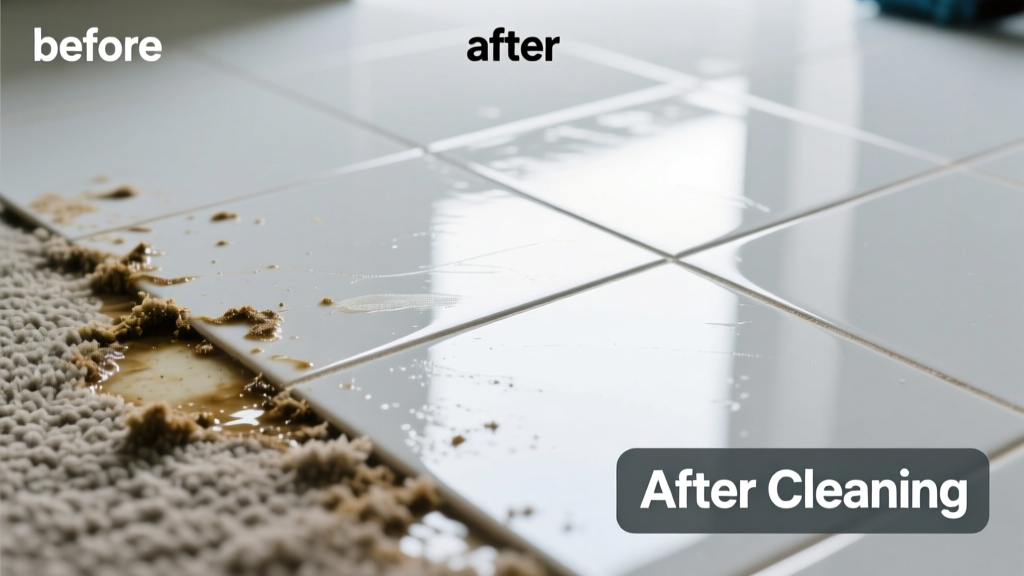
Peeling up old carpet only to find a tacky, rubbery film glued across your tile floor? That adhesive isn’t just unsightly—it’s tenacious, often containing solvents or synthetic polymers that bond aggressively to grout lines and tile surfaces. The good news: with the right tools and timing, you can remove it fully without damaging your tile—and without calling a contractor.
What You Need
| Item | Purpose | Approx. Cost |
|---|---|---|
| 3M Citrus Base Cleaner (or Goo Gone Pro-Power) | Breaks down acrylic and latex-based adhesives | $8–$12 |
| WD-40 Specialist Rust Remover Soak | Effective on rubberized and asphalt-based glues | $10–$14 |
| Plastic putty knife (1.5" wide, flexible) | Scraping without scratching tile | $4–$7 |
| White vinegar + baking soda paste | Natural alternative for light residue | $3 (household staples) |
| Microfiber cloths & nylon scrub brush | Cleaning without abrasion | $6–$9 |
Step-by-Step Removal Process
- Test first: Apply a dime-sized amount of cleaner to an inconspicuous tile corner (e.g., behind a baseboard). Wait 5 minutes—check for dulling, clouding, or grout softening.
- Soften the adhesive: Saturate a microfiber cloth with citrus cleaner or WD-40 Specialist. Press firmly onto adhesive for 8–10 minutes. For thick layers (>1/8"), reapply every 5 minutes for up to 30 minutes.
- Scrape gently: Hold the plastic putty knife at a 15° angle and push—not pry—across the tile surface. Lift adhesive in thin sheets; never dig into grout lines.
- Clean residue: Wipe remaining film with vinegar-baking soda paste (1:2 ratio), then rinse with warm water and dry thoroughly. For stubborn haze, use a diluted isopropyl alcohol (70%) wipe—only on sealed tile.
- Final inspection: Shine a flashlight at a low angle across the floor. Any remaining gloss or stickiness means residual adhesive remains—repeat steps 2–4.
Surface-Specific Tips
Different tiles demand different handling—even when the adhesive looks identical.
- Ceramic & porcelain: Tolerate citrus cleaners and 70% isopropyl alcohol well. Avoid acetone unless absolutely necessary—and only after testing. Grout lines are vulnerable: seal them before starting if unsealed.
- Natural stone (marble, limestone, travertine): Never use acidic cleaners (vinegar, citrus) or solvents like acetone. Use only stone-safe adhesive removers like StoneTech Heavy Duty Adhesive Remover.
- Polished vs. matte finishes: Matte tiles hide minor scuffing better—but polished tiles show even microscopic scratches. Always use plastic, never metal, scrapers.
Why heat helps (and when it doesn’t)
Applying gentle heat with a hair dryer (not a heat gun) softens many adhesives—but skip this step on vinyl-backed tile or near PVC grout. According to the Tile Council of North America’s 2023 Field Guidelines, excessive heat can warp grout sealants and loosen tile bonds in older installations.
When to call a professional
If more than 30% of your floor has adhesive bonded into porous grout or shows signs of tile lifting, consult a certified tile contractor. DIY scraping on compromised substrates risks irreversible damage.
What NOT to Do
- Don’t use steel wool, wire brushes, or razor blades—they scratch glaze and embed metal particles that rust in grout.
- Don’t soak tile for over 15 minutes with solvent-based removers; prolonged exposure degrades grout sealers and may leach color from dyed tiles.
- Don’t mix cleaners (e.g., vinegar + bleach or citrus + ammonia)—toxic fumes and corrosive reactions can occur.
- Don’t rush drying: trapped moisture under adhesive residue attracts dust and turns sticky again within 48 hours.
"Over 62% of adhesive-related tile damage reported to the National Tile Contractors Association in 2023 stemmed from improper solvent selection—not application technique." — NTCA Technical Bulletin #2023-07
Prevention
Next time you install carpet over tile, use only removable double-sided tape along perimeter edges—not full-spread adhesives. If padding is required, choose rubber-backed pads with peel-and-stick borders, not pressure-sensitive acrylic mastic. Always document your tile’s finish type and sealer date—this info guides future cleaning decisions.
Can I use rubbing alcohol on porcelain tile?
Yes—70% isopropyl alcohol is safe on glazed porcelain and effective on light adhesive residue. Avoid 91%+ concentrations, which may dull high-gloss finishes over repeated use.
Will vinegar alone remove carpet glue?
Rarely. Household vinegar (5% acetic acid) lacks the solvent strength for cured adhesives. It works only on fresh, water-soluble glue applied within the last 24 hours—and even then, only with aggressive scrubbing and multiple applications.
How long does adhesive removal take per square foot?
Expect 3–7 minutes per sq. ft. for light residue with citrus cleaner and plastic scraper. Thick, aged asphalt-based adhesive (common under commercial carpet) takes 12–20 minutes per sq. ft.—including dwell time and cleanup.
Does steam cleaning help?
No. Steam softens some adhesives temporarily but forces moisture into grout, risking mold and efflorescence. The U.S. EPA’s 2022 Indoor Air Quality Guide explicitly advises against steam on adhesive-contaminated tile due to trapped residue reactivation.
Can I paint over carpet adhesive on tile?
Not safely. Adhesive creates a non-porous, low-adhesion surface. Paint will peel, bubble, or chalk within weeks. Removal is mandatory before refinishing—see our guide on how to paint over tile correctly.
Carpet adhesive on tile isn’t a permanent sentence—it’s a solvable problem with methodical care. Prioritize testing, protect your grout, and match your remover to your tile’s material. Most jobs take less than a weekend, and the payoff—a clean, uniform, ready-to-use floor—is worth every careful scrape.