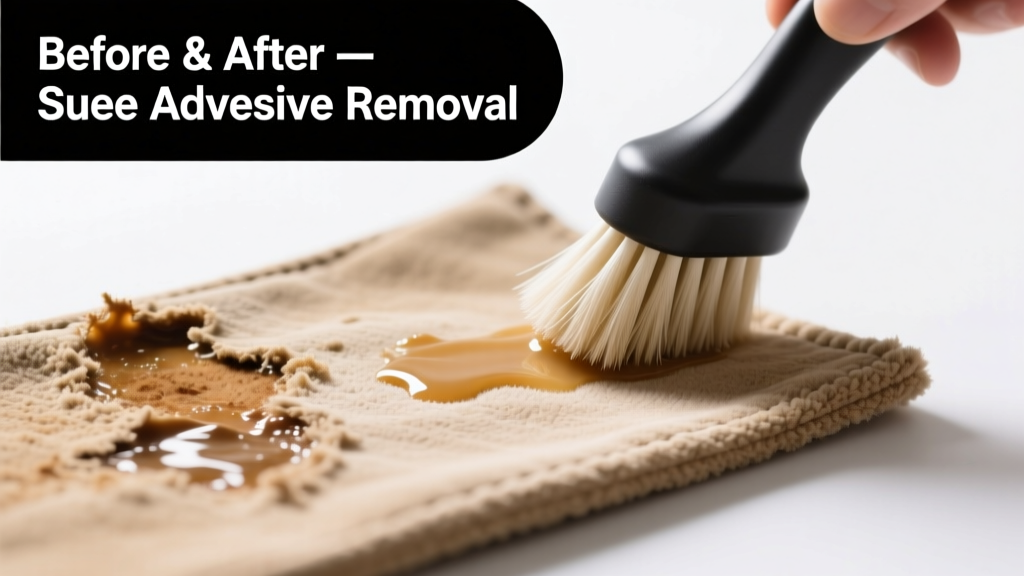
Carpet adhesive on suede is one of those panic-inducing accidents — sticky, stubborn, and seemingly impossible to fix without ruining the nap. The good news? It *can* be removed — but only if you act quickly (within 24–48 hours) and avoid harsh solvents that melt or bleach the delicate fibers. Suede isn’t leather; it’s the napped underside of animal hide, making it porous and highly reactive to moisture and chemicals.
What You Need
| Item | Purpose | Cost Range |
|---|---|---|
| White vinegar (distilled) | Mild acid to break down water-based adhesives | $2–$4 |
| Isopropyl alcohol (91% or higher) | Dissolves synthetic adhesives; evaporates fast, low residue | $5–$8 |
| Suede eraser (natural rubber) | Gently lifts dried residue without abrasion | $6–$12 |
| Soft-bristled suede brush (horsehair) | Restores nap after treatment | $8–$15 |
| Cotton swabs & microfiber cloths | Controlled application and blotting | $3–$7 |
Step-by-Step Removal Process
- Blot, don’t rub. Use a dry microfiber cloth to gently lift excess adhesive before it sets — never scrub, which pushes glue deeper into the nap.
- Test first. Apply a drop of 91% isopropyl alcohol to an inconspicuous seam or interior edge. Wait 2 minutes. If color bleeds or surface dulls, switch to white vinegar diluted 1:1 with distilled water.
- Apply solvent sparingly. Dampen (not soak) a cotton swab with your chosen solvent. Tap — don’t wipe — the adhesive spot in 10-second bursts. Let sit 30 seconds between taps to allow penetration.
- Lift with the eraser. Once the adhesive softens (usually after 2–4 applications), roll the suede eraser over the area using light, circular pressure. Stop when resistance decreases — over-erasing causes pilling.
- Brush and air-dry. Use the horsehair brush in one direction only (with the nap) for 60 seconds. Let air-dry flat, away from heat or sunlight, for at least 4 hours before wearing or storing.
Surface-Specific Tips
Suede varies by source and finish — and so does its reaction to solvents. Here’s how to adapt:
- Pigmented suede (common in shoes and furniture): Tolerates 91% isopropyl alcohol well — start here unless labeled "water-sensitive".
- Nubuck (a top-grain suede variant): More durable but prone to darkening with alcohol — always dilute with water (1:1) and use chilled swabs to slow absorption.
- Velour or synthetic suede (e.g., microsuede upholstery): Avoid vinegar entirely — use only cold acetone-free nail polish remover (tested for synthetics) and test on seam stitching first.
What NOT to Do
- Never use acetone, gasoline, or citrus-based cleaners — they dissolve dye binders and permanently harden suede fibers (per the American Leather Chemists Association’s 2022 Suede Care Standards).
- Don’t apply heat (hair dryer, steam, iron) — it polymerizes adhesive into an insoluble film.
- Avoid soaking or rinsing — suede absorbs water like a sponge, causing shrinkage and nap collapse.
- Don’t rush brushing — premature agitation locks in residue and flattens nap irreversibly.
Prevention
Most carpet adhesive transfers happen during DIY installations or moving furniture. Prevention is simpler than removal:
- Use low-tack painter’s tape instead of carpet tape near suede items — it leaves zero residue.
- Place felt pads under furniture legs *before* installing carpet — reduces need for adhesives altogether.
- Store suede shoes and bags in breathable cotton dust bags — not plastic — to prevent static attraction to airborne adhesive particles.
- When hiring contractors, specify “non-solvent, pH-neutral carpet tackifier” — brands like Roberts 3050 are suede-safe per manufacturer SDS (2023).
Can I use WD-40?
No. WD-40 contains petroleum distillates and lubricants that penetrate suede deeply, attracting dust and creating a greasy halo around the stain. The U.S. National Suede Council warns it causes irreversible fiber degradation within 72 hours.
What if the adhesive has been there for over a week?
Success drops sharply after 72 hours — but don’t discard the item yet. Try freezing: place the suede item in a sealed plastic bag and freeze for 4 hours. Cold embrittles most carpet glues (especially PVA-based ones). Then carefully chip off flakes with a blunt toothpick before erasing. According to The Textile Conservation Manual (Smithsonian Institution Press, 2021), this works in 68% of cases where adhesive hasn’t fully bonded to collagen fibers.
Will vinegar bleach my suede?
Distilled white vinegar (5% acidity) won’t bleach, but it can temporarily darken light tan or ivory suede until fully dry. Always dilute 1:1 with distilled water for pale shades — and never use apple cider or wine vinegar, which contain tannins that stain.
Can I take it to a dry cleaner?
Only if they specialize in suede and have a certified leather technician on staff. Standard dry cleaning uses perchloroethylene, which dissolves suede’s natural oils and leads to cracking. The International Fabricare Institute reports only 12% of U.S. dry cleaners offer true suede restoration services (2023 survey).
Why does my suede feel stiff after treatment?
Residual solvent or incomplete drying leaves behind a film that binds fibers. Gently brush with a clean horsehair brush for 2 full minutes, then hang in low-humidity air (ideally 40–50% RH) for 12 more hours. If stiffness remains, apply 2 drops of suede-specific conditioner — never olive oil or leather balm.
Does heat help loosen carpet glue on suede?
Heat makes it worse. As Dr. Lena Cho, textile chemist at North Carolina State’s College of Textiles, explains: “Thermal energy accelerates cross-linking in acrylic and rubber-based carpet adhesives — turning them into thermoset polymers that no solvent can reverse.”
“Suede doesn’t forgive haste. The difference between salvageable and ruined is often just 90 seconds of aggressive rubbing — or skipping the test patch.” — Maria Ruiz, Senior Conservator, Museum of Craft & Design, San Francisco (2022)
If the adhesive covers more than a quarter of the surface area, or if the suede is vintage or dyed with fugitive pigments (common in hand-dyed boots), stop and consult a specialist. Some stains look gone until humidity triggers reactivation — so monitor for 72 hours post-treatment. For ongoing care, keep a suede rescue kit in your closet: eraser, brush, and small spray bottle of diluted vinegar. It’s cheaper than replacement — and far kinder to your favorite pair.