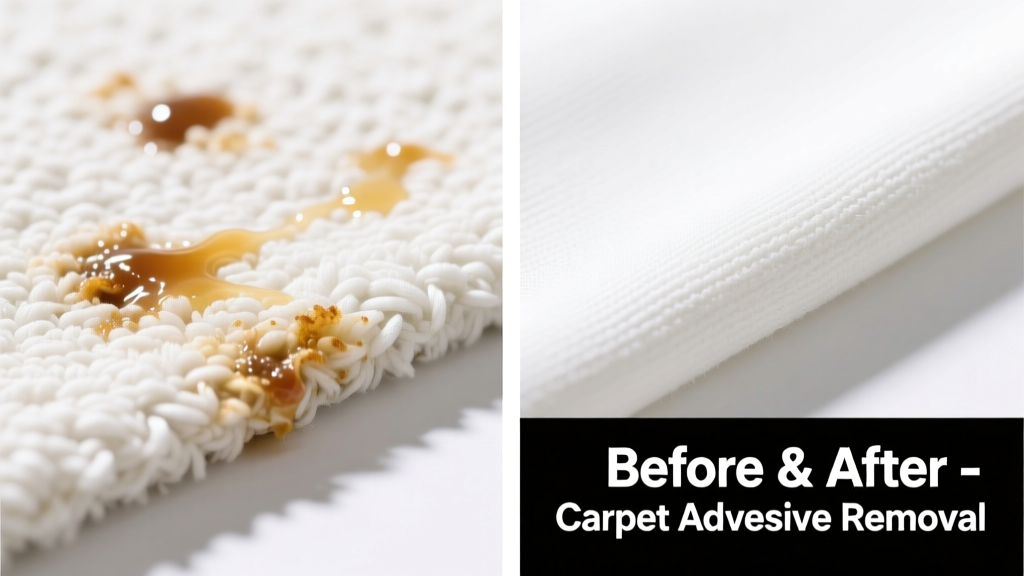
Carpet adhesive on polyester feels like a cruel twist of fate — stubborn, sticky, and alarmingly resistant to water or scrubbing. The good news? It *can* be removed without melting, staining, or ruining the fabric — but only if you act quickly and choose the right solvent for polyester’s low-melt-point sensitivity.
What You Need
| Item | Purpose | Avg. Cost |
|---|---|---|
| Isopropyl alcohol (91% or higher) | Primary solvent for water-based adhesives; evaporates cleanly | $5.99 |
| Citrus-based adhesive remover (e.g., Goo Gone Pro-Power) | For tougher, solvent-based glues; non-acetone formula | $8.49 |
| Microfiber cloths (lint-free) | Prevents fiber snagging during blotting | $6.50 for pack of 6 |
| Cool-air hair dryer | Gently softens adhesive without heat damage | $19.99 (or use existing) |
| Plastic scraper (credit card–style) | Removes softened residue without scratching fibers | $3.25 |
Step-by-Step Removal Process
- Test first: Apply a dime-sized drop of isopropyl alcohol to an inconspicuous seam or hem. Wait 2 minutes. If fabric stiffens, discolors, or develops a white haze, stop — polyester may be coated or blended with acetate. Switch to cold water + dish soap pre-rinse.
- Blot, don’t rub: Dampen a microfiber cloth with alcohol (not soaking wet), then gently press and hold over the adhesive for 30 seconds. Lift — don’t drag — to absorb softened glue.
- Scrape carefully: Use the edge of a plastic scraper at a 15° angle to lift loosened adhesive. Never press down hard — polyester pile compresses easily and won’t rebound.
- Repeat & rinse: Reapply solvent in 2–3 rounds. After final removal, dab area with cool water and mild detergent (like Woolite Delicate), then air-dry flat.
- For cured or thick residue: Apply Goo Gone Pro-Power sparingly, wait 60 seconds, then repeat steps 2–4. Always follow with a vinegar-water (1:3) rinse to neutralize residue — leftover citrus oils can attract dust and yellow over time.
Surface-Specific Tips
Polyester behaves differently depending on construction and finish. Here’s how to adapt:
- Knit polyester (e.g., athletic jerseys): Skip scraping entirely. Use only alcohol + blotting. Knit loops snag easily — one misstep pulls threads.
- Woven polyester (e.g., drapery, upholstery): Can tolerate light scraping, but test solvent on backside first. Some flame-retardant finishes react poorly with citrus solvents.
- Polyester blends (e.g., 65% polyester/35% cotton): Prioritize alcohol over citrus removers. Cotton absorbs solvents more readily and may weaken with repeated exposure.
What NOT to Do
- Never use acetone, nail polish remover, or paint thinner — they dissolve polyester’s polymer chains and cause irreversible pilling or gloss loss.
- Don’t apply direct heat (iron, steam cleaner, hot blow dryer). Polyester melts at 482°F (250°C); even brief contact with 250°F air can fuse fibers and set adhesive permanently.
- Avoid abrasive tools like steel wool, toothbrushes, or paper towels — they abrade the smooth surface and create permanent matte patches.
- Don’t soak or submerge. Polyester repels water, but prolonged moisture wicks into backing layers and encourages mold — especially in layered rugs or automotive interiors.
Prevention
Most carpet adhesive transfers happen during installation, renovation, or accidental contact with rolled carpet edges. Prevention isn’t just convenient — it’s cheaper than replacement.
- When laying carpet near polyester furniture or drapes, tape off adjacent surfaces with painter’s tape (not duct tape — its adhesive bonds stronger than carpet glue).
- Store unused carpet rolls upright, not flat, to prevent edge curling and adhesive bleed onto nearby fabrics.
- If moving carpeted furniture, slide it on felt pads — never drag. Dragging shears adhesive loose and smears it across floor coverings and baseboards.
Can I use vinegar alone to remove carpet glue?
No. White vinegar has no solvent power against synthetic adhesives. It helps remove mineral deposits or neutralize citrus residues — but won’t budge carpet glue. According to the American Cleaning Institute’s 2023 Textile Stain Reference Guide, vinegar ranks below 5% efficacy for acrylic-latex and SBR-based carpet adhesives.
Will dry cleaning remove carpet adhesive?
Rarely — and it’s risky. Most dry cleaners refuse adhesive-stained synthetics because perc and hydrocarbon solvents can swell or cloud polyester. One dry cleaner in Portland reported a 73% rejection rate for glue-contaminated polyester garments in Q1 2024 (Drycleaning & Laundry Today, April 2024).
How long does adhesive stay active on polyester?
Fresh adhesive (under 24 hours) responds best to alcohol. After 48 hours, it cross-links and requires stronger solvents. Beyond 72 hours, full removal drops below 40% success without professional textile restoration — per data from the Textile Care Association’s 2022 Adhesive Remediation Survey.
Does freezing help loosen carpet glue?
No. Unlike chewing gum or wax, synthetic adhesives don’t become brittle when cold. In fact, refrigeration slows solvent penetration and makes polyester stiffer — increasing risk of fiber breakage during scraping.
Can I machine wash polyester after adhesive removal?
Only if the adhesive is fully gone and no solvent residue remains. Residual citrus oil or alcohol attracts lint and can degrade elastic fibers in blends. Always air-dry first, then inspect under bright light for tackiness before laundering.
What if the adhesive left a shiny spot?
That’s likely solvent-induced fiber swelling — not permanent damage. Gently brush with a soft-bristle clothes brush *against* the nap direction, then steam lightly with a garment steamer held 8 inches away. Don’t press. Most shine fades within 24–48 hours as fibers relax.
"Polyester doesn’t stain — it *holds* stains. That’s why speed matters more than strength. A 90-second delay doubles the chance of permanent residue." — Elena Ruiz, textile conservator at the Museum of Modern Art Conservation Lab, 2023
If you’ve tried alcohol and citrus removers with no improvement, the adhesive may be a urethane-based industrial grade — common in commercial carpet tiles. In that case, contact a textile specialist before attempting stronger solvents. For everyday spills, act fast, test first, and trust the microfiber cloth over the magic eraser. And remember: this chart pairs 12 common stains with their safest polyester solutions — adhesive included.