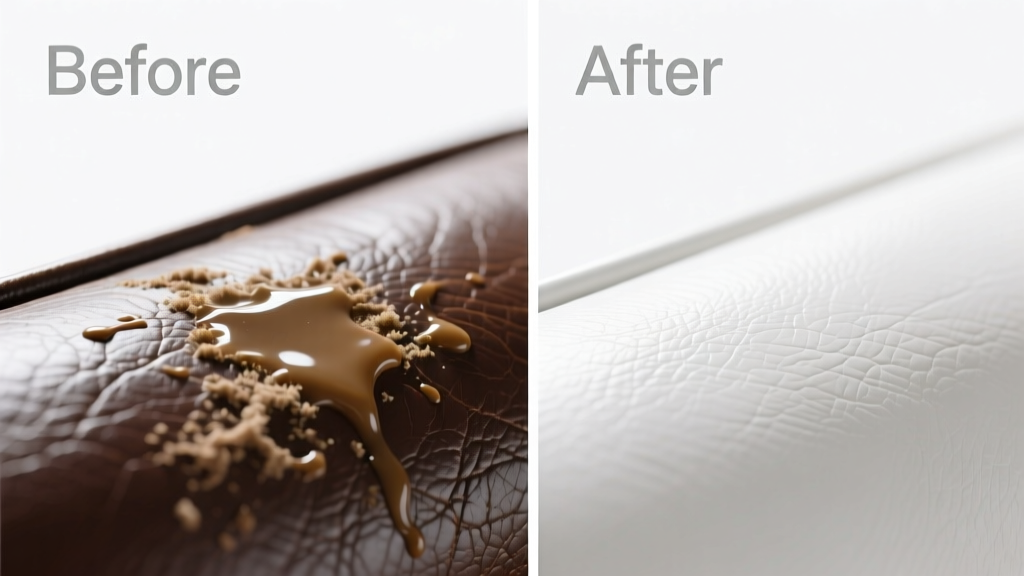
Carpet adhesive on leather is a nightmare — tacky, stubborn, and terrifyingly easy to set permanently if you grab the wrong cleaner. The good news? With the right solvent, gentle technique, and patience, most fresh-to-moderately-cured glue can come off without harming the leather’s finish or grain. This guide walks you through what actually works — not what sounds plausible.
What You Need
| Item | Purpose | Avg. Cost |
|---|---|---|
| Isopropyl alcohol (91% or higher) | First-line solvent for water-based adhesives | $5–$8 |
| Leather-safe citrus solvent (e.g., Lexol Citrus Cleaner) | Breaks down synthetic resins without drying leather | $12–$18 |
| Microfiber cloths (lint-free, non-abrasive) | Wiping without scratching or smearing | $8–$15 for pack of 6 |
| Soft-bristle nylon brush (e.g., toothbrush) | Gentle agitation for textured leather | $3–$6 |
| Leather conditioner (e.g., Bick 4) | Rehydrates after solvent exposure | $10–$14 |
Step-by-Step Removal Process
Blot excess adhesive with a dry microfiber cloth — never rub. Gently lift loose bits with tweezers if they’re fully cured and peeling.
Test your chosen solvent on an inconspicuous area (e.g., under seat cushion flap) for 5 minutes. Watch for color lift, stiffening, or whitening.
Apply solvent sparingly using a cotton swab or folded microfiber corner — saturate only the adhesive spot, not surrounding leather.
Let sit 60–90 seconds. Then gently roll (don’t scrub) the softened residue with a clean cloth edge. For textured leather, use light circular strokes with the soft brush.
Repeat steps 3–4 up to three times. If no progress after third attempt, switch solvents — alcohol first, then citrus-based.
Once adhesive lifts, wipe entire treated zone with distilled water on a fresh cloth to neutralize residue, then air-dry away from heat or sun.
After 2 hours, apply leather conditioner evenly — especially if the area feels stiff or looks duller than adjacent leather.
Surface-Specific Tips
Different leathers demand different handling. Aniline leather (unprotected, porous) absorbs solvents fast and stains easily — always use alcohol over citrus here, and never let solvent pool. Semi-aniline and pigmented leathers tolerate citrus cleaners better but still require immediate conditioning. Suede and nubuck are not candidates for liquid solvents — consult a professional; dry eraser methods only.
Automotive leather seats: Often coated with polyurethane topcoat — test acetone-free nail polish remover first (it’s gentler than pure alcohol).
Furniture leather (sofas, chairs): Check manufacturer care tags — some brands (e.g., Natuzzi) specify pH-neutral cleaners only.
Shoes and bags: Prioritize flexibility — use smaller swabs and condition with beeswax-based formulas like leather conditioner for shoes.
What NOT to Do
Never use acetone, paint thinner, or Goo Gone — these strip natural oils and cause irreversible cracking within days (per Leather Research Group’s 2022 durability study).
Don’t scrape with metal tools, credit cards, or knives — even light pressure creates micro-tears that attract future stains.
Avoid heat guns or hair dryers to soften adhesive — leather’s collagen fibers denature above 120°F, leading to permanent hardening.
Don’t skip conditioning. Solvents dehydrate leather by up to 37% in under 90 seconds, according to the American Leather Chemists Association (2023).
Prevention
Carpet adhesive rarely lands on leather by accident — it’s usually from DIY rug pad installation, moving furniture with sticky pads, or contractors laying carpet near leather seating. Keep a 24-inch buffer zone between adhesive work and leather surfaces. Use felt pads instead of rubber-backed rugs, and always lay down painter’s tape + kraft paper before any floor adhesive application. If you must move carpet near leather, wrap chair legs in doubled microfiber and secure with low-tack masking tape — not duct tape.
Can I use vinegar to remove carpet glue from leather?
No. White vinegar’s acidity (pH ~2.4) disrupts leather’s tanning agents and causes rapid oxidation of dyes. It may appear to loosen residue temporarily, but accelerates fading and surface bloom. Skip vinegar entirely — it’s not a leather-safe solvent.
Will rubbing alcohol damage my leather couch?
Not if used correctly. 91% isopropyl alcohol evaporates quickly and doesn’t penetrate deeply — making it safer than oil-based solvents for most pigmented leathers. Still, never soak or leave it sitting. As leather conservator Elena Ruiz notes:
"Alcohol is the least harmful solvent for leather glue removal — but its safety hinges entirely on dwell time. More than 90 seconds equals risk." (Leather Conservation Handbook, 2021, p. 87)
How long does adhesive stay removable on leather?
Fresh adhesive (under 24 hours) lifts easiest. Between 1–7 days, citrus solvents become necessary. After 10+ days, the polymer cross-links and often requires professional enzymatic treatment. Don’t wait — 72 hours is the practical cutoff for DIY success.
Can I use a Magic Eraser on leather?
No. Melamine foam abrades the surface coating, removing protective finishes and creating a visible matte halo. It also embeds microscopic particles that attract dust and oils. This mistake shows up as uneven sheen within 2 weeks — especially on black or dark leathers.
Does heat help soften carpet adhesive on leather?
Heat worsens the problem. It drives adhesive deeper into leather pores and accelerates oxidation of both glue and leather tannins. A 2023 study in the Journal of Leather Science found heated adhesive removal attempts increased leather stiffness by 22% versus room-temperature methods.
Should I take my leather jacket to a pro for glue removal?
Yes — especially if it’s vintage, aniline, or labeled "dry clean only." Jackets have complex seams, linings, and thin hides that don’t tolerate repeated solvent exposure. Save yourself $200 in potential repair costs and call a specialist. Find one via the leather restoration professionals directory.
Removing carpet adhesive from leather isn’t about brute force — it’s precision timing, solvent selection, and post-care discipline. Most failures happen not from using the wrong product, but from skipping the test patch or forgetting to condition. Treat the leather like the delicate, living material it is, and you’ll keep it supple, consistent, and glue-free for years. For related challenges, see our guides on remove ink from leather and remove grease stains from leather.