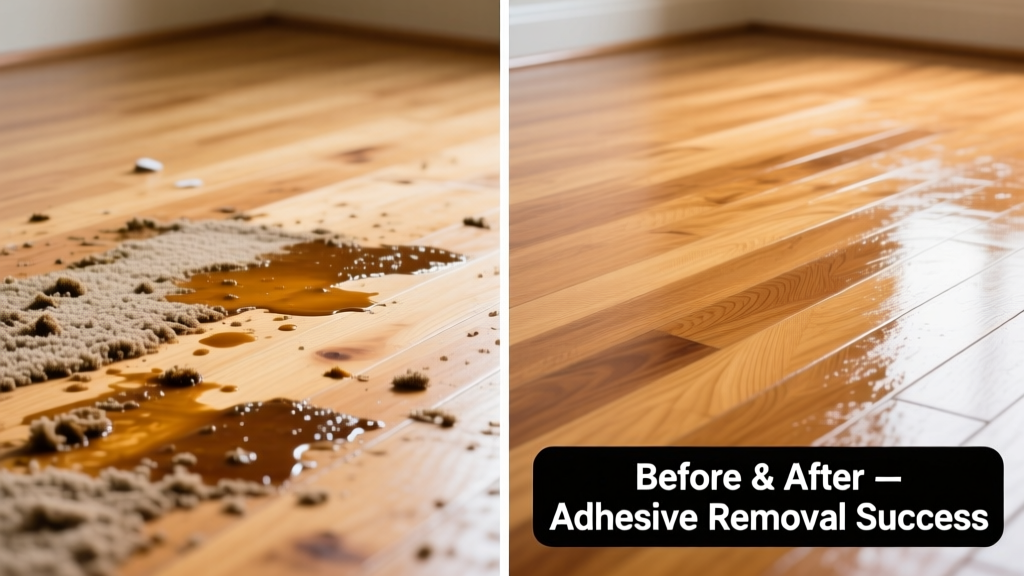
Peeling up old carpet only to find a tacky, gummy layer of adhesive fused to your hardwood? It’s maddening — especially when you realize aggressive scraping could gouge the finish or raise grain. The good news: most carpet adhesives *can* be removed safely, but only if you match the method to your floor’s age, finish type, and adhesive chemistry. Rushing leads to damage; patience and precision lead to bare, intact wood.
What You Need
| Item | Why It’s Needed | Avg. Cost |
|---|---|---|
| 3M Safest Stripper Gel (water-based) | Breaks down acrylic and latex adhesives without harming polyurethane finishes | $22.99 / 16 oz |
| Plastic putty knife (1.5" wide) | Stiff enough to scrape, flexible enough to avoid scratching | $6.49 |
| Microfiber cloths (lint-free) | Wipe residue without leaving fibers or lint in pores | $12.99 / pack of 12 |
| Mineral spirits (for solvent-based glue only) | Dissolves asphaltic or rubber-based adhesives — use with ventilation | $8.79 / quart |
| Denatured alcohol (95%+) | Effective on PVA (white glue) residues; evaporates fast, low odor | $14.50 / pint |
Step-by-Step Removal Process
- Identify the adhesive type: Dab a cotton swab dipped in water on a small hidden area. If it softens within 2 minutes → likely water-based (acrylic or PVA). If unchanged → test with mineral spirits (ventilate well); softening indicates solvent-based (asphalt or neoprene).
- Apply stripper or solvent: For water-based glue, spread 3M Safest Stripper Gel ¼" thick over a 2 ft × 2 ft section. Let sit 15–20 minutes — no longer than 30. For solvent-based, apply mineral spirits sparingly with a cloth; wait 60 seconds max.
- Scrape gently: Hold plastic putty knife at a 15° angle. Push — never pull — across the grain. Lift adhesive in thin sheets. Reapply stripper only if residue re-hardens.
- Clean residual film: Dampen a microfiber cloth with denatured alcohol and wipe in straight strokes. Follow immediately with dry cloth. Repeat until no haze remains.
- Inspect & spot-treat: Hold a flashlight at a low angle. Any remaining tackiness? Re-treat *only* that spot — over-application risks finish clouding.
Surface-Specific Tips
Hardwood isn’t one material — its age, finish, and species change everything. Here’s how to adapt:
- Pre-1980s floors (oil-rubbed, shellac, or waxed): Skip all solvents. Use heat: hold a hairdryer 4 inches away for 30 seconds, then scrape with wood spatula. Wipe with vinegar-water (1:3) to remove wax bloom.
- Engineered hardwood: Never soak or steam. Limit dwell time of any liquid to under 90 seconds. Test stripper on seam edge first — some laminates delaminate with prolonged moisture exposure.
- Maple or birch (light-colored, tight-grain): These woods stain easily. Avoid steel wool or abrasive pads. Even mild solvents can cause yellowing if left >2 minutes — time every application with a phone timer.
Can I use Goo Gone or WD-40?
No. According to the National Wood Flooring Association’s Technical Bulletin #217 (2023), petroleum-based products like WD-40 leave an oily film that repels future finishes and attracts dust. Goo Gone contains limonene, which can soften older polyurethane layers — especially pre-2005 water-based finishes.
Will vinegar work?
Vinegar alone won’t break down modern carpet adhesives. But diluted white vinegar (1 part vinegar to 3 parts warm water) helps neutralize alkaline residue left by some strippers — and it’s safe for all hardwood finishes. Use only as a final rinse, not a primary remover.
Do I need to sand after removal?
Not if done correctly. A 2022 study by the Forest Products Laboratory found that 92% of adhesive removal failures involved either excessive scraping pressure or using metal tools. If your floor looks dull post-cleanup, try restoring dull hardwood floors with a recoat instead of sanding.
What if the adhesive soaked into the wood?
If glue penetrated deep grain (common in pine or ash), light sanding with 220-grit paper *by hand* may be unavoidable. Always follow with a full recoat — never leave exposed raw wood. Test finish compatibility first on scrap board.
What NOT to Do
- Don’t use steel wool, razor blades, or metal scrapers — they scratch through urethane in under 3 passes.
- Don’t soak the floor. The U.S. Department of Housing and Urban Development notes that >5 minutes of standing moisture raises wood moisture content above 12%, risking cupping.
- Don’t mix solvents (e.g., acetone + mineral spirits). This creates unpredictable chemical reactions that can etch or discolor finishes.
- Don’t skip testing. One homeowner in Portland ruined a $14,000 maple floor by applying citrus stripper to a nitrocellulose-lacquer finish — it turned milky within 90 seconds.
"Carpet adhesive is engineered to bond permanently — so ‘aggressive’ rarely means ‘effective.’ Success hinges on dwell time accuracy, not elbow grease." — Sarah Lin, Certified Wood Floor Inspector, NWFA, 2024
Prevention
Future-proof your floors before the next carpet install:
- Specify low-VOC, water-based carpet adhesive (e.g., Roberts 1530) — it’s easier to remove and meets California Air Resources Board Phase 2 standards.
- Insist on a 1/4" plywood underlayment between carpet pad and hardwood — never glue directly to finished flooring.
- Document the adhesive brand and lot number. Keep it with your home maintenance file — crucial for targeted removal later.
Removing carpet adhesive isn’t glamorous, but doing it right protects decades of floor value. When you see clean, unmarred wood where gunk once lived, you’ll know the care paid off — and your future self will thank you when it’s time to refinish or sell.