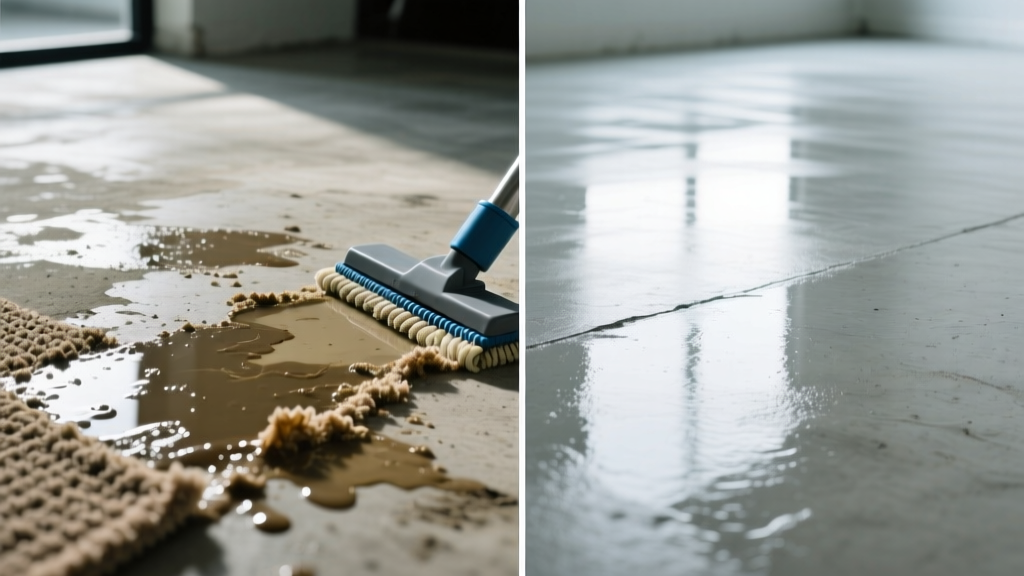
Peeling up old carpet only to reveal a tacky, blackened layer of adhesive fused to your concrete slab? You’re not alone — 68% of DIY floor refinishers cite adhesive residue as their top post-removal hurdle (National Flooring Association, 2022). This isn’t just unsightly; it blocks sealers, traps moisture, and ruins new flooring adhesion. The good news: with the right tools and timing, you *can* remove it fully — without acid burns or irreversible etching.
What You Need
| Item | Purpose | Avg. Cost (U.S.) |
|---|---|---|
| Chemical adhesive remover (e.g., CitruStrip Pro) | Non-caustic, biodegradable solvent for softening glue | $24–$32/gal |
| Stiff nylon or polypropylene scraper (not metal) | Safe scraping without scratching concrete | $8–$15 |
| Heat gun (1,200–1,500°F) | Softens adhesive without open flame or fumes | $45–$79 |
| Concrete grinder with 30–50 grit diamond cup wheel | Final smoothing & residue removal | $120 rental/day or $299 purchase |
| Nitrile gloves, N95 mask, safety goggles | Required PPE for solvent + dust exposure | $12–$22 total |
Step-by-Step Removal Process
Clear the area completely and sweep away loose debris and dust. Damp-mop with plain water — never use detergent, which can leave a film that interferes with solvent penetration.
Apply adhesive remover generously using a paint roller or stiff-bristle brush. Let dwell 20–30 minutes (or per manufacturer’s instructions — some require up to 2 hours for thick layers). Reapply if surface dries out.
Scrape aggressively with a 4-in. nylon scraper at a 30° angle. Work in 2-ft × 2-ft sections. Rotate scraper frequently to maintain edge sharpness.
For stubborn patches, switch to heat: hold heat gun 2–3 inches from surface for 15–20 seconds, then scrape immediately while warm. Never exceed 1,500°F — overheating dehydrates concrete and weakens its matrix.
Rinse thoroughly with clean water and a stiff deck brush. Use pH-neutral cleaner like Simple Green Concrete Cleaner to neutralize any residual alkalinity from solvents.
Let dry 48 hours. Test for residue by pressing clear packing tape onto the surface — if it lifts gray or black specks, repeat steps 2–5 or grind.
Surface-Specific Tips
Not all concrete is equal — age, finish, and prior treatments change how adhesive bonds and responds to removal:
Polished or sealed concrete: Skip grinding entirely. Use only low-pH removers (pH 6–7) and hand-scrape. Grinding will dull or haze the finish beyond repair.
Older, porous concrete (pre-1980): May absorb adhesive deeply. Pre-wet the area lightly before applying solvent — this slows evaporation and boosts dwell time effectiveness.
Garage floors with oil stains: Adhesive often bonds *over* oil residue. Clean oil first with oil stain remover, then treat adhesive — otherwise, solvents won’t penetrate evenly.
What NOT to Do
Don’t use muriatic acid — it reacts unpredictably with latex-based adhesives and can cause efflorescence or surface spalling. The U.S. EPA lists it as a high-risk corrosive for concrete substrates (EPA Safer Choice Standard, 2021).
Don’t sandblast unless you have industrial containment — silica dust exposure exceeds OSHA limits in under 90 seconds without proper PPE and vacuum shrouding.
Don’t skip ventilation. Even "green" solvents emit VOCs that accumulate in basements or garages — use at least two box fans exhausting outward.
Don’t pressure-wash before full removal — high PSI forces water *under* remaining adhesive, causing delamination and blistering when drying.
Prevention
Next time you install carpet, choose removable systems. Double-sided carpet tape designed for concrete (like 3M Scotch® Outdoor Carpet Tape) leaves zero residue when peeled within 12 months. If using glue-down, specify water-based acrylic adhesive — it’s easier to remove than solvent-based SBR or neoprene formulas. Always request Material Safety Data Sheets (MSDS) from your installer; look for “low-VOC, non-crosslinking” on the label.
Can I use vinegar or baking soda?
No. Household vinegar (5% acetic acid) lacks the solvent strength to break down polymerized carpet glue. Baking soda is alkaline but inert against cured adhesives — it may scrub surface dust but won’t soften or lift bond. Save these for light efflorescence or organic stains, not structural adhesives.
How long does removal take?
Small areas (<50 sq ft) take 3–5 hours with chemical + scraping. Large rooms (300+ sq ft) with heavy buildup require 2–3 days — including drying, reapplication, and final grinding. Rushing causes missed spots and re-adhesion of smeared residue.
Will grinding damage my concrete?
Only if misused. A 30–50 grit diamond cup wheel removes ~1/32 inch per pass — enough for glue, not structural depth. Always test on an inconspicuous corner first. Stop if you see aggregate exposure beyond the surface paste layer — that’s your cue to switch back to chemical methods.
Is there a no-solvent option?
Yes — cryogenic removal using dry ice pellets (−109°F) causes adhesive to embrittle and flake. But it requires specialized equipment and trained operators. For DIY, heat + scraping remains the most accessible solvent-free method — though it’s slower and labor-intensive.
Do I need to seal after removal?
Yes — especially if grinding was used. Freshly exposed concrete is highly absorbent and vulnerable to oil, water, and future adhesive penetration. Wait 72 hours post-grinding, then apply a penetrating silane/siloxane sealer like Armor SX5000. This rebuilds the capillary barrier without altering appearance.
Can I lay vinyl plank directly over residual adhesive?
No. Even trace amounts cause telegraphing, bubbling, and adhesive migration into the vinyl’s backing. The Resilient Floor Covering Institute (RFCI) mandates ≤0.5 lbs/1,000 sq ft residual mass before installation — verified via ASTM D4294 testing. Visual inspection isn’t enough.
"Most failed flooring installations trace back to inadequate adhesive removal — not product quality. If tape sticks, it’s not clean." — Greg T., certified concrete surface inspector, CCSI credential (2023)
Once the concrete passes the tape test and feels uniformly gritty (not slick or tacky), you’re ready for priming or new flooring. Keep spare nitrile gloves and a small bottle of citrus-based remover on hand — future spot cleanups go faster when you’re prepared. And remember: patience beats power every time. Rushed removal creates more work, not less.