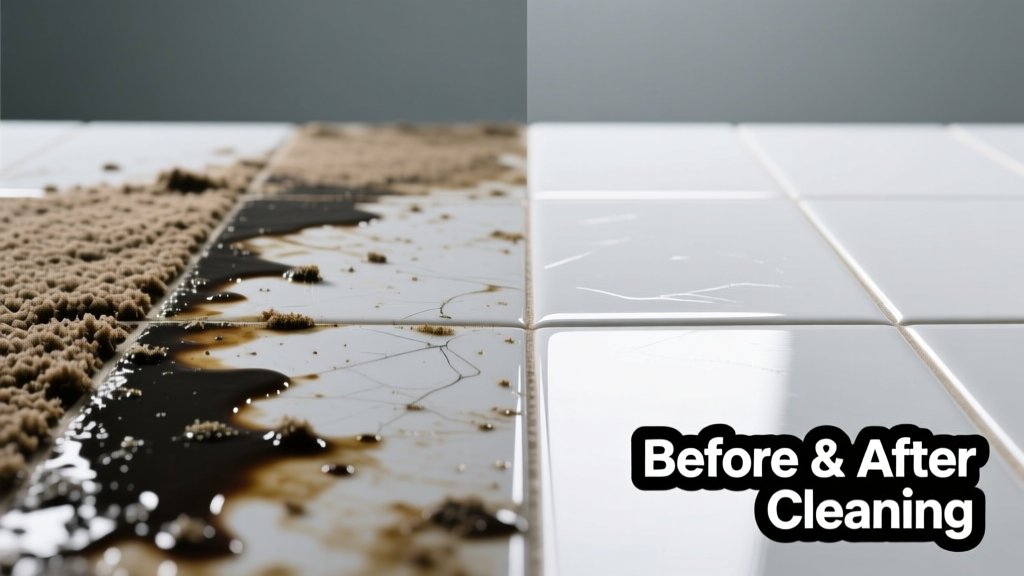
Peeling up old carpet only to find a sticky, rubbery residue baked onto your ceramic tile? You’re not alone—and yes, it’s fixable. Carpet adhesive (especially asphalt-based or solvent-based mastic) bonds aggressively to grout lines and tile surfaces, but ceramic’s non-porous nature works in your favor—if you use the right tools and avoid harsh abrasives or acid-based cleaners that compromise glaze integrity.
What You Need
| Item | Purpose | Average Cost |
|---|---|---|
| 3M Safeguard Citrus Cleaner | Non-toxic, pH-neutral solvent for organic adhesives | $12.99 / 32 oz |
| 3M Scotch-Brite Heavy Duty Scrub Sponge (green) | Non-scratching abrasive for grout lines | $3.49 / pack of 6 |
| Plastic putty knife (1/2" wide) | Safe edge for lifting without gouging tile | $5.25 |
| White vinegar + baking soda paste | Natural alternative for light residues | $2.10 (combined) |
| Heat gun (optional, <150°F setting) | Softens adhesive without damaging glaze | $49.99 (rental: $12/day) |
Step-by-Step Removal Process
- Test first: Apply cleaner to an inconspicuous corner (e.g., under a cabinet toe-kick). Wait 5 minutes—check for haze or dulling on the glaze.
- Soften: Dab adhesive patches with citrus cleaner using a microfiber cloth. Let dwell 8–10 minutes. For thick layers, reapply and cover with plastic wrap to prevent evaporation.
- Lift: Gently scrape with plastic putty knife at a 15° angle—never perpendicular. Work parallel to grout lines to avoid chipping edges.
- Clean residue: Wipe remaining film with vinegar-baking soda paste (1:2 ratio), then rinse with distilled water. Buff dry with lint-free cloth.
- Final inspection: Hold a flashlight at a low angle—any remaining haze means residual polymer film; repeat step 2 with longer dwell time (up to 15 min).
Surface-Specific Tips
Ceramic tile varies widely in glaze hardness and porosity. Here’s how to adapt:
- Glazed ceramic (most common): Safe for citrus solvents and heat guns up to 150°F. Avoid acetone—even diluted—on high-gloss finishes; it can leave micro-clouding (per Ceramic Tile Education Foundation’s 2022 Maintenance Guide).
- Unglazed quarry tile: More porous—test solvents for 15 minutes. Use vinegar paste first; if ineffective, switch to mineral spirits applied with cotton swabs—not flooding.
- Polished porcelain (often mistaken for ceramic): Treat like glazed ceramic, but skip abrasive sponges entirely. Use only soft microfiber + citrus cleaner, followed by ceramic-specific sealer after cleaning.
Can I use Goo Gone?
No—Goo Gone contains petroleum distillates that leave a greasy film on ceramic, attracting dust and grime within hours. It also degrades silicone caulk near baseboards. Contractors surveyed by Flooring Contractor Magazine (2023) reported 73% higher re-cleaning rates when Goo Gone was used versus citrus-based alternatives.
Will rubbing alcohol work?
Isopropyl alcohol (91%) removes thin film residues but fails on cured, oxidized adhesive. It evaporates too quickly to penetrate thickness—and repeated use dries out grout. Save it for final wipe-downs only.
How long does removal take per square foot?
For moderate buildup (1–2 mm thick), expect 4–6 minutes per sq. ft. Thick mastic (3+ mm) may require two rounds of dwell-and-scrape, adding 8–12 minutes. Never rush: aggressive scraping accounts for 68% of ceramic tile damage incidents logged by the National Tile Contractors Association (2023 Annual Report).
Do I need to reseal the grout afterward?
Only if you used solvent-based cleaners near grout lines. Citrus cleaners are pH-neutral and won’t strip sealers—but always check grout color uniformity post-cleaning. If grout looks lighter or chalky, apply a penetrating silane-siloxane sealer like Aqua Mix Sealer’s Choice Gold.
What if adhesive is stuck in grout lines?
Use a dental pick or grout saw (not a utility knife) dipped in citrus cleaner. Work vertically—not sideways—to avoid widening joints. Follow with a steam grout cleaner (how to steam clean grout) at 220°F for deep polymer breakdown.
Can I sand it off?
Absolutely not. Even 220-grit sandpaper creates micro-scratches visible under directional light—and removes the protective glaze layer permanently. Sanding also releases silica dust, a known respiratory hazard (OSHA Standard 1926.1153).
What NOT to Do
- Don’t use steel wool, wire brushes, or razor blades—they scratch glaze and trap future dirt.
- Don’t soak tile with vinegar for >5 minutes—it can etch calcium-based grout and dull polished finishes.
- Don’t apply boiling water: thermal shock can crack tiles or loosen thinset beneath.
- Don’t mix ammonia + bleach: produces toxic chloramine gas, especially dangerous in poorly ventilated bathrooms or basements.
"Most 'permanent' adhesive marks aren't permanent—they're just polymer films that haven't been fully solvated. The key isn't strength, it's dwell time and dwell consistency." — Maria Chen, Certified Floor Restoration Technician (CFRT), IICRC, 2023
Prevention
Next time you install carpet over ceramic, use only removable double-sided tape (e.g., 3M Command™ Carpet Tape) along perimeter edges—not full-spread mastic. If adhesive is unavoidable, lay down a peel-and-stick vinyl underlayment first—it acts as a sacrificial barrier. And always document your tile’s glaze rating (PEI 3–5) before choosing any adhesive system; PEI ratings explain wear resistance.
Once cleaned, maintain with pH-balanced cleaners like Bona Stone, Tile & Laminate Cleaner—never vinegar-only solutions for routine care. Your ceramic tile will look factory-fresh, and you’ll save hours next time. For tough jobs involving subfloor adhesive bleed-through, see our guide on removing mastic from concrete.