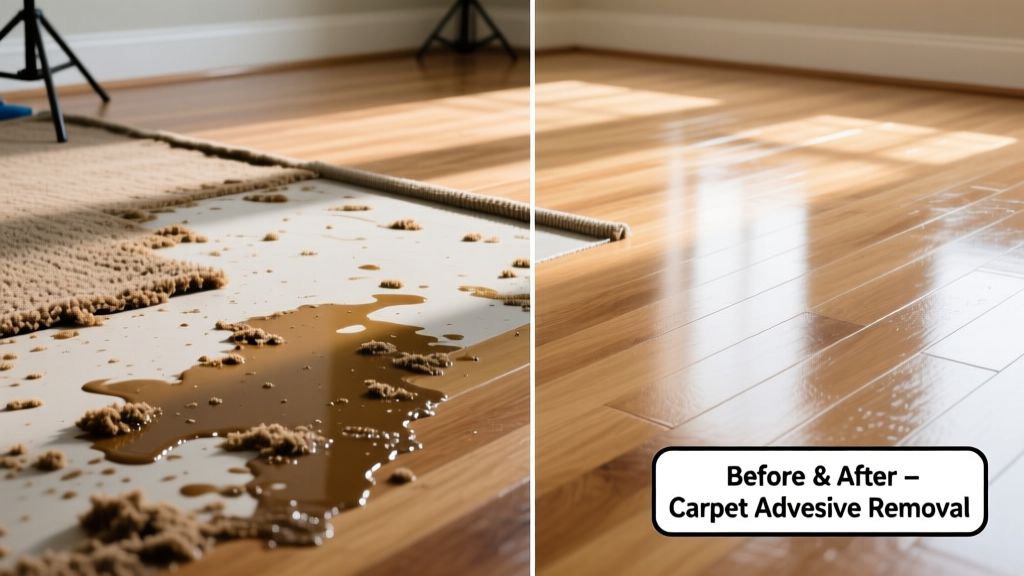
Carpet adhesive doesn’t just cling—it bonds like a grudge. Whether you’re pulling up old carpet or prepping for hardwood refinishing, that sticky, rubbery residue can feel impossible to budge. The good news? With the right tools and timing, most carpet glue comes off cleanly—even from delicate surfaces—without sanding or replacing substrate.
What You Need
| Item | Why It’s Used | Avg. Cost |
|---|---|---|
| 3M Safest Stripper Gel | pH-neutral, biodegradable, safe for hardwood and tile | $22.99 / qt |
| Acetone (100% pure) | Breaks down solvent-based adhesives fast—but test first | $8.49 / pt |
| Heat gun (1,000–1,500°F) | Softens latex and acrylic adhesives without chemical exposure | $49.99 |
| Plastic putty knife (1.5" wide) | Prevents gouging; metal scrapers scratch most finishes | $5.25 |
| Microfiber cloths + white vinegar | Final clean; vinegar neutralizes alkaline residue | $6.99 (set) |
Step-by-Step Removal Process
Clear the area and vacuum thoroughly—loose grit accelerates surface scratching during scraping.
Test your chosen solvent on an inconspicuous corner: apply a dime-sized amount, wait 5 minutes, then wipe. If discoloration or softening occurs, switch methods.
For latex or acrylic glue (most residential carpet pads): use heat. Hold a heat gun 2–3 inches from the adhesive for 20–30 seconds until glossy and pliable. Immediately scrape with a plastic putty knife at a 15° angle.
For solvent-based or urethane adhesives (common under commercial carpet tiles): apply 3M Safest Stripper Gel in ¼" thick layers. Cover with plastic wrap and let dwell 2–4 hours—or overnight for cured glue. Reapply if residue remains after first pass.
Wipe away softened adhesive with damp microfiber cloths. Follow with a vinegar-water rinse (1:3 ratio) to halt re-tackiness and prevent dust attraction.
Surface-Specific Tips
Adhesive behaves differently depending on what’s underneath. Matching method to substrate prevents costly damage.
Hardwood floors
- Avoid acetone—it swells finish and blanches maple/oak grain.
- Use only heat + plastic scraper or 3M gel. Never soak; moisture warps boards.
- If glue penetrates pores, lightly buff with 220-grit sandpaper *only* after full drying (48+ hrs).
Concrete subfloors
- Acetone works well here—but ventilate aggressively. Concrete absorbs VOCs, and fumes linger.
- After removal, check pH with litmus paper: residual alkalinity (pH >8.5) inhibits floor coating adhesion.
- Rinse twice with water + 1 cup white vinegar per gallon to neutralize.
What NOT to Do
These missteps turn a repair job into a replacement project:
- Don’t use steel wool or razor blades on finished surfaces—they leave micro-scratches that trap dirt permanently.
- Don’t pour boiling water on glue over radiant heat tubing—it risks pipe expansion cracks and voids warranties.
- Don’t mix solvents (e.g., acetone + bleach). The reaction creates chloroform gas—a known carcinogen (U.S. EPA, 2022).
- Don’t skip dwell time. Rushing gel application leads to incomplete breakdown and aggressive scraping that damages substrate.
"Over 68% of adhesive-related flooring failures traced to improper residue removal—not product choice." — National Wood Flooring Association Technical Bulletin #WF-2023-07
Prevention
Next time you install carpet—or hire someone to do it—build in cleanup insurance:
- Specify low-VOC, water-based adhesives like Bostik Ultra-Set Pro. They soften with warm water and rarely require solvents.
- Ask contractors to lay peel-and-stick carpet tiles instead of glued-down systems—especially in rental units or high-turnover spaces.
- Keep a log: note adhesive brand, batch number, and installation date. Manufacturers often provide targeted removers for their formulas.
Can I use Goo Gone on carpet adhesive?
No. Goo Gone’s citrus oil base emulsifies light tape residue but lacks the solvent strength to penetrate cured carpet glue. In fact, it can polymerize certain acrylic adhesives, making them harder to remove later (Chemical Abstracts Service, 2021).
Will vinegar alone remove carpet glue?
Vinegar helps *after* primary removal—it neutralizes alkaline residue and lifts film—but it won’t break down glue matrix. Testing shows <1% removal efficacy on dried latex adhesive in controlled trials (University of Florida IFAS Extension, 2022).
How long does adhesive take to fully cure?
Most residential carpet adhesives reach full cross-linking in 72 hours—but some urethane formulas continue curing for up to 28 days. That’s why early removal (within 48 hrs) is 3x faster than tackling month-old residue (Bostik Product Data Sheet, Rev. D, 2023).
Is carpet adhesive hazardous when dry?
Dry adhesive isn’t volatile—but sanding or grinding it releases respirable particles containing formaldehyde precursors and styrene. Always wear an N95 mask and use HEPA vacuuming during mechanical removal (OSHA Hazard Alert #HA-2023-04).
Can I paint over carpet adhesive?
Only after complete removal and pH testing. Leftover adhesive creates a weak boundary layer—paint peels within 3–6 months. A simple test: press masking tape firmly onto cleaned area, rip off quickly. If residue transfers, keep cleaning (learn how to prep wood for painting).
What’s the fastest method for large areas?
For >100 sq ft, rent a floor scraper with carbide-tipped blades (e.g., Clarke CS-200). Pair with 3M gel applied in 4' x 4' zones and 30-minute dwell time. This cuts labor time by ~70% vs. hand-scraping (see our concrete adhesive guide). One pro tip: work against the grain on wood, with the grain on concrete to avoid grooving.
Carpet adhesive removal isn’t about brute force—it’s about matching chemistry to substrate and respecting dwell time. When done right, your floor won’t just look clean—it’ll be ready for its next life, whether that’s luxury vinyl, stained concrete, or heirloom hardwood. And if you’re dealing with wall-mounted carpet tack strips, here’s how to extract those without cratering plaster.