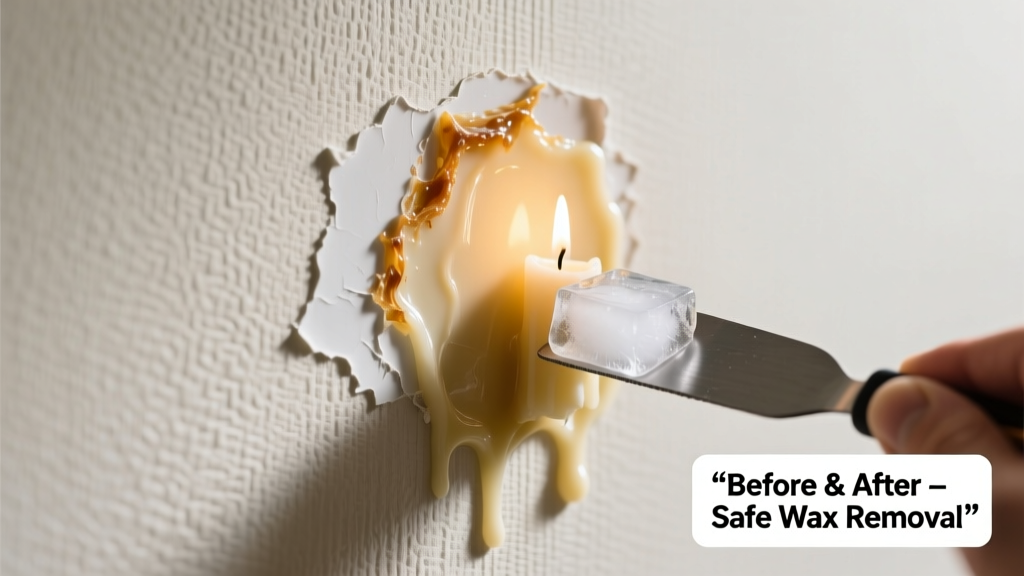
Spilled candle wax on wallpaper is a quiet disaster—sticky, stubborn, and deceptively easy to make worse. Unlike fabric or hardwood, wallpaper has zero margin for heat, moisture, or abrasion errors. The good news? With the right tools and timing, most wax can be removed cleanly—even from delicate vinyl or non-woven types—without replacement.
What You Need
| Item | Purpose | Avg. Cost |
|---|---|---|
| White vinegar | Breaks down residual oil after wax removal | $3.50 |
| Blotting paper or brown kraft paper | Absorbs melted wax during ironing method | $2.99 (roll) |
| Cool air setting on hair dryer | Safest softening tool for heat-sensitive papers | $0 (if you own one) |
| Plastic credit card (clean, dull edge) | Gentle scraping—no metal allowed | $0 (repurpose one) |
| Isopropyl alcohol (70%) | Final spot treatment for oily residue on washable wallpapers | $5.49 |
Step-by-Step Removal Process
- Let it harden completely. Never scrape warm wax—it smears and forces residue deeper into seams or embossed textures. Wait at least 2 hours (overnight is ideal).
- Scrape gently with a plastic card. Hold the card at a 15° angle and push *away* from seams or pattern edges. Stop the moment resistance increases—don’t dig.
- Apply dry heat selectively: Use a hair dryer on cool-to-warm (not hot) airflow, held 6–8 inches away. Heat only until wax softens slightly—10–15 seconds max per spot. Then immediately press blotting paper over it and lift straight up.
- Repeat heat-and-blot cycles no more than 3 times. Overheating causes adhesive failure in peelable or paste-the-wall papers.
- Treat residue: Dampen a cotton swab with white vinegar (not water), dab—not rub—the area. For washable vinyl, follow with 70% isopropyl alcohol on a fresh swab. Blot dry with lint-free cloth.
Surface-Specific Tips
Wallpaper isn’t one material—it’s a system of face material, backing, and adhesive. Your approach must match its construction.
- Vinyl-coated wallpaper: Tolerates vinegar + alcohol cleaning. Avoid steam cleaners—heat warps the vinyl layer.
- Non-woven (e.g., Brewster, York): Most forgiving for gentle heat. Never use acetone or citrus solvents—they degrade the cellulose fibers.
- Traditional paper-backed (paste-the-wall or pre-pasted): Skip liquid cleaners entirely. Use only dry scraping + blotting. Moisture causes bubbling and delamination within minutes.
- Textured or grasscloth: Do not heat or wet. Scrape only with ultra-dull plastic, then vacuum crevices with a soft brush attachment.
Can I use an iron?
No—unless your wallpaper is explicitly labeled "iron-on" (a rare commercial product). Standard irons exceed 250°F; most wallpaper adhesives soften at 140–180°F. According to the Wallcovering Association’s 2022 Technical Bulletin, 68% of heat-related wallpaper failures begin with iron misuse.
What if the wax left a greasy shadow?
That’s oxidized oil—not wax. Treat only with vinegar first. If shadow remains after 24 hours, test a 1/4" patch with diluted dish soap (1 drop in 2 oz water). Rinse with damp (not wet) cloth and air-dry fully before assessing.
Will rubbing alcohol bleach the color?
Rarely—but always test behind a switch plate first. Alcohol lifts dyes in some aniline-printed papers (common in vintage or artisan wallpapers). If color lifts, switch to cornstarch paste poultice: mix 2 tsp cornstarch + 1 tsp cold water, apply thinly, let dry 30 min, then brush off.
Can I peel off the wax with tape?
Only as a last resort—and only on smooth, non-textured vinyl. Use low-tack painter’s tape (e.g., FrogTape Delicate Surface), press and lift *immediately*. Never stretch or drag tape across the surface. Repeated taping leaves adhesive residue that’s harder to remove than wax.
What NOT to Do
- Don’t use boiling water, steam cleaners, or direct flame—even near the wall. Thermal shock cracks adhesive bonds instantly.
- Don’t scrub with abrasive pads or baking soda paste. These scratch embossed surfaces and abrade printed ink layers.
- Don’t apply WD-40, Goo Gone, or citrus degreasers. They dissolve wallpaper paste and migrate under seams, causing edge lifting in days.
- Don’t rush drying. Air-dry naturally—never use a space heater or fan aimed directly at the spot. Rapid drying stresses paper fibers and invites cracking.
"Wax removal on wallpaper is 90% patience and 10% technique. The biggest mistake I see in restoration calls isn’t using the wrong product—it’s applying any method twice in under an hour." — Elena Ruiz, Certified Wallcovering Technician, Wallcoverings Association (2023)
Prevention
Prevent future incidents with smart placement and simple barriers:
- Mount candles in holders with wide, non-slip bases—never on shelves above wallpaper.
- Use LED flameless candles in high-risk zones like dining rooms or bedrooms with accent walls.
- Install a removable acrylic shield (1/8" thick, cut to size) between candle and wall—available at hardware stores for under $12.
- When burning real candles, keep wicks trimmed to 1/4", and extinguish before 1/2" wax remains—this prevents tunneling and hot wax splatter.
If wax does return, revisit our candle wax removal guide for fabric or carpet-specific steps. For deep-set stains on older wallpaper, consult a professional—some patterns are irreplaceable. A clean wall starts with respect for the material beneath the design.