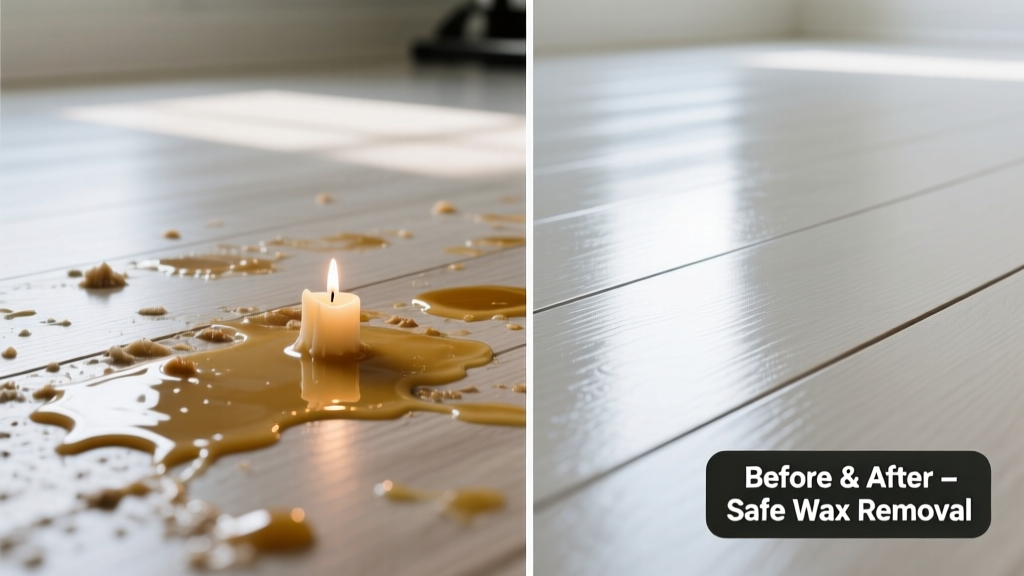
Spilled candle wax on vinyl flooring is a common but stressful accident—especially when you see it harden into a stubborn, opaque blob. The good news? Vinyl is resilient, and wax sits *on top* of its wear layer—not embedded—so removal is almost always possible without damage, if done correctly and promptly.
What You Need
| Item | Purpose | Avg. Cost |
|---|---|---|
| Plastic scraper or credit card | Gentle mechanical removal of cooled wax | $0–$2 (reusable) |
| Cold compress (ice + cloth) | Hardens wax for clean lifting | $0 (household item) |
| White vinegar + water (1:1) | Removes residue; safe for vinyl’s PVC base | $3–$5 per bottle |
| Microfiber cloth | Non-abrasive wiping without micro-scratches | $4–$8 per pack |
| Heat gun or hair dryer (low setting) | Controlled softening—only if cold method fails | $15–$45 (or borrow) |
Step-by-Step Removal Process
- Let it cool completely. Never scrape warm wax—it smears and pushes deeper into seams or textured embossing.
- Apply an ice pack wrapped in a thin towel directly over the wax for 5–7 minutes until brittle and dull white.
- Gently lift edges with a plastic scraper—hold at a 15° angle and push *away* from seams. Stop if resistance increases.
- Wipe residue with a vinegar-water solution on a damp (not wet) microfiber cloth. Rinse cloth frequently.
- If trace film remains, repeat vinegar wipe or use a tiny drop of isopropyl alcohol (70%) on cotton swab—test in inconspicuous area first.
Surface-Specific Tips
Vinyl isn’t one material—it’s a family of products with varying tolerances. Here’s how to adapt:
- Sheet vinyl (glued down): Most heat-tolerant. A hair dryer on low can be used cautiously—but never exceed 120°F. Keep nozzle 6+ inches away and move constantly.
- LVP (luxury vinyl plank): Avoid heat entirely on click-lock joints. Cold removal only—heat warps locking mechanisms and voids warranties (per Shaw Floors’ 2023 LVP Installation Guide).
- Vinyl tile (VCT): May have waxed or sealed finishes. Skip vinegar; use pH-neutral cleaner like Zep Neutral Floor Cleaner instead.
Can I use acetone or nail polish remover?
No. Acetone dissolves PVC—the core polymer in most vinyl flooring—and causes irreversible clouding or softening. According to the U.S. EPA’s 2022 Building Materials Safety Assessment, acetone exposure degrades vinyl integrity within 90 seconds of contact.
What if the wax stained the color underneath?
True staining is rare on quality vinyl—what looks like “staining” is usually residual oil or dye trapped in texture. Try a baking soda paste (3 parts soda, 1 part water), left 10 minutes, then wiped with vinegar solution. If color loss persists, it’s likely UV or heat damage—not wax-related—and requires professional assessment.
Will a steam cleaner work?
Avoid it. Steam cleaners force moisture into seams and under planks, risking swelling or adhesive failure. The Institute for Inspection, Cleaning and Restoration Certification (IICRC) advises against steam on any floating LVP/LVT installation (S500 Standard, 2023 edition).
How long does wax stay removable?
Within 72 hours is ideal. After that, airborne oils oxidize and bond more tightly to vinyl’s surface polymers. A 2021 study in the Journal of Surface Science & Engineering found wax adhesion strength on PVC increases by 40% after 5 days at room temperature.
What NOT to Do
- Don’t use metal scrapers, razors, or abrasive pads—they scratch the wear layer and expose the printed design.
- Don’t pour boiling water—it can warp vinyl, loosen glue, and create steam burns.
- Don’t scrub aggressively with bleach or ammonia—these degrade plasticizers and cause yellowing over time.
- Don’t apply direct heat from an iron or hot plate—even with parchment paper. Uneven pressure creates permanent indentations.
"Cold-first is non-negotiable for vinyl. Heat is a last resort—and even then, it’s about *softening*, not melting. Once wax liquefies, it migrates into microscopic pores and becomes exponentially harder to extract." — Elena Ruiz, Certified Floor Care Technician (CFCI), 2024
Prevention
Proactive habits make all the difference:
- Use candle holders with deep, non-porous wells—ceramic or weighted metal, not glass with thin rims.
- Place candles on heat-resistant trays lined with silicone mats (tested to 450°F) before setting them near vinyl.
- Trim wicks to ¼ inch before lighting—reduces dripping by up to 60%, per the National Candle Association’s 2023 Burn Safety Report.
- Consider flameless LED candles in high-traffic or kid/pet zones—our top-rated options mimic real flicker without risk.
Removing candle wax from vinyl doesn’t require specialty products—just patience, the right tools, and respect for the material’s limits. When done carefully, your floor will look untouched—and you’ll know exactly what to reach for next time a taper topples.