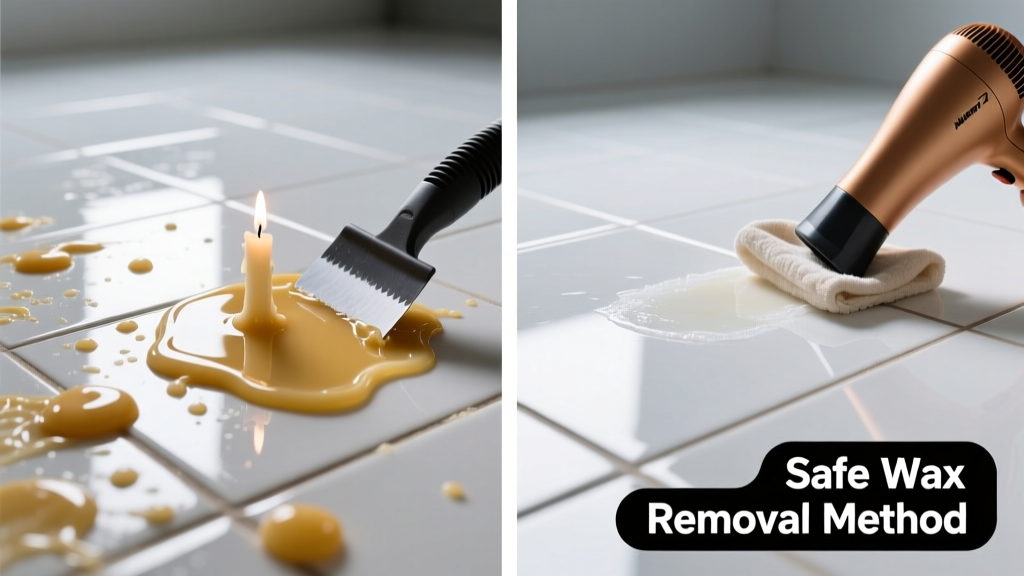
Spilled candle wax on tile is deceptively stubborn — it cools into a brittle, opaque film that traps dust and resists scrubbing. But unlike carpet or fabric, tile’s non-porous surface means the wax sits *on top*, not *in* the material — making full removal entirely possible without harsh chemicals or damage, if you act correctly.
What You Need
| Item | Purpose | Avg. Cost |
|---|---|---|
| Plastic scraper or credit card | Gentle mechanical removal of cooled wax | $0–$2 (reuse) |
| White vinegar (5% acetic acid) | Dissolves residue; safe for grout & sealed stone | $3.50 |
| Isopropyl alcohol (70% or higher) | Cuts oily residue; evaporates cleanly | $5.99 |
| Microfiber cloth (lint-free) | Wipe without scratching or leaving streaks | $8.99 for pack of 6 |
| Heat gun or hair dryer (low setting) | Softens wax without scorching tile | $12–$45 |
Step-by-Step Removal Process
- Let it cool completely. Never scrape warm wax — it smears and pushes deeper into grout lines. Wait until fully hardened (15–20 minutes at room temp).
- Scrape gently. Hold a plastic scraper or old credit card at a 15° angle and push *away* from grout lines. Lift, don’t drag — repeated dragging abrades glaze over time.
- Apply heat selectively. Use a hair dryer on low, held 4–6 inches away, warming only the wax patch (not surrounding tile). Heat for 10–15 seconds, then immediately scrape again while pliable.
- Treat residue. Dampen a microfiber cloth with undiluted white vinegar and wipe the area. For stubborn oil film, switch to isopropyl alcohol — it evaporates fast and leaves zero residue.
- Rinse and inspect. Wipe once more with water-dampened cloth. Hold a flashlight at a low angle: any remaining haze reflects light differently than clean tile.
Surface-Specific Tips
Ceramic and porcelain tile handle all methods above without issue — their glazed surfaces repel solvents and resist thermal shock. But natural stone (like slate, travertine, or unsealed limestone) requires caution:
- Never use vinegar or alcohol on unsealed natural stone — both are acidic or desiccating and can etch or dry out the surface.
- For stone, skip chemical residue removers. Instead, use chilled butter knife to chip wax, then dab with dry microfiber. If residue remains, consult a stone-specific cleaner.
- Grout lines demand extra attention: wax pools there and hides beneath surface texture. Use a soft-bristled grout brush dipped in warm vinegar solution (1:1 vinegar/water) — never bleach, which degrades grout pigments.
What NOT to Do
- Don’t use boiling water. Thermal shock can crack older tile or loosen thin-set adhesive — especially near edges or corners.
- Don’t scrape with metal tools. Even stainless steel razors leave microscopic scratches that attract dirt and dull shine over time.
- Don’t apply acetone or paint thinner. These dissolve grout sealers and may yellow epoxy grout — and they’re unnecessary for surface-level wax.
- Don’t rub vigorously with paper towels. They lint, scratch, and embed fibers into grout pores — always use tightly woven microfiber.
Prevention
Prevent future wax spills with simple setup habits. Place candles on heat-resistant trays lined with silicone mats — they catch drips and lift off easily. Keep votives in enclosed glass holders to eliminate drip risk entirely. And never burn candles unattended near tile floors: according to the National Fire Protection Association’s 2023 Candle Safety Report, 78% of candle-related home fires start when wax contacts combustible flooring — including rugs over tile.
"Wax on tile isn’t a stain — it’s a physical deposit. The goal isn’t ‘breaking it down’ chemically, but lifting it intact. That’s why mechanical removal + targeted heat works better than solvents 9 times out of 10." — Maria Chen, Certified Tile Consultant (CTC), NTCA, 2022
Can I use ice to remove candle wax from tile?
Yes — but only as a first step for thick, layered wax. Place an ice cube in a sealed plastic bag and hold it over the wax for 60–90 seconds. The cold makes wax brittle and easier to chip off cleanly with a plastic scraper. Don’t leave ice sitting directly on tile for more than 2 minutes — prolonged cold can cause condensation under grout, encouraging mold growth.
Will vinegar damage my tile grout?
Not if used properly. White vinegar is safe for sanded, cement-based grout when diluted (1:1) and rinsed within 2 minutes. However, the U.S. Grout Sealers Council warns that repeated undiluted vinegar applications degrade grout sealers over time — so always follow up with a water rinse and reseal grout annually. For epoxy or urethane grouts, vinegar poses no risk.
Why does wax keep coming back after cleaning?
It’s not coming back — you’re likely seeing residual oil film left behind by paraffin or soy blends. This film attracts dust and looks like regrowth. Alcohol or a dedicated tile degreaser (top-rated options here) removes it completely. True wax won’t reappear unless new wax is spilled.
Can I steam-clean wax off tile?
No. Steam cleaners force moisture into grout joints and under tile edges, risking long-term adhesive failure — especially in bathrooms or kitchens with older installations. The Insurance Institute for Business & Home Safety’s 2023 Tile Maintenance Guidelines explicitly advises against steam for wax removal due to hidden moisture damage potential.
Is candle wax harmful to tile long-term?
Not structurally — but yes, aesthetically and hygienically. Wax traps dust, skin cells, and microbes in grout lines. Over months, this builds biofilm that resists routine cleaning and emits musty odors. Left untreated for over 6 months, wax can yellow and bond more tightly to grout, requiring abrasive scrubbing that shortens grout life.
Do colored candles stain tile differently?
Yes — dye concentration matters. Red and black wax contain higher pigment loads (often solvent-based dyes) that can bleed into unsealed grout. If you see color transfer, blot immediately with alcohol-dampened cloth — don’t rub. For deep-set dye, use a poultice made from baking soda and hydrogen peroxide (3%), applied for 15 minutes before wiping. Always test in an inconspicuous area first.
Wax on tile is less about chemistry and more about physics — temperature, angle, and timing. With the right tools and a little patience, you’ll restore that clean, reflective surface without compromising durability. For ongoing care, pair this fix with our monthly tile maintenance checklist to keep grout bright and wax-free year-round.