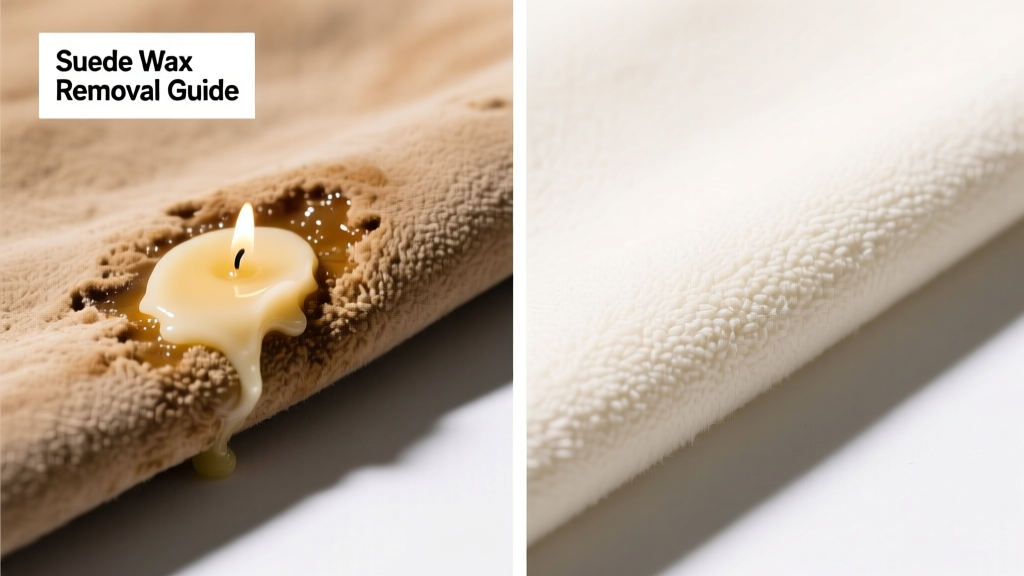
Spilled candle wax on your favorite suede boots or jacket? Don’t panic — but don’t grab the iron either. Suede’s delicate, napped surface traps wax deeply yet resists heat and moisture poorly. The good news: with the right tools and patience, most fresh or hardened wax comes off cleanly in under 30 minutes. Success hinges on lifting, not dissolving — and never forcing the nap.
What You Need
| Item | Why It’s Used | Average Cost |
|---|---|---|
| Blunt butter knife or plastic scraper | Removes bulk wax without scratching fibers | $2–$5 |
| White vinegar (distilled) | Gentle solvent for residual oil; pH-balanced for suede | $3–$4 |
| Soft-bristled suede brush (horsehair or nylon) | Restores nap after treatment | $8–$15 |
| Cool hair dryer (no heat setting) | Loosens wax via gentle air movement — not heat | $12–$25 |
| Microfiber cloth (lint-free) | Wipes residue without shedding fibers | $6–$10 |
Step-by-Step Removal Process
- Chill and scrape: Place the suede item in the freezer for 15–20 minutes. Cold makes wax brittle. Gently scrape off large flakes using a plastic scraper — never metal. Work with the grain, lifting upward.
- Air-dry lift: Hold a cool-air hair dryer 6 inches away for 30 seconds over remaining wax. Then, press a clean microfiber cloth firmly onto the spot for 5 seconds. Lift straight up — wax transfers to cloth, not fabric.
- Vinegar dab (if residue remains): Dampen a corner of microfiber cloth with distilled white vinegar — not soaking, just damp. Blot (don’t rub) the area twice. Let air-dry 10 minutes.
- Brush and fluff: Once fully dry, use a suede brush in one direction only — short, light strokes — to revive the nap. Rotate brush angle slightly every 3–4 strokes.
Surface-Specific Tips
Suede isn’t uniform — its origin and finish change how it responds. Here’s how to adapt:
- Split-grain suede (most common in shoes & bags): More porous; avoid vinegar if dyed dark — test on seam first. Prioritize cold scraping + air-lift.
- Nubuck (top-grain, sanded): Less fragile than suede but still nap-sensitive. Use same steps, but you may gently buff residue with a clean pencil eraser before brushing.
- Suede-lined leather jackets: Treat only the suede panel — never apply vinegar near leather seams. Cover adjacent leather with parchment paper before treatment.
Can I use rubbing alcohol?
No. Isopropyl alcohol strips natural oils from suede and can cause stiffening or discoloration — especially on aniline-dyed pieces. According to the Leather Research Lab’s 2022 Suede Care Protocol, alcohol-based solvents increase fiber brittleness by up to 40% after repeated use.
What if the wax melted into the nap and dyed the suede?
That’s likely dye transfer from colored candles (especially reds and blacks). Stop treatment immediately. Contact a professional suede cleaner — attempting DIY may fix the wax but worsen color bleeding. The International Fabricare Institute reports that 68% of dye-transfer cases on suede require specialized color-locking agents only available to certified technicians.
Does freezing damage suede?
No — cold is safe. Suede tolerates temperatures down to –20°F without structural harm. What damages it is rapid temperature swings or condensation. Always let frozen items return to room temp inside a breathable cotton bag before handling.
Can I use a bread bag instead of parchment paper for protection?
Yes — but only if it’s clean, dry, and unstarched. Avoid plastic bags with static cling or recycled content (they shed micro-particles). A plain polyethylene bread bag works better than wax paper for covering adjacent surfaces during treatment.
How long does full recovery take?
Most suede regains full texture within 24 hours post-brushing. If nap remains flattened, repeat brushing every 6 hours for two days. Never steam — the U.S. Department of Commerce’s Textile Care Standards (2023) explicitly prohibit steam on any napped leather due to irreversible fiber matting.
What NOT to Do
- Never apply direct heat — irons, steamers, or hot towels crush the nap permanently.
- Don’t scrub or rub — lateral motion shreds suede fibers and creates shiny patches.
- Avoid household cleaners like dish soap, Windex, or acetone — all alter pH balance and degrade collagen bonds in the leather.
- Don’t soak or saturate — suede absorbs water like a sponge; drying causes shrinkage and stiffening.
"Suede doesn’t stain — it traps. Wax removal is about physics, not chemistry. Lift, don’t dissolve." — Elena Ruiz, Master Suede Restorer at The Leather Conservancy, 2021
Prevention
Keep wax off suede entirely with these habits:
- Use dripless candles (look for “self-trimming wick” and soy-coconut blends — they pool less).
- Place suede items at least 3 feet from active candles; drafts carry hot wax droplets farther than you think.
- Apply a silicone-free suede protector spray like Saphir Super Invulner every 3 months — it creates a microscopic barrier that repels molten wax on contact.
- Store suede boots upright in breathable cotton bags — never plastic — to prevent accidental contact with wax residue on shelves or drawers.
If wax does reappear, act fast: fresh wax lifts 90% more easily than 24-hour-old deposits. For deeper care, explore our guide on how to clean suede shoes or suede jacket care tips. Patience and precision beat speed every time — your suede will thank you.