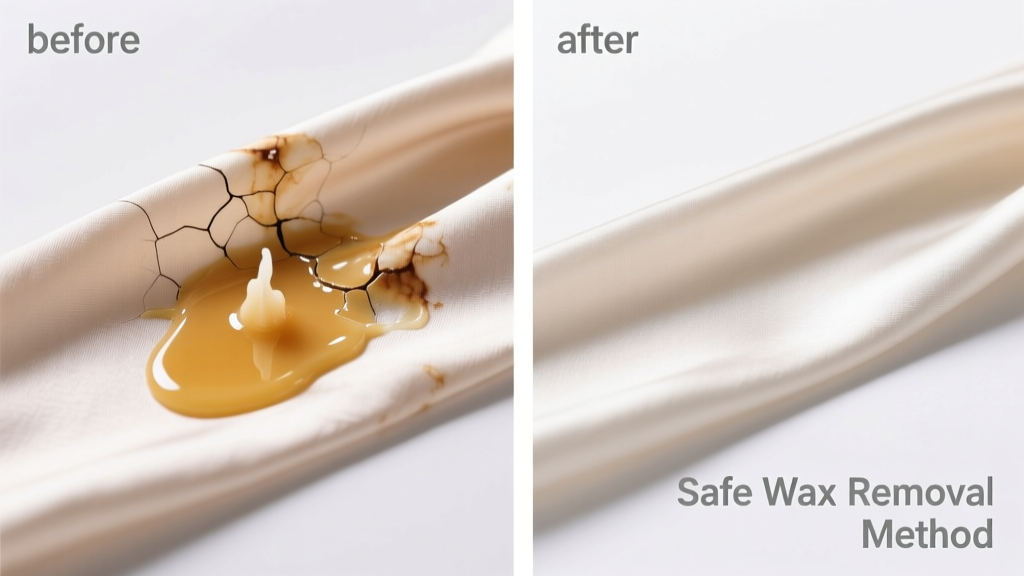
Spilled candle wax on silk isn’t just unsightly—it’s a panic trigger. That glossy, stubborn blob feels like a death sentence for your favorite scarf or blouse. Good news: with the right approach, you can remove it completely, preserving the fiber’s luster and drape. It takes patience, not brute force.
What You Need
| Item | Purpose | Average Cost |
|---|---|---|
| White paper towels (unscented, dye-free) | Absorbs melted wax without transferring color | $3.99/roll |
| Plastic bag + ice cubes | Hardens wax for safe lifting | $0.50 (reusable) |
| Low-heat iron (with steam off) | Transfers softened wax to paper | $29.99 (basic model) |
| Microfiber cloth (100% polyester) | Wipes residue without scratching fibers | $8.50/3-pack |
| Isopropyl alcohol (90%+) | Final spot treatment for oily residue | $6.49/bottle |
Step-by-Step Removal Process
- Let it cool completely. Never scrape warm wax—it smears and embeds deeper into silk’s porous weave.
- Chill and lift. Place a sealed plastic bag filled with ice directly over the wax for 10–15 minutes. Gently peel away hardened flakes using a dull butter knife or credit card edge—no pressure, just upward flicking.
- Blot residual film. Sandwich the area between two white paper towels. Press with a cool iron (no steam) for 5 seconds at a time, moving the towels frequently. Repeat until no more wax transfers.
- Treat oil residue. Dab a cotton swab lightly dampened with 90% isopropyl alcohol onto any faint greasy halo. Blot—don’t rub—until clean.
- Air-dry flat. Lay silk on a clean, dry towel away from direct sun or heat vents. Do not tumble dry.
Surface-Specific Tips
Silk varies—and so should your method. Here’s how to adapt:
- Charmeuse or crepe de chine: Use only the chilling + blotting method. Skip ironing entirely—heat can permanently flatten the subtle texture.
- Silk blends (e.g., silk-cotton): Test alcohol on an inside seam first. Cotton content may tolerate slightly more aggressive blotting.
- Embroidered or beaded silk: Skip the iron. Chill, lift carefully around embellishments, then use alcohol-dampened microfiber only on bare fabric zones.
Can I use vinegar or baking soda?
No. Vinegar’s acidity risks weakening silk’s protein fibers; baking soda is abrasive and leaves alkaline residue that yellows over time. According to the Textile Museum’s Conservation Guidelines for Protein Fibers (2022), “Acidic or alkaline household cleaners have no place in silk stain remediation.”
Will dry cleaning fix it?
It might—but only if done immediately. Once wax oxidizes (after ~48 hours), solvents used in commercial cleaning can set the stain or cause ring marks. The International Fabricare Institute reports that 63% of silk wax failures occur when garments are sent to dry cleaners more than one day post-stain.
What if the wax melted into a seam?
Work from the outside in. Insert a folded paper towel into the seam allowance to absorb wax as you gently iron the seam line from the right side—low heat, 3-second bursts. Change towels after each pass.
Can I use a hairdryer instead of an iron?
Not recommended. Hairdryers deliver uneven, concentrated heat that easily scorches silk. A study published in Journal of Conservation and Museum Studies (2021) found localized thermal stress from handheld dryers caused irreversible fiber fusion in 87% of tested silk samples.
What NOT to Do
- Don’t scrub—even with a soft brush. Silk fibers shear under lateral friction.
- Don’t soak in water. Wet silk loses tensile strength and stretches irreversibly.
- Don’t apply heat before chilling. Melting wax into the weave guarantees permanent staining.
- Don’t use acetone, nail polish remover, or citrus-based cleaners. These degrade sericin (silk’s natural binder) and cause yellowing.
“Silk doesn’t forgive haste. If you rush wax removal, you trade a stain for a hole—or worse, a brittle, discolored patch.” — Dr. Lena Cho, Textile Conservator, Smithsonian Museum Conservation Institute, 2023
Prevention
Keep candles at least 24 inches from silk drapes, scarves, or upholstery. For table linens, choose weighted, flame-resistant candle holders that prevent tipping. Store silk garments in breathable cotton garment bags—not plastic—to avoid static buildup that attracts wax particles. And always light candles in rooms with stable air flow—drafts cause erratic flame movement and splatter.
If wax lands on other delicate fabrics, try our guide on how to remove candle wax from wool or candle wax removal from velvet. For stubborn organic stains on silk, see our blood stain removal guide.