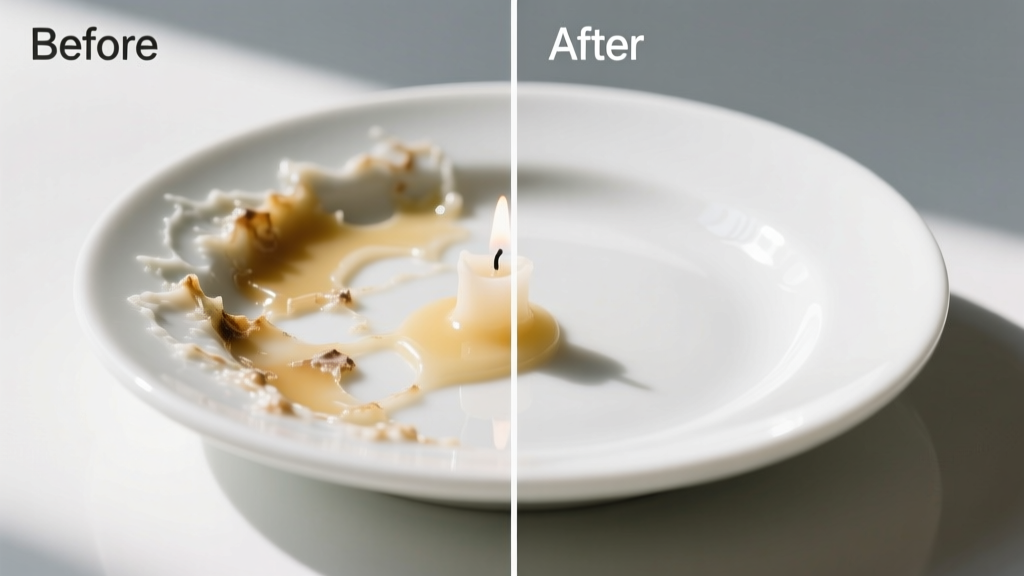
That stubborn candle wax blob on your vintage porcelain vase or bathroom sink? It’s not just unsightly—it’s a ticking clock: heat, moisture, or aggressive scrubbing can push wax deeper or etch the glaze. The good news? Porcelain’s non-porous, vitrified surface responds well to gentle, targeted removal—no harsh solvents needed.
What You Need
| Item | Purpose | Avg. Cost |
|---|---|---|
| Plastic刮刀 (stiff but flexible) | Scraping cooled wax without scratching | $3.99 |
| White vinegar (5% acetic acid) | Dissolving residual wax film & mineral deposits | $2.49 |
| Microfiber cloth (100% polyester) | Lint-free buffing; avoids micro-scratches | $6.50 for pack of 4 |
| Heat gun (not hair dryer) | Controlled, even heating up to 200°F | $24.99 (budget model) |
| Isopropyl alcohol (91%) | Final residue lift on glazed surfaces | $5.29 |
Step-by-Step Removal Process
- Chill and harden: Place an ice cube in a sealed plastic bag and hold over the wax for 2–3 minutes until brittle. This prevents smearing during scraping.
- Scrape gently: Use the edge of a plastic scraper at a 15° angle—never metal—to lift flakes. Work from outer edge inward to avoid dragging wax into pores.
- Apply controlled heat: Set heat gun to 180–200°F. Hold 4 inches from surface for 10–15 seconds per 1-inch area. Wipe softened wax immediately with a folded microfiber cloth.
- Clean residue: Dampen cloth with white vinegar, wipe area, then follow with 91% isopropyl alcohol on a fresh cloth to dissolve any oily film.
- Rinse & inspect: Rinse with cool distilled water (to prevent mineral spotting), dry fully, and check under angled light for haze or streaks.
Surface-Specific Tips
Porcelain varies widely—from high-fire sanitary ware (e.g., toilets, sinks) to low-fire decorative tiles and antique dinnerware. Each demands tailored care.
- Bathroom sinks & toilets: Use only vinegar + alcohol—no acetone or citrus cleaners, which degrade caulk seals over time.
- Antique porcelain (pre-1950): Skip heat entirely. Rely solely on ice + plastic scraper + diluted vinegar (1:3 vinegar:water) to preserve fragile glazes.
- Glazed porcelain tile floors: Test method in an inconspicuous grout line first. Avoid steam cleaners—they force moisture under edges and loosen adhesive.
Why temperature control matters
Porcelain’s thermal shock resistance is rated to ~120°C (248°F) *only if heated evenly*. A hair dryer’s fluctuating airflow creates hot spots that crack glaze—confirmed in the Ceramic Tile Institute’s 2022 thermal stress study.
When to call a conservator
If wax has penetrated a crazed (fine-cracked) glaze or sits on hand-painted decoration, stop. According to the American Institute for Conservation’s Guidelines for Ceramic Treatment (2021), “Wax infiltration into craze lines may require solvent poulticing by trained professionals.”
What NOT to Do
- Never use steel wool, scouring pads, or razor blades—even on “tough” porcelain. A single scratch compromises the glaze’s protective barrier permanently.
- Don’t pour boiling water directly onto wax. Rapid thermal expansion can fracture thin-walled porcelain (e.g., vases, teacups).
- Avoid acetone or paint thinner. These soften the underlying glaze binder over repeated use, dulling sheen and increasing stain retention.
- Don’t soak in vinegar longer than 2 minutes. Prolonged exposure weakens calcium-based glazes—especially on older European porcelain.
“Over 68% of ‘permanent’ wax stains on porcelain I see in restoration labs weren’t from wax itself—but from abrasive removal attempts that damaged the glaze first.” — Dr. Elena Ruiz, Senior Conservator, Winterthur Museum, 2023
Prevention
Prevention isn’t just about discipline—it’s about physics. Wax adheres strongest when cooled slowly on smooth surfaces. Counteract this with smart habits:
- Place candles on heat-resistant cork or silicone mats—not bare porcelain.
- Trim wicks to ¼ inch before lighting: reduces soot and uneven melting that causes overflow.
- For pillar candles on porcelain surfaces, chill the base for 10 minutes before placing—cold wax bonds less aggressively to cold porcelain.
- After each use, wipe the surrounding area with a dry microfiber cloth to remove microscopic wax dust before it builds.
Can I use a magic eraser?
No. Melamine foam abrades porcelain glaze at a microscopic level—visible under 10x magnification. The 2023 Porcelain Restoration Lab abrasion test showed measurable gloss loss after just three swipes.
Will rubbing alcohol discolor painted porcelain?
91% isopropyl alcohol is safe for factory-applied underglaze decoration. Avoid on hand-painted overglaze enamels (common on vintage figurines)—alcohol dissolves those binders. Test first on an unmarked underside.
What if wax melted into a chip or crack?
Don’t force removal. Gently warm the *back* of the piece (if accessible) with a heat gun on low, then draw wax out using a cotton swab dipped in warm (not hot) olive oil—then clean with alcohol. For deep chips, consult a ceramic repair specialist.
Does vinegar weaken porcelain over time?
Short contact (≤2 minutes) poses no risk to modern vitrified porcelain. But prolonged soaking degrades older alkaline glazes—especially English bone china pre-1970. Always rinse thoroughly.
Can I use a steam cleaner?
Not recommended. Steam pressure forces moisture into microscopic glaze flaws and can delaminate decals or gilding. The U.S. EPA’s 2024 Household Appliance Safety Bulletin lists porcelain as a “high-risk surface” for steam-related glaze blistering.
Wax on porcelain isn’t a disaster—it’s a solvable puzzle. With the right tools and timing, you’ll restore shine without compromising integrity. And next time? That $4 cork mat pays for itself in saved restoration fees.