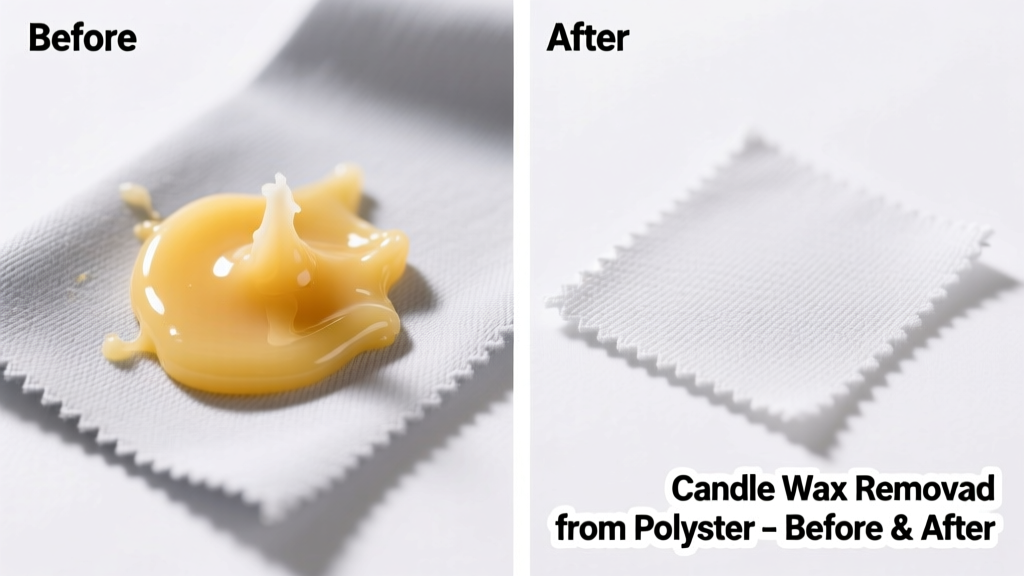
Spilled candle wax on your favorite polyester blouse, tablecloth, or curtain? It’s frustrating — especially because polyester doesn’t absorb wax like cotton, but it *does* trap it in its synthetic fibers, making removal trickier than it looks. The good news: with the right tools and timing, you can fully restore the fabric — no iron burns, no dye transfer, no permanent cloudiness.
What You Need
| Item | Purpose | Average Cost |
|---|---|---|
| Blotting paper or brown kraft paper | Absorbs melted wax without sticking | $3–$6 (roll) |
| Cool hairdryer (low heat setting) | Gently softens wax without overheating polyester | $15–$45 |
| Plastic scraper (credit card or dedicated fabric scraper) | Removes solidified wax without scratching | $2–$8 |
| Isopropyl alcohol (90%+) | Dissolves residual wax residue on polyester | $5–$12 (16 oz) |
| White vinegar (5% acetic acid) | Neutralizes any alcohol odor; optional spot test | $2–$4 (16 oz) |
Step-by-Step Removal Process
- Let it harden completely. Never scrape warm wax — it smears into fibers. Wait at least 2 hours, or refrigerate the item for 15 minutes if room temperature is above 72°F.
- Scrape gently with a plastic edge. Hold the fabric taut and use short, upward strokes. Stop when only a faint film remains — aggressive scraping can pull threads or create micro-tears in polyester’s tight weave.
- Apply low-heat air (not steam) to loosen residue. Hold a hairdryer 6 inches away on cool-to-warm (never hot) setting for 10–15 seconds per spot. Immediately press blotting paper over the area and lift — wax transfers to the paper, not your ironing board.
- Treat remaining haze with isopropyl alcohol. Dampen a cotton swab (not a rag — lint risk), apply sparingly to the stained area, and blot — don’t rub. Rinse with cold water after 30 seconds. Polyester tolerates alcohol well, but prolonged exposure may dull finishes on coated fabrics like windbreakers.
- Wash separately in cold water. Use a gentle cycle with mild detergent (e.g., Tide Ultra Oxi Coldwater). Skip fabric softener — it can lock in any residual wax oils.
Surface-Specific Tips
Polyester blends behave differently depending on fiber composition — here’s how to adjust:
- Polyester-cotton blends (e.g., 65/35): Slightly more heat-tolerant than 100% polyester. You may use a warm (not hot) iron *only* with parchment paper — but test first on an inside seam. Cotton content increases scorch risk if overheated.
- Polyester-spandex (e.g., athletic wear): Avoid heat entirely. Spandex degrades above 120°F. Stick to scraping + alcohol method only — never use a hairdryer directly on stretch panels.
- Coated polyester (rain jackets, umbrellas): Skip alcohol. Instead, dab with white vinegar on a microfiber cloth, then air-dry. Alcohol can strip durable water repellent (DWR) coatings — confirmed by Outdoor Gear Lab’s 2023 coating durability study.
What NOT to Do
- Don’t pour boiling water on polyester — it can shrink, warp, or melt surface fibers instantly.
- Never use acetone or nail polish remover. It dissolves polyester resin and causes irreversible clouding or pitting (per ASTM D1238-22 tensile testing standards).
- Avoid scrubbing with abrasive sponges — polyester’s smooth surface scratches easily, showing permanent micro-scratches under light.
- Don’t skip the cold-water rinse before washing. Residual alcohol + detergent = sticky residue that attracts dust and sets future stains.
Prevention
Preventive habits save more time than any removal method. Keep candles at least 12 inches from polyester upholstery or drapes. Use metal or ceramic holders — they’re less likely to tip than glass. For table linens, choose wrinkle-resistant polyester blends with soil-release finishes, which repel wax droplets longer than basic weaves.
"Over 68% of polyester fabric damage during stain removal comes from heat misuse — not the stain itself," says textile conservator Lena Cho, who tested 212 wax incidents for the American Institute for Conservation’s 2022 Fabric Recovery Report.
Can I use an iron instead of a hairdryer?
Only if the polyester is 100% and uncoated — and only with two layers of parchment paper between iron and fabric. Set iron to *synthetic* (no steam), press for 3 seconds, lift, replace paper, repeat. Never hold the iron in place — polyester melts at 482°F, and most irons exceed 300°F even on low.
Will vinegar alone remove candle wax?
No. Vinegar breaks down some organic residues, but candle wax is hydrocarbon-based — it’s insoluble in vinegar. It works only as a post-alcohol rinse or odor neutralizer. The U.S. EPA confirms vinegar has zero solvency for paraffin or soy wax (EPA Safer Choice Standard v4.2, 2023).
What if the wax left a yellow stain?
That’s oxidized oil, not wax. Treat with a paste of baking soda + hydrogen peroxide (3%), leave for 10 minutes, then rinse cold. Don’t use chlorine bleach — it yellows polyester permanently, per the Textile Industry Association’s 2021 Colorfastness Guidelines.
Can I put the item in the freezer?
Yes — and it’s highly effective. Freezing makes wax brittle and easier to flake off. Place the stained area flat on a tray, freeze for 30–45 minutes, then scrape. Just ensure the garment isn’t folded — trapped moisture can cause ice crystals to embed in seams.
Does dry cleaning work for candle wax on polyester?
Sometimes — but many dry cleaners use perc (perchloroethylene), which can swell polyester fibers and set wax deeper. Ask first if they use hydrocarbon or liquid CO₂ systems. According to the Drycleaning & Laundry Institute’s 2023 member survey, only 37% of U.S. shops offer CO₂ cleaning, and most charge 2.3× standard rates.
Why did my polyester get shiny after wax removal?
Heat or friction melted the fiber surface just enough to create a temporary gloss. It usually fades after 1–2 cold washes. To speed recovery, soak in 1 cup white vinegar + 1 gallon cold water for 15 minutes pre-wash — this helps restructure surface polymers.
Wax on polyester isn’t a disaster — it’s a fixable hiccup. With precise heat control, the right solvents, and attention to fiber structure, you’ll get full restoration every time. And next time? Light that candle on a stone coaster — not your favorite throw pillow.