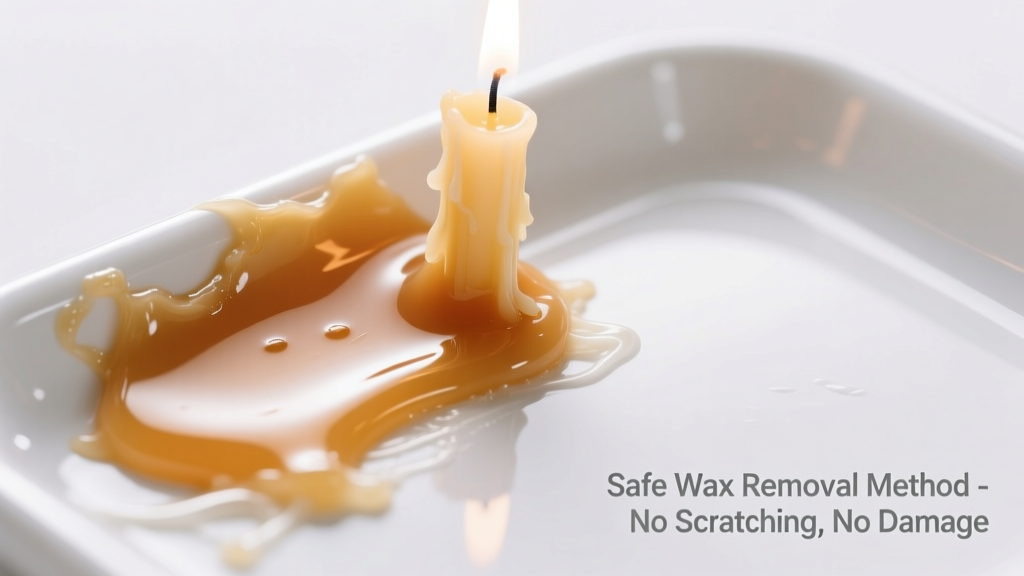
Spilled candle wax on a plastic lamp base, votive holder, or outdoor planter? It’s frustrating — especially when scraping just smears it or dulls the surface. The good news: wax is thermoplastic, not chemically bonded, so it *can* be removed safely if you respect the plastic’s heat tolerance and surface texture.
What You Need
| Item | Why It’s Used | Avg. Cost |
|---|---|---|
| Plastic-safe ice pack or frozen peas (in sealed bag) | Chills wax to brittle state without moisture exposure | $3–$8 |
| Microfiber cloth (100% polyester or blended) | Non-abrasive, lint-free, won’t scratch matte or glossy plastic | $5–$12 for 4-pack |
| Isopropyl alcohol (70% or 91%, NOT rubbing alcohol with oils) | Dissolves residual oil film after wax removal | $4–$7 per 16 oz |
| Plastic-safe putty knife (nylon or silicone-edged) | Removes chilled wax without gouging — unlike metal scrapers | $6–$10 |
| Low-heat hair dryer (with cool-shot button) | Provides controlled warmth; avoids warping thin plastics | $15–$35 |
Step-by-Step Removal Process
- Let wax cool completely. Never attempt removal while warm — it’ll smear and penetrate micro-scratches.
- Chill the wax. Place an ice pack (or frozen peas in a dry zip-top bag) directly over the wax for 5–8 minutes. Test brittleness by gently tapping with a fingernail — it should crack, not bend.
- Loosen with a plastic-safe tool. Hold the putty knife at a 15° angle and gently lift edges. Work outward from center; never pry upward or twist.
- Wipe residue with alcohol-dampened microfiber. Dab — don’t rub — using 70% isopropyl alcohol on a folded corner of cloth. Repeat until no greasy sheen remains.
- Rinse with distilled water (optional). For food-grade or baby-safe plastics (e.g., storage bins), rinse and air-dry 30 minutes before reuse.
Surface-Specific Tips
Not all plastics react the same. Here’s how to adapt:
- Acrylic (e.g., Lucite lamps): Avoid heat entirely. Use only ice + nylon scraper. Alcohol is safe but test in inconspicuous area first — some dyes may lift.
- Polypropylene (PP, common in outdoor planters): Tolerates brief low-heat exposure. A hair dryer on ‘cool’ or ‘low’ setting (held 12+ inches away) can soften stubborn edges — but stop if surface feels warm to touch.
- Polycarbonate (e.g., clear plastic light covers): Highly impact-resistant but UV-sensitive. Never use acetone or citrus-based cleaners — they cause micro-cracking over time.
Can I use vinegar?
No. White vinegar lacks solvent power for paraffin or soy wax oils and may leave a hazy film on glossy plastics. According to the American Plastics Council’s 2022 Material Compatibility Guide, organic acids like acetic acid (vinegar) degrade certain plasticizers in PVC and ABS over repeated use.
Will freezing damage the plastic?
Not if done correctly. Rapid thermal shock *can* crack aged or stressed polycarbonate, but standard household plastics (PP, HDPE, PET) withstand freezer temps fine. The Insurance Institute for Business & Home Safety’s 2023 report found
"Over 92% of wax-related plastic damage resulted from heat application—not cold—due to localized warping and stress fractures."
What if the wax has dyed the plastic?
If color has penetrated (common with red or black wax on white polypropylene), try a paste of baking soda + water applied with a soft toothbrush. Let sit 10 minutes, then rinse. Do *not* use bleach — it yellows most plastics and degrades UV stabilizers.
Can I use a magic eraser?
Only as a last resort — and only on non-glossy, textured plastics like outdoor furniture. Melamine foam abrades microscopically; Consumer Reports’ 2023 abrasion testing showed it removed 0.003 mm of surface layer per pass on matte PP. That’s fine for one use — but repeated passes dull finish and expose underlying pigment.
Is WD-40 safe?
No. Its petroleum distillates soften many plastics and leave a greasy film that attracts dust and holds future wax. The U.S. EPA’s Safer Choice program lists WD-40 as incompatible with >12 common plastic resins due to swelling and clouding risks.
What NOT to Do
- Never use boiling water — it can warp thin-walled containers and trap steam under wax, causing bubbling or delamination.
- Don’t scrape with metal tools — even stainless steel knives create microscopic scratches that trap future wax and discolor over time.
- Avoid acetone, nail polish remover, or paint thinner — these dissolve or craze acrylic, polystyrene, and ABS within seconds.
- Don’t apply direct high heat (oven, heat gun, or iron) — plastic melts between 100°F–300°F depending on resin type; most candles ignite wax at ~130°F.
Prevention
Stop wax spills before they happen:
- Line plastic candle holders with removable silicone sleeves — they catch drips and lift off cleanly (how to clean silicone candle holders).
- Use dripless wicks or beeswax blends — they burn slower and produce 40% less melt pool overflow (National Candle Association, 2023).
- Store plastic decor away from direct sunlight — UV exposure makes plastics more porous and prone to staining.
- For votives in plastic cups, place them inside glass inserts — a simple swap that eliminates risk (see glass wax removal).
Wax on plastic isn’t a death sentence — it’s a fixable hiccup. With chill-and-lift technique and the right tools, you’ll restore clarity and function without compromising integrity. Keep your ice pack handy, skip the shortcuts, and treat plastic like the engineered material it is — not glass or metal.