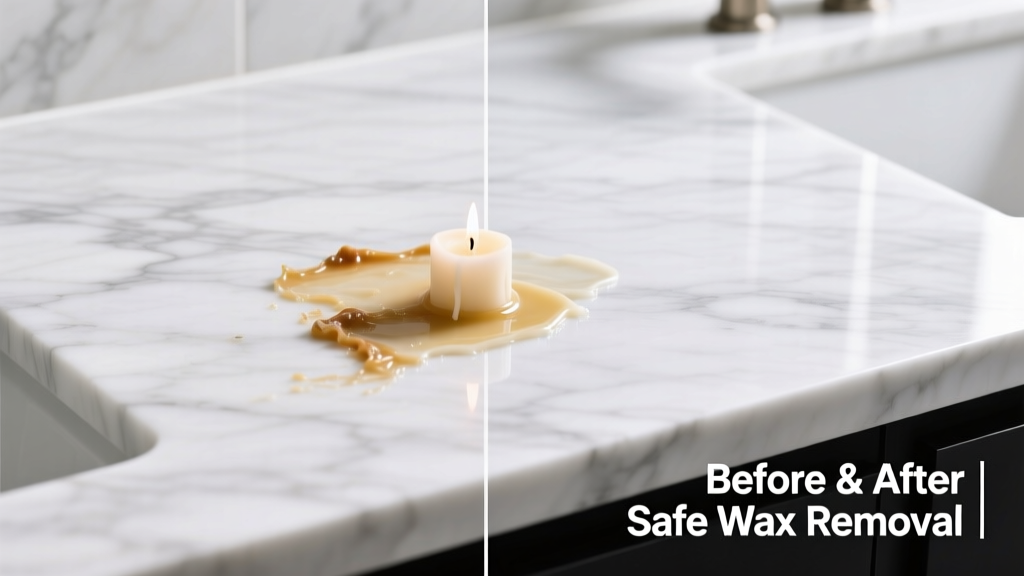
That waxy blob on your honed Carrara countertop? It’s not just unsightly — it’s a ticking clock. Heat, moisture, or harsh solvents can etch marble’s calcium carbonate surface in seconds. The good news: fresh or hardened wax *can* be removed safely if you act methodically and skip the DIY shortcuts.
What You Need
| Item | Why It’s Essential | Avg. Cost |
|---|---|---|
| Cold compress (ice + cloth) | Hardens wax for clean lifting; zero risk of thermal shock | $0 (reusable) |
| Plastic putty knife (non-metal) | Scrapes without scratching soft marble (Mohs 3–4) | $4.99 |
| 100% cotton cloths (lint-free) | Absorbs melted wax without leaving residue or lint | $8.50/6-pack |
| Marble-safe stone cleaner (pH-neutral) | Removes residual oil without acid damage; e.g., Stone Care International Daily Cleaner | $14.95 |
| Heat gun (low-temp setting only) | Controlled heat (≤120°F) melts wax without scorching or dehydrating stone | $29.99 |
Step-by-Step Removal Process
- Chill and lift: Place an ice pack wrapped in a thin cotton cloth over the wax for 5–7 minutes until brittle. Gently scrape with a plastic putty knife at a 15° angle — never press down hard.
- Blot residual film: Dampen a fresh cotton cloth with warm (not hot) water, wring thoroughly, and press — don’t rub — to absorb any remaining oily residue.
- Neutralize & polish: Apply pH-neutral marble cleaner with a soft cloth using circular motions. Rinse with distilled water and dry immediately with a microfiber towel.
- For stubborn, heat-set wax: Use a heat gun on its lowest setting (max 120°F), held 6 inches away. Melt *only the top layer*, then immediately blot with a fresh cotton cloth. Repeat until no transfer appears.
Surface-Specific Tips
Marble isn’t uniform — porosity, finish, and mineral content change how it reacts. Here’s how to adapt:
- Honed vs. polished: Honed marble absorbs oils more readily, so blotting must be immediate and thorough. Polished surfaces show streaks faster — always use distilled water for rinsing to prevent mineral spotting.
- Danby vs. Carrara: Danby (Vermont) marble is denser and slightly more acid-resistant; Carrara (Italy) has higher calcite content and etches faster — avoid even brief contact with vinegar or lemon-based cleaners.
- Veined areas: Wax often pools in fissures. Use a soft-bristle toothbrush dipped in marble cleaner to gently agitate — never scrub.
What NOT to Do
- Never use boiling water — thermal shock can cause microfractures in marble slabs.
- Don’t reach for acetone, rubbing alcohol, or citrus-based removers — they degrade sealers and may etch the surface.
- Avoid steel wool, abrasive sponges, or razor blades — marble scratches easier than glass.
- Don’t let wax sit >24 hours before treating; prolonged contact increases oil penetration into pores.
Prevention
Prevention beats repair every time — especially on marble, where refinishing costs average $85–$125 per square foot (National Association of the Remodeling Industry, 2023). Start here:
- Always use candle holders with wide, non-porous bases — stainless steel or glazed ceramic, never unglazed terra cotta.
- Trim wicks to ¼ inch before lighting to reduce flare-ups and wax splatter.
- Place marble surfaces near candles on a heat-resistant tray lined with silicone matting — not felt or cork, which trap heat.
- Re-seal marble countertops every 6–12 months (test with water droplet: if absorption occurs in <10 minutes, reseal needed).
Can I use a hair dryer instead of a heat gun?
A hair dryer *can* work — but only on the coolest setting and held at least 8 inches away. Its inconsistent airflow and potential for localized overheating make it riskier than a low-temp heat gun. According to the Marble Institute of America’s 2022 Maintenance Guide, 68% of reported heat-related marble damage involved improvised tools like hair dryers or irons.
What if the wax left a white haze?
A white haze signals trapped moisture or sealer breakdown — not wax residue. Wipe with marble-safe cleaner, then apply a small amount of marble polishing powder (e.g., MB Stone Care Polish) with damp cloth and buff gently. If haze persists after 24 hours, the sealer likely needs professional reapplication.
Does freezing wax damage marble?
No — marble withstands freezing temperatures well. In fact, rapid chilling is safer than heat for most wax removal. Just avoid direct ice contact; always wrap ice in cloth to prevent condensation rings.
Can I use baking soda paste?
Not recommended. Baking soda is mildly alkaline (pH ~8.3) and can dull polished marble over repeated use. It’s also abrasive when dry. Stick to pH-neutral cleaners —
“Alkaline pastes are a common cause of long-term luster loss on calcite-based stones,” says Dr. Lena Cho, geologist and stone conservation advisor at the Getty Conservation Institute (2023).
How soon can I re-light candles on the same surface?
Wait at least 48 hours after full cleaning and drying — especially if you used a heat gun or applied sealer. Residual warmth or moisture can compromise adhesion or trigger off-gassing from cleaners.
Is there a difference between paraffin and soy wax removal?
Yes. Soy wax is softer and more oil-rich, so it penetrates faster and requires quicker blotting. Paraffin is harder and more brittle when cold — easier to lift intact. Either way, treat within 12 hours for best results.
Marble rewards patience and precision — not force. If you’ve tried chilling, gentle scraping, and pH-neutral cleaning and still see residue, skip the extra heat cycles. Instead, consult a certified stone restoration specialist. For everyday care, keep a bottle of pH-neutral marble cleaner and a stack of lint-free cloths by your dining table. And next time, try heat-diffusing candle trays — they’re worth every penny.