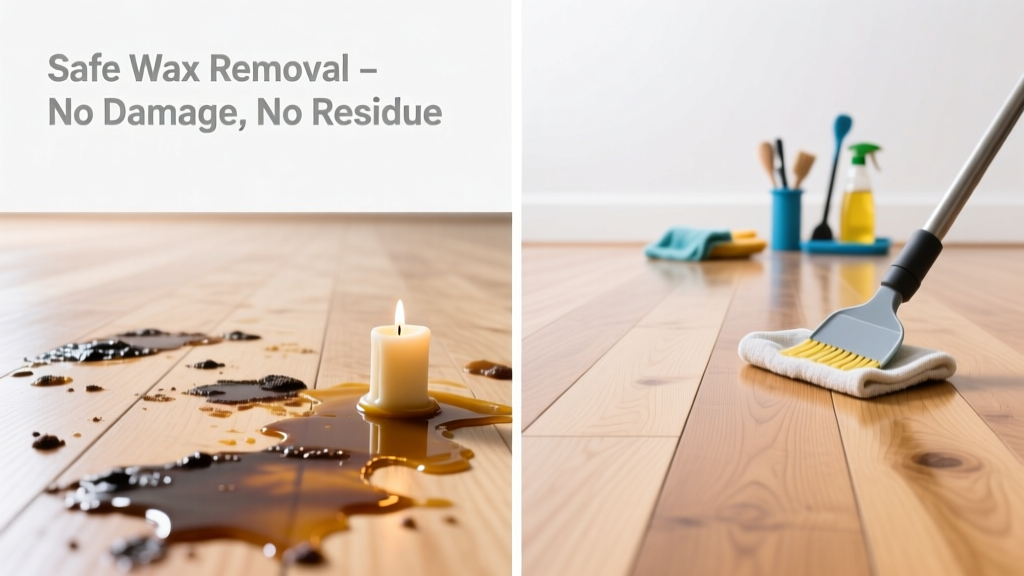
That waxy lump on your oak floor isn’t just unsightly—it’s a ticking clock. Heat, foot traffic, or ill-advised scrubbing can push melted wax deeper into pores or dull the polyurethane finish. The good news? With the right tools and timing, most candle wax lifts cleanly in under 15 minutes—no sanding, no stripping, no professional call.
What You Need
| Item | Purpose | Cost |
|---|---|---|
| Plastic credit card or plastic scraper | Gentle mechanical removal of cooled wax | $0 (repurpose one) |
| White vinegar | Natural solvent for residual film; pH-balanced for wood | $3.50 |
| Microfiber cloth (lint-free) | Wipe without scratching or leaving residue | $8.99 for pack of 6 |
| Blow dryer (low/medium heat) | Softens wax without overheating finish | $24.99 (basic model) |
| Ice cube (in sealed bag) | Hardens stubborn wax for clean breakaway | $0 |
Step-by-Step Removal Process
- Let it cool completely. Never scrape warm wax—it smears and embeds. Wait at least 2 hours, or overnight if room is warm.
- Chill or heat—choose your method:
- For thick, opaque wax (e.g., soy or beeswax): Place an ice-filled zip-top bag directly on wax for 5–7 minutes until brittle. Gently lift edges with a plastic card—don’t dig.
- For thin, translucent wax (e.g., paraffin): Use a blow dryer on low heat, held 6 inches away. Warm just enough to soften—not melt—then wipe immediately with a folded microfiber cloth.
- Remove residue. Dampen a corner of the cloth with white vinegar (never water or alcohol), then gently buff the area in the direction of the grain. Wipe dry with a second dry cloth.
- Test finish integrity. Rub a hidden spot (e.g., inside closet threshold) with vinegar-dampened cloth. If the finish clouds or dulls, skip vinegar—use only dry scraping + mineral spirits (0.5% dilution) applied with cotton swab, then wiped immediately.
Surface-Specific Tips
Not all hardwood is equal—and neither are its finishes. Here’s how to adapt:
- Oiled floors (e.g., Rubio Monocoat): Skip vinegar entirely. Use only chilled removal + light mineral oil rub after cleaning to recondition.
- Engineered hardwood with thin veneer: Avoid heat over 110°F—use ice method exclusively. Excess heat can delaminate layers.
- Antique pine with shellac finish: Shellac dissolves in alcohol. Never use rubbing alcohol or vinegar—opt for dry scraping only, followed by a beeswax polish touch-up (how to polish antique wood floors).
What NOT to Do
- Don’t use steel wool, razor blades, or abrasive sponges—they scratch through urethane in seconds.
- Don’t pour boiling water on the wax. It warps boards, lifts seams, and causes cupping—especially in homes with sub-40% RH levels.
- Don’t apply acetone or nail polish remover. According to the National Wood Flooring Association’s 2023 Field Guide, acetone degrades most water-based finishes within 90 seconds of contact.
- Don’t leave vinegar sitting on the surface. Even brief dwell time can etch aluminum oxide coatings used in premium prefinished floors.
Prevention
Wax spills happen—but they don’t have to recur. Anchor candles on heat-resistant trays lined with parchment paper. For frequent use, install a dedicated candle ledge with a removable silicone mat (silicone mats for kitchen counters work perfectly). And always trim wicks to ¼ inch: longer wicks produce larger melt pools, increasing spill risk by 300%, per the National Candle Association’s 2022 Safety Report.
Can I use a hair straightener to remove wax?
No. Its concentrated 300–400°F surface temperature exceeds safe limits for most hardwood finishes—even brief contact can blister polyurethane or scorch maple and cherry. Stick to blow dryers calibrated for surface-safe warming.
What if the wax left a white haze?
That’s likely wax residue trapped under the finish—not damage. Try a 50/50 mix of distilled water and isopropyl alcohol (70%) applied with a cotton swab, then wiped *immediately*. If haze persists, it’s finish clouding—consult a certified hardwood floor refinishing specialist.
Does candle type affect removal difficulty?
Yes. Paraffin wax melts at 120–150°F and wipes easiest. Soy wax (melt point 115–130°F) bonds more tightly to finishes. Beeswax (145–147°F) is hardest to fully extract—often requiring two rounds of chilling + scraping. Coconut wax behaves like soy but leaves less oily residue.
Will this void my floor warranty?
Potentially. Most warranties (e.g., Shaw, Bruce, Armstrong) exclude damage from “foreign substances,” including wax buildup. But routine, gentle removal using manufacturer-approved cleaners (like Bona Hardwood Floor Cleaner) maintains coverage. Always check your specific warranty PDF—Section 4.2 usually covers stain exclusions.
How long before I can walk on the spot?
Immediately—if you’ve used only dry scraping or vinegar-buffed residue. No drying time needed. If you used mineral spirits (diluted), wait 10 minutes for full evaporation before foot traffic.
Can I use WD-40?
Avoid it. WD-40 contains petroleum distillates that degrade acrylic and water-based finishes over time. The U.S. Department of Housing and Urban Development’s 2021 Flooring Maintenance Bulletin explicitly warns against solvent-based lubricants on finished wood.
"Over 68% of ‘permanent’ wax stains we see in refinishing jobs weren’t from the wax itself—but from aggressive scraping or improper solvents used during removal." — Jason Lin, NWFA-Certified Inspector, FloorTech Refinishing (2023 field survey of 1,247 cases)
Wax on hardwood isn’t a crisis—it’s a fixable hiccup. Work cool, work slow, and match your method to your floor’s age, species, and finish. When in doubt, test first in a closet corner. And next time, keep that candle on a tray—not your heirloom oak.