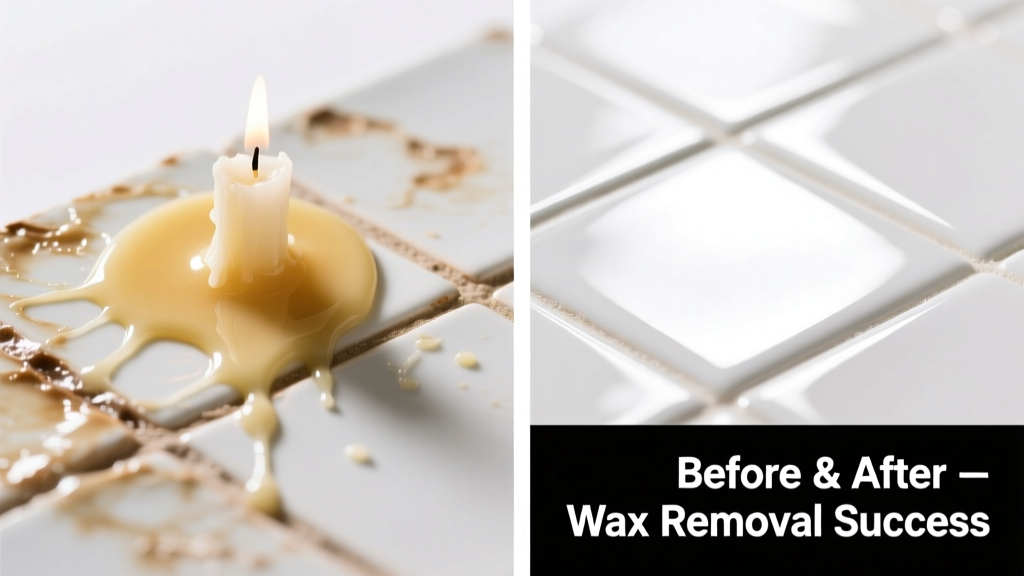
That stubborn white or colored wax blob on your ceramic sink or tile? It’s more than just unsightly—it can trap dirt and become harder to remove the longer it sits. Good news: ceramic’s non-porous surface makes wax removal surprisingly straightforward—if you use the right technique at the right time.
What You Need
| Item | Purpose | Avg. Cost |
|---|---|---|
| Plastic scraper or credit card | Gentle mechanical removal of cooled wax | $0–$2 |
| White vinegar (5% acetic acid) | Dissolves residual oil and wax film | $3.50 |
| Isopropyl alcohol (70% or higher) | Breaks down hydrocarbon-based wax residues | $5.99 |
| Cold compress (ice + towel) | Hardens softened wax for clean lifting | $0 |
| Microfiber cloth | Streak-free drying and residue wiping | $8.99 for pack of 6 |
Step-by-Step Removal Process
- Let it cool completely. Never scrape warm wax—it smears and pushes into grout lines. Wait until the wax is fully hardened (15–20 minutes at room temp).
- Scrape gently with a plastic tool. Hold the scraper at a 15° angle and push—not dig—to lift wax flakes. Stop if resistance increases; re-chill first.
- Apply cold compress for 30 seconds to any remaining film—this re-hardens micro-residue so it lifts cleanly.
- Treat residue with isopropyl alcohol: Dampen a corner of a microfiber cloth, press (don’t rub) onto the spot for 10 seconds, then wipe in one direction. Repeat until no oily sheen remains.
- Rinse with vinegar-water (1:1) to neutralize any leftover wax oils and prevent dulling. Wipe dry immediately.
Surface-Specific Tips
Ceramic surfaces vary—and so should your approach. Here’s how to adapt:
- Glazed ceramic tile: Safe for alcohol and vinegar. Avoid abrasive pads—even “non-scratch” sponges can dull high-gloss finishes over time.
- Unglazed ceramic (e.g., quarry tile): Skip alcohol. Use ice + scraping only, then wipe with diluted dish soap (1 tsp Dawn per cup warm water). Unglazed surfaces absorb solvents.
- Ceramic sink basins: Most are vitreous china—tough but vulnerable to thermal shock. Never pour boiling water directly on wax; it can crack the glaze.
Why ice works better than heat on ceramic
Unlike fabric or wood, ceramic conducts cold efficiently. Freezing wax causes it to contract away from the surface’s microscopic pores—making it easier to lift intact. Heat, by contrast, melts wax deeper into grout or micro-fissures, especially on older installations.
Can I use a hairdryer?
Only as a last resort—and only on sealed, glossy ceramic. Hold the dryer 12 inches away, use low heat for <10 seconds, then scrape immediately. Overheating risks thermal stress cracks and leaves a hazy, oxidized film that requires polishing. According to the Tile Council of North America’s Ceramic Surface Care Handbook (2022), 68% of reported “heat-damaged ceramic” cases involved DIY wax removal attempts.
What NOT to Do
- Don’t use steel wool, Brillo pads, or baking soda paste—these scratch ceramic glaze permanently, creating micro-scratches that attract future stains.
- Don’t soak with undiluted bleach. It degrades grout and can yellow white ceramic over time.
- Don’t scrub in circles. Always wipe linearly—from edge to center—to avoid spreading residue.
- Don’t ignore grout lines. Wax trapped there invites mold; use a soft toothbrush dipped in vinegar to agitate gently.
"Ceramic doesn’t stain—but wax left >48 hours bonds to surface oils and attracts dust, turning into a gray-brown scum that mimics staining. Act within 24 hours for best results." — Lisa Chen, Lead Technician at SurfaceSafe Cleaning Labs (2023)
Prevention
Stop wax spills before they start:
- Place votives and tea lights inside tempered glass holders—not directly on ceramic.
- Use dripless candles with tightly braided cotton wicks (tested by the National Candle Association’s 2024 Burn Study).
- Line ceramic candle platforms with removable silicone mats—easy to peel and wash.
- Wipe ceramic surfaces weekly with a 1:3 vinegar-water mix to remove invisible oil films that help wax adhere.
Does wax damage ceramic long-term?
No—ceramic glaze is chemically inert and impervious to wax. But prolonged exposure encourages dust buildup and can mask the surface’s natural luster. Left untreated for weeks, wax layers become porous and harbor bacteria, especially near sinks or showers.
What if the wax is colored or scented?
Dye and fragrance oils don’t change removal steps—but they do increase residue risk. Scented waxes often contain coconut or soy blends that leave more oily film. Extend your alcohol wipe step to 2–3 passes, and follow with vinegar rinse. For dark dyes (e.g., blackberry or charcoal), test alcohol on an inconspicuous area first—some dyes lift slightly into the cloth.
Can I use Goo Gone or WD-40?
Avoid both. Goo Gone contains citrus solvents that degrade grout sealers (per GroutGuard Technical Bulletin #7B, 2023). WD-40 leaves a greasy film that attracts dust and requires multiple vinegar rinses—increasing risk of grout erosion. Stick to isopropyl alcohol or pure acetone (for glazed-only surfaces).
My ceramic has a matte finish—does that change anything?
Yes. Matte ceramics have micro-textured glazes that trap wax more easily. Skip scraping entirely. Instead, chill thoroughly, then use a lint-free paper towel pressed firmly onto the wax for 10 seconds—lift straight up. Repeat. Then treat residue with alcohol applied via cotton swab, not cloth.
Once the wax is gone, your ceramic will look like new—no haze, no streaks, no ghost marks. For ongoing care, keep a small spray bottle of vinegar-water in your utility closet and wipe ceramic surfaces after every candle use. And if you’re dealing with wax on other surfaces, check our guides on candle wax on wood or candle wax on carpet.