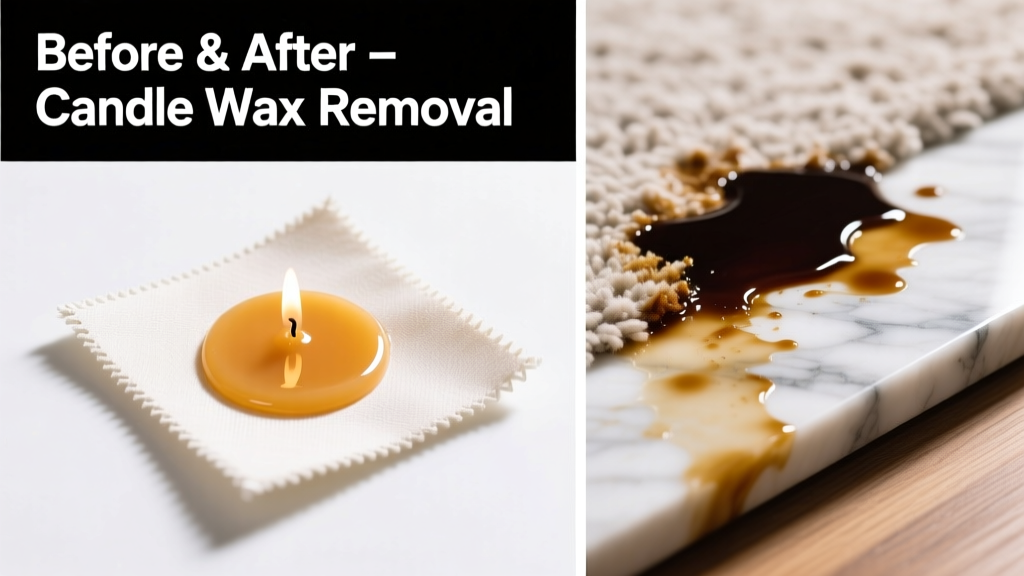
That waxy drip down the side of a taper or the stubborn puddle left by a forgotten votive? It’s more than just messy—it’s a time bomb for your furniture, rug, or tablecloth. The good news: candle wax is 95% paraffin or soy, both thermoplastic and non-polar, meaning it *can* be removed intact—no harsh solvents needed—if you act before heat sets it deeper.
What You Need
| Item | Why It’s Used | Avg. Cost |
|---|---|---|
| Plastic scraper or credit card | Removes bulk wax without scratching | $0–$2 |
| Brown paper bag or plain kraft paper | Absorbs melted wax during ironing | $3 for 50-sheet pack |
| Cold pack or ice cubes in sealed bag | Hardens wax for clean removal | $0–$4 |
| White vinegar (5% acetic acid) | Dissolves residual oil film on hard surfaces | $2.50 per 16 oz |
| Isopropyl alcohol (70% or higher) | Cleans soy wax residue from porous fabrics | $4.99 per 16 oz |
Step-by-Step Removal Process
- Let it cool completely. Never scrape warm wax—it smears and embeds deeper. Wait at least 2 hours at room temperature (longer if thick).
- Scrape off excess. Hold a plastic scraper at a 15° angle and gently push—not dig—to lift flakes. For delicate surfaces, use the edge of a spoon.
- Choose your method based on surface:
- Cold method: Place an ice pack over remaining wax for 10 minutes, then scrape again.
- Heat method: Sandwich fabric or carpet between two brown paper bags; press with a cool iron (no steam) for 5–10 seconds. Lift and repeat until wax transfers fully.
- Solvent method: Dab soy or beeswax residue on non-washable items with cotton swab dipped in isopropyl alcohol—test first on seam or hidden area.
- Clean residue. Wipe hard surfaces with vinegar-water (1:1); blot fabrics with mild detergent solution (1 tsp dish soap + 1 cup lukewarm water).
Surface-Specific Tips
Wax behaves differently depending on what it lands on—and missteps can ruin more than the stain.
- Carpet: Always use the brown paper + iron method—not direct heat. Vacuum loose particles first. Avoid steam cleaners: heat re-melts wax into backing fibers.
- Upholstery (cotton/linen): Test solvent on inner seam. Blot—never rub—to prevent fiber distortion.
- Wood furniture: Scrape *with* the grain only. Follow with mineral spirits on a lint-free cloth to lift oily residue, then wipe with damp microfiber.
- Glass or ceramic: Chill, scrape, then polish with vinegar and a squeegee. Wax rarely bonds permanently here—just looks cloudy until wiped.
What NOT to Do
These mistakes turn a simple cleanup into a restoration project.
- Don’t use boiling water on fabric—it sets dye and shrinks fibers.
- Never apply acetone or nail polish remover to vinyl, leather, or lacquered wood—it dissolves finishes.
- Avoid scrubbing wax off wallpaper—it tears the top layer instantly.
- Don’t skip the cold-hardening step on carpets: heat alone melts wax deeper into padding.
Prevention
According to the National Candle Association’s 2023 Safety Report, 68% of wax spills happen within 6 inches of the candle base—usually due to drafts or uneven surfaces.
"Always place candles on heat-resistant, non-porous trays—even on stone or tile. A ¼-inch-thick ceramic dish stops 99% of drips before they reach your surface." — Sarah Lin, textile conservator at the Museum of Domestic Arts, 2022
- Trim wicks to ¼ inch before lighting to reduce flare-ups and tunneling.
- Use pillar candles instead of tapers on open tables—they’re less prone to tipping.
- Line mantels or shelves with removable silicone mats (like these washable ones)—they catch wax and wipe clean in seconds.
Can I use a hairdryer instead of an iron?
Yes—but with strict limits. Hold the dryer 6 inches away on low heat for no longer than 20 seconds per spot. Overheating melts wax into carpet backing or fabric weaves. The iron + paper method gives far more control and absorption.
Will vinegar remove wax stains from clothes?
Vinegar alone won’t dissolve solid wax, but it *does* cut the oily film left after heat removal. For washable fabrics, pretreat with vinegar before laundering in warm (not hot) water—per our laundry stain guide.
What if the wax has dyed the fabric?
Dye transfer means the wax was hot enough to bond pigment to fibers. Try soaking in oxygen-based bleach (like OxiClean™) for 30 minutes before washing. Avoid chlorine bleach on colored fabrics—it worsens dye bleeding.
How do I remove wax from leather?
Never use heat or alcohol. Chill the spot with an ice cube wrapped in cloth, then gently lift with a dull butter knife. Buff with leather conditioner afterward to restore oils. For deep-set stains, consult a professional—see our full leather care protocol.
Does freezing wax make it easier to remove from walls?
Yes—especially on painted drywall. Cold makes wax brittle and less adhesive. Scrape carefully with a plastic putty knife, then wipe residue with a vinegar-dampened cloth. Don’t use abrasive pads: they scratch flat paint.
Can I reuse the brown paper bag?
No. Each pass transfers wax into the paper’s fibers. Reusing spreads residue or leaves gray streaks. Replace after every 2–3 iron passes—or when paper turns translucent.
Wax isn’t permanent—just persistent. With the right tools and timing, even a week-old spill lifts cleanly. Keep a small wax-removal kit in your cleaning caddy: ice pack, paper bags, scraper, and alcohol. You’ll thank yourself next time a candle flickers too close to the edge.