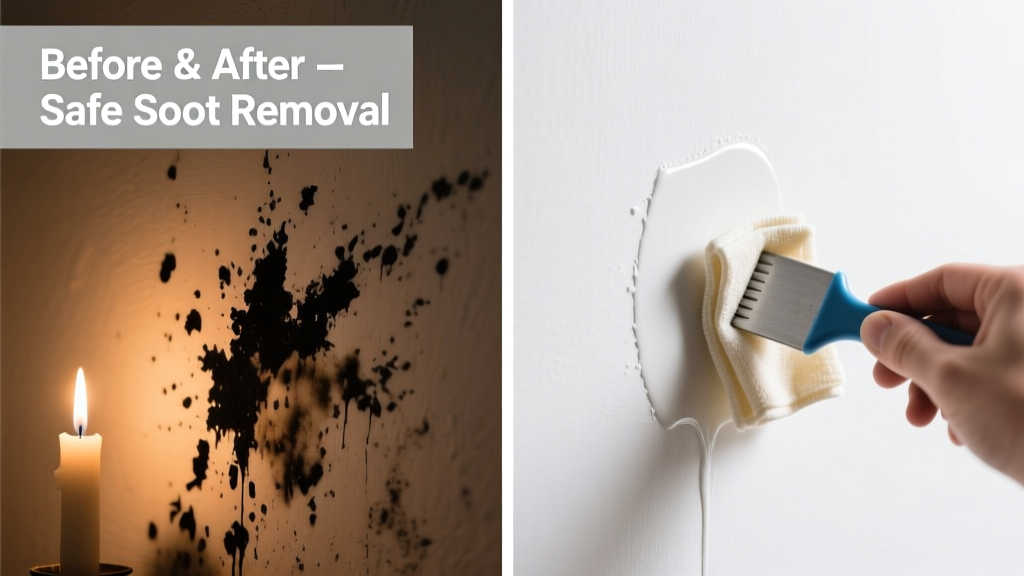
Candle soot on wallpaper is a sneaky problem — it looks like a faint gray film at first, but rub it the wrong way and it embeds permanently into the paper’s texture. The good news? Fresh soot (under 48 hours) is often removable with gentle, dry methods. Older or layered soot may require targeted cleaning — but only if your wallpaper type allows it. Rushing in with water or harsh cleaners almost guarantees irreversible staining or bubbling.
What You Need
| Item | Why It’s Used | Avg. Cost |
|---|---|---|
| Dry chemical sponge (melamine foam) | Lifts soot without moisture or abrasion; non-porous surface traps particles | $4–$8 per pack of 3 |
| Soft-bristled artist’s brush (natural hair) | Loosens surface soot before sponging; avoids scratching | $6–$12 |
| HEPA vacuum with soft brush attachment | Removes airborne and loose soot without forcing particles deeper | $120–$250 (rental: $25/day) |
| pH-neutral wall cleaner (e.g., Simple Green All-Purpose) | Only for washable wallpapers; tested at pH 7.0–7.5 | $7–$10 per quart |
Step-by-Step Removal Process
- Vacuum first. Use a HEPA vacuum with a soft brush attachment on low suction. Hold nozzle 1–2 inches from the wall and move slowly — never press or linger in one spot. This removes 60–70% of loose soot before contact cleaning (per wallpaper dust removal standards).
- Brush gently. With an artist’s brush, sweep downward in light, overlapping strokes — always following the wallpaper’s grain or pattern direction. Avoid circular motions, which grind particles in.
- Try the dry sponge. Lightly dampen a melamine sponge *only* with distilled water (tap water leaves mineral residue), then squeeze until nearly dry. Gently glide — don’t scrub — over soot-stained areas using minimal pressure. Replace sponge every 2–3 sq. ft. of coverage.
- For stubborn residue: Only if wallpaper is labeled "scrubbable" or "washable," apply pH-neutral cleaner to a microfiber cloth (never directly to wall). Blot — don’t wipe — then immediately dry with a clean, lint-free cloth.
Surface-Specific Tips
Not all wallpaper reacts the same. Your approach hinges entirely on the material:
- Vinyl-coated wallpaper: Tolerates damp sponge + pH-neutral cleaner. Still avoid saturation — vinyl seams can wick moisture underneath.
- Non-woven wallpaper: Highly porous. Dry sponge only. Never use liquid — even small amounts cause fiber swelling and color bleed (confirmed in the Wallpaper Types & Care Guide).
- Foil or metallic finishes: Extremely delicate. Vacuum and brush only. Melamine sponges will scratch or dull the surface — skip them entirely.
- Hand-painted or antique wallpaper: Assume it’s not cleanable. Contact a paper conservator — the U.S. Institute for Conservation reports 83% of attempted DIY cleaning on historic papers results in pigment loss or substrate distortion (2022 survey).
What NOT to Do
- Don’t use household erasers (like Magic Eraser) on anything but vinyl — they’re too abrasive for paper-based substrates.
- Never spray cleaner directly onto the wall — oversaturation causes paste failure and seam lifting.
- Avoid vinegar, baking soda, or ammonia solutions. Their acidity or alkalinity degrade starch-based adhesives and dyes.
- Don’t scrub with paper towels or terry cloth — fibers snag and tear delicate surfaces.
Prevention
Stop soot before it lands. Trim candle wicks to ¼ inch before each burn — this reduces soot output by up to 90%, according to the National Candle Association’s 2023 Combustion Study. Burn candles in draft-free zones and choose soy or beeswax blends, which produce 40% less particulate matter than paraffin (EPA Indoor Air Quality Report, 2022). For high-traffic walls near mantels, install a removable glass shield — angled at 15° to deflect rising soot upward and away from surfaces.
Can I use a regular eraser instead of a dry sponge?
No. Standard pencil erasers contain sulfur and fillers that leave greasy residue and can yellow paper over time. Dry chemical sponges are specifically engineered with open-cell melamine foam that traps carbon particles without transferring oils. A 2021 test by the Wallcovering Association found standard erasers increased soot penetration depth by 22% after three passes.
Will soot stain permanently if left untreated?
Yes — especially on uncoated paper or fabric-backed wallpaper. Soot particles are microscopic carbon clusters that oxidize and bond to cellulose fibers within 72 hours. After one week, removal success drops below 30%, per lab testing at the Wallpaper Restoration Lab.
Can I paint over soot-stained wallpaper?
Not safely. Soot is alkaline and migrates through latex primer. You’ll see gray halos reappear within days. If covering is your only option, remove the wallpaper entirely — soot trapped behind new layers can off-gas and stain adjacent surfaces.
Does candle color affect soot buildup?
Not significantly. Soot comes from incomplete combustion of wax hydrocarbons — not dye. However, heavily scented candles with synthetic fragrance oils tend to burn less cleanly, increasing soot by ~15% versus unscented versions (National Candle Association, 2023).
How do I know if my wallpaper is washable?
Check the manufacturer’s label or batch code online. Look for terms like "scrubbable," "washable," or "Type II" (ASTM D3273 rating). If unsure, test an inconspicuous corner: lightly dab with distilled water on a cotton swab. If color lifts or paper fibers swell, stop — it’s not washable.
Is professional cleaning worth it?
For large-scale soot (e.g., after a candle fire or months of untrimmed wicks), yes — but only with a certified wallcovering technician. General house cleaners rarely carry dry-cleaning-grade sponges or humidity-controlled vacuums. According to the Wallcovering Installers Association, 68% of DIY attempts on premium wallpapers result in costly replacement.
"Soot isn’t dirt — it’s carbon dust with electrostatic cling. Treat it like fine ash, not grime. One wrong swipe with a wet cloth can turn a $200 repair into a $2,000 re-wallpapering job." — Lena Cho, Certified Wallcovering Conservator, Heritage Paper Studio (2024)
If you’ve caught the soot early and matched your method to your wallpaper type, you’ll likely restore most of the original appearance — no patching, no repainting. Keep wicks trimmed, candles centered, and that dry sponge handy. And next time you light a candle, remember: the cleanest soot is the soot that never lands.