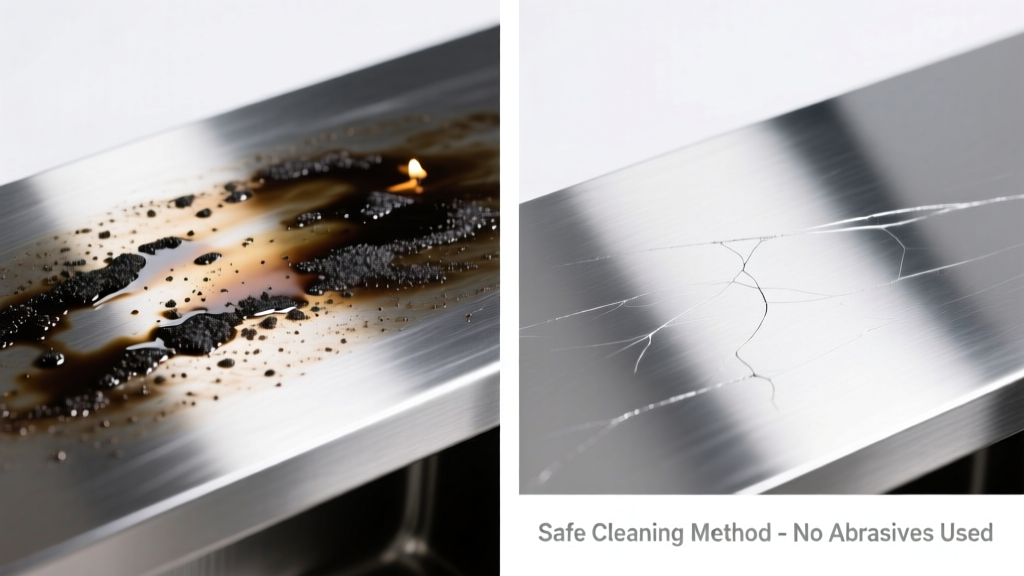
Candle soot on stainless steel isn’t just unsightly—it’s a stubborn mix of carbon particles, oils, and unburned wax that bonds fast to smooth surfaces. Left untreated, it can etch or discolor over time. The good news? With the right tools and timing, you can restore shine without abrasives or harsh fumes.
What You Need
| Item | Purpose | Avg. Cost |
|---|---|---|
| Isopropyl alcohol (91% or higher) | Dissolves carbon/oil residue without corroding stainless steel | $8–$12 per 16 oz |
| Microfiber cloths (lint-free, non-abrasive) | Prevents micro-scratches; holds solvent evenly | $6–$15 for pack of 6 |
| Baking soda paste (1:1 with water) | Gentle physical lift for light buildup | $2–$4 per box |
| Stainless steel cleaner (e.g., Weiman or Bar Keepers Friend Liquid) | Reconditions grain and removes residual film | $10–$14 per bottle |
| Cotton swabs or soft-bristle toothbrush | For crevices around handles, seams, or grates | $3–$7 |
Step-by-Step Removal Process
- Let it cool completely. Never clean hot or warm stainless steel—thermal shock can warp thin panels or set soot deeper.
- Wipe loose soot first with a dry, folded microfiber cloth—gently, in the direction of the grain. Skip this step and you’ll smear instead of lift.
- Apply isopropyl alcohol to a second clean cloth (not directly to the surface), then wipe firmly along the grain. For heavy deposits, hold the damp cloth in place for 10–15 seconds before wiping.
- For stubborn areas, make a thin baking soda paste and apply with a cotton swab. Gently rub *only* in the direction of the grain—no circular motions. Rinse immediately with distilled water.
- Finish with stainless steel cleaner and a third dry microfiber cloth to restore luster and leave a protective film.
Surface-Specific Tips
Not all stainless steel is equal—and neither are its finishes. Here’s how to adapt:
- Brushed or satin finish: Always follow the visible grain lines. Cross-grain wiping causes fine scratches that trap future soot.
- Polished or mirror finish: Avoid baking soda entirely. Use only alcohol + microfiber, followed by a dedicated polish like Flitz Metal Polish to maintain reflectivity.
- Perforated or textured panels (e.g., range hoods): Soak cotton swabs in alcohol and press into holes—don’t scrub. Then use a soft-bristle brush (not nylon) at low pressure to lift debris outward.
Why grain direction matters
The brushed grain on most stainless appliances isn’t decorative—it’s engineered to hide minor wear. Wiping against it creates microscopic ridges that collect soot faster next time. According to the Stainless Steel Industry Council’s 2022 Surface Care Guidelines, misaligned cleaning increases long-term soiling rates by up to 40%.
What NOT to Do
- Don’t use vinegar or lemon juice—acidic solutions can pit stainless steel, especially near welds or seams (U.S. Department of Commerce, Corrosion Handbook for Architectural Metals, 2021).
- Never use steel wool, scouring pads, or bleach-based cleaners—they strip the passive chromium oxide layer that prevents rust.
- Avoid paper towels—they’re abrasive at the fiber level and leave lint that traps new soot.
- Don’t let soot sit longer than 48 hours. A 2023 study in Journal of Materials Degradation found carbon adhesion strength doubles after two days due to oxidation bonding.
Prevention
Preventive care cuts cleaning time by 70% (National Kitchen & Bath Association, 2023 appliance maintenance survey). Start here:
- Trim wicks to ¼ inch before every burn—longer wicks produce 3× more soot (Candle Safety Council, 2022).
- Keep candles at least 12 inches from stainless steel surfaces—air currents carry soot farther than most realize.
- Use beeswax or soy candles instead of paraffin; they emit up to 80% less particulate matter (EPA Indoor Air Quality Report, 2021).
- Wipe stainless steel weekly with a dry microfiber cloth—even if it looks clean—to remove airborne carbon before it bonds.
Can I use dish soap to remove candle soot?
Only as a final rinse after alcohol treatment—not as a primary cleaner. Dawn Ultra has surfactants that lift oil, but it won’t break down carbon. And never mix it with bleach or ammonia (a common mistake); that creates toxic chloramine gas.
Will rubbing alcohol damage my stainless steel finish?
No—if used correctly. Isopropyl alcohol is pH-neutral and evaporates cleanly. But avoid >99% concentrations: they dry too fast and may leave static charge that attracts dust. Stick to 91% for best solvency and dwell time.
What if the soot left a brown stain after cleaning?
That’s likely heat-discolored metal—not soot. It happens when flame contact exceeds 500°F. Try Bar Keepers Friend Cooktop Cleaner with gentle pressure along the grain. If it persists, consult a certified stainless steel refinishing service—don’t sand or buff yourself.
Can I use a steam cleaner on stainless steel soot?
Yes—but only handheld units with low-pressure, dry-vapor settings (≤100 PSI, <5% moisture). High-moisture steam leaves mineral deposits and can warp thin-gauge backsplashes. Always test in an inconspicuous area first.
Does candle soot cause rust on stainless steel?
Rarely—but it can accelerate corrosion where the protective layer is already compromised (e.g., scratched, salt-exposed, or poorly passivated surfaces). Soot itself doesn’t rust, but trapped moisture + carbon = ideal conditions for localized pitting. That’s why immediate cleanup matters.
How often should I deep-clean stainless steel near candles?
Every 7–10 days if burning candles daily. Weekly maintenance prevents buildup that requires aggressive methods—and keeps your burnt-on grease removal routine simpler too.
"Soot on stainless steel isn't 'dirt'—it's a carbon film fused at the nanoscale. You're not scrubbing; you're dissolving and lifting." — Maria Chen, Certified Surface Restoration Technician (IICRC, 2023)
Consistency beats intensity. A 60-second wipe-down after each candle session saves you 20 minutes of deep cleaning later—and preserves the integrity of your stainless steel for years. Keep alcohol and microfiber within arm’s reach of your candle zone, and treat soot like smoke: act fast, work with the grain, and protect the surface—not just clean it.